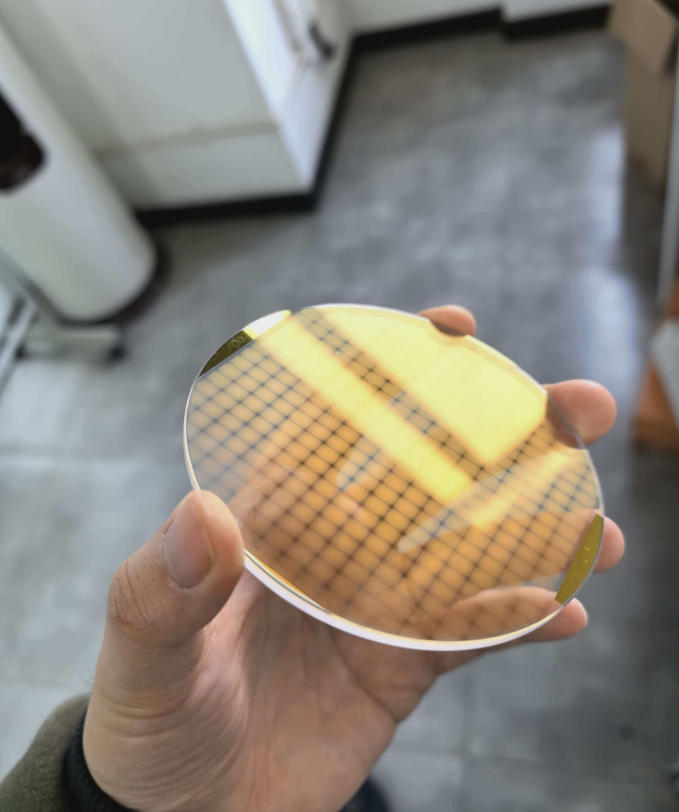
Diffractive vs Refractive Microlens Arrays
Tuesday, January27, 2026
Table Of Contet
- What is Microlens Arrays?
- Refractive Microlens Arrays
- Diffractive Microlens Array
- Diffractive vs Refractive Microlens Arrays Microlens Arrays
- Microlens Design and Considerations in Project Implementation
- How to custom microlens arrays?
- FAQ:
- Q1: What is the fundamental difference between refractive microlens arrays and diffractive microlens arrays?
- Q2: Which has higher efficiency, refractive microlens arrays or diffractive microlens arrays?
Refractive MLA: Transmittance can exceed 95% - Q3: Can diffractive microlenses be used with high-power lasers?
What is Microlens Arrays?
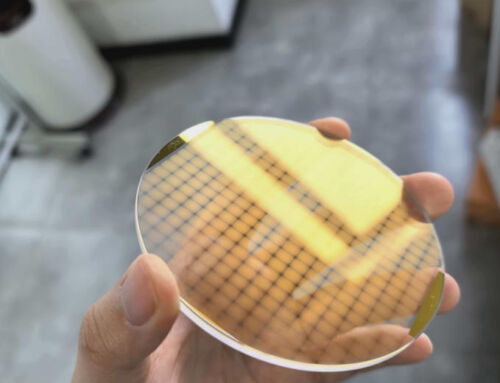
Microlense arrays are optical components that arrange a large number of microscopic lenses in a regular pattern within an optical system, serving as its core component. They play a vital role in CMOS/CCD imaging, 3D advertising displays, AR display modules, fiber optic coupling, laser processing and shaping, bioimaging, and infrared medical sensing.
Microlens arrays primarily fall into two categories: refractive microlens arrays and diffractive microlens arrays.
A frequently asked question in optical projects is: What distinguishes refractive micro-lens arrays from diffractive micro-lens arrays? How should one select the most suitable micro-array lens?
We also commonly encounter client inquiries such as: Given identical pitch and material specifications, how should we choose the optimal micro-array lens for a client’s optical system? Below, we compare refractive and diffractive microlens arrays based on operating principles, thickness, optical efficiency, and typical applications to provide selection guidance for customers.
Refractive Microlens Arrays
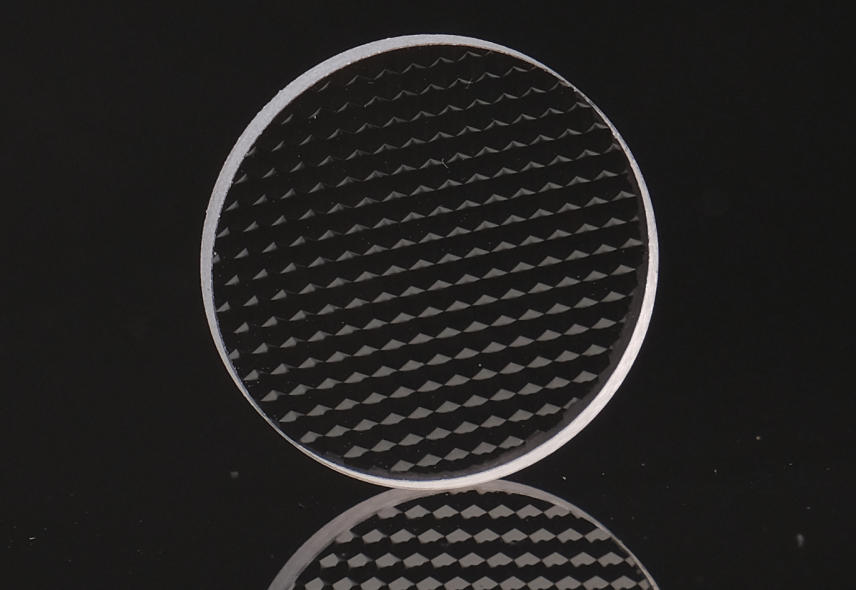
Refractive microlens arrays currently constitute the majority of our development efforts, accounting for over 90% of our microlens array product line. They are also the most widely applied type of microlens array.
The core characteristics of refractive lenses are:
- Its optical performance is determined by the curvature radius and the refractive index of the material. Currently, the most commonly used materials are fused silica and silicon.
- Additionally, it exhibits low sensitivity to operating wavelengths. Generally, if the design wavelength is close to the intended application wavelength—for example, a design wavelength of 755nm but intended for use at 800nm—it remains viable. This is because fused silica maintains high transmittance at both 755nm and 800nm.
- Due to the unique properties of the material, it enables broad spectral use with minimal stray light, high optical efficiency, and virtually no diffraction loss.
However, it also has significant engineering limitations. For instance, when using fused silica as the substrate, our standard thickness is 1.0mm. While we can manufacture micro-array lenses with thicknesses above 0.3mm, this poses major constraints in systems requiring ultra-thin micro-array lenses.
Overall, refractive microlens arrays represent a reliable choice for image sensors, illumination systems, and imaging systems.
Diffractive Microlens Array

Diffractive micro-lenses modulate light wavefronts through phase structures at the micro-nano scale, independent of traditional curved refraction.
Key characteristics of diffractive micro-lenses include:
- Functionality determined by phase distribution
- Optical performance is highly dependent on the design wavelength. For instance, if designed for 1550nm, it may be unusable even if the customer’s operational wavelength is 1530nm.
However, compared to refractive microlenses, they offer significant advantages: greater freedom in wavefront design, and the ability to fabricate ultra-thin, lightweight components. Unlike refractive microlenses, their diffraction efficiency depends on fabrication precision rather than material properties. They are also prone to generating stray light.
Diffractive vs Refractive Microlens Arrays Microlens Arrays
Overall, refractive microlens arrays and diffractive microlens arrays exhibit significant differences in imaging principles, structure, and performance.
In terms of application, refractive microlens arrays are suitable for scenarios requiring broadband light sources and high throughput. For monochromatic or narrow-band light source systems operating at specific wavelengths, diffractive microlenses offer distinct advantages.
Microlens Design and Considerations in Project Implementation
In practical projects, selecting a micro-lens array typically requires comprehensive consideration of the following factors:
- 1. Operating wavelength and spectral bandwidth
- 2. Optical system thickness requirements
- 3. Optical operational efficiency and stray light control
- 4. Precision and consistency in microstructure fabrication
The synergy between design capability and manufacturing capability is more critical than the optical solution itself.
How to custom microlens arrays?
Coligh can design micro-lens arrays tailored to customer requirements, achieving unified design and manufacturing of micro-lens arrays. We offer microlens arrays custom solution for the clients. With below information we can custom the microlens arrays according to client’s requirement.
- Working wavelength
- Beam Input: Beam diameter, NA/divergence angle, oblique incidence
- Target: Coupling efficiency/light uniformity/imaging resolution metrics
- MLA: Array size, pitch, lens aperture, working distance
- Material: Polymer/quartz
- Coating: Coated/uncoated
- Quantity: Prototype quantity + Estimated production volume
- Acceptance: Critical parameters and test methods
FAQ:
Q1: What is the fundamental difference between refractive microlens arrays and diffractive microlens arrays?
Refractive microlens arrays: Focusing relies on material refractive index and continuous curved surfaces
Diffractive microlens arrays: Focusing relies on phase modulation and diffraction effects
Q2: Which has higher efficiency, refractive microlens arrays or diffractive microlens arrays?
Refractive MLA: Transmittance can exceed 95%
Diffractive MLA: Theoretical efficiency is limited (constrained by diffraction orders). Only multi-step phase profiles can approach high efficiency. Efficiency drops significantly when deviating from the design wavelength.
Q3: Can diffractive microlenses be used with high-power lasers?
Extreme caution is required. The high local energy density in diffractive microstructures can easily cause thermal effects and damage. In fact, refractive MLAs are more suitable for high-power light homogenization.