Lithography Etched Micro-Optics
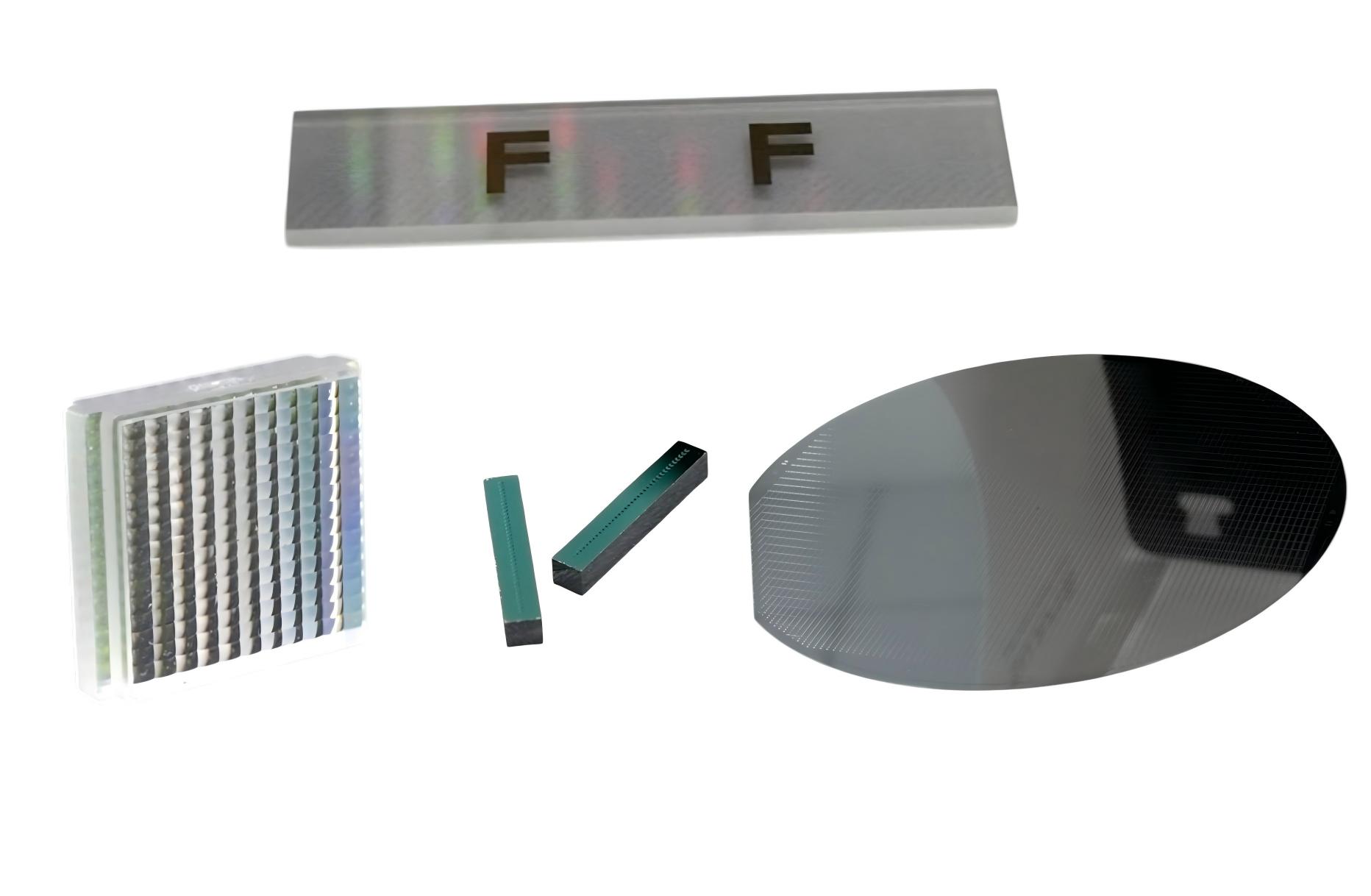
Coligh specialized in design and production of Lithography etched micro-optics such as High-precision microlens arrays, diffraction gratings, beam splitters, and optical elements for application like laser beam shaping & splitting, optical communication, bioimaging, methology and laser LiDAR.
Key Advantages of Precision Photolithography Microlenses and Diffractive Optical Elements
- We leverage advanced photolithography and etching technologies to deliver outstanding machining precision.
- Our extensive product portfolio spans from high-performance microlens arrays to diffractive optical elements.
- With comprehensive in-house optical design capabilities, we provide both standard and fully customized solutions
- Every product is optimized for performance based on real-world application scenarios, ensuring maximum effectiveness.
- We support arbitrary pattern designs, selection of substrate materials, and customization options including lens pitch and diffraction efficiency.
- Boasting an annual output exceeding 15 million units, our manufacturing processes are governed by rigorous quality control standards
- Full guarantee consistent product reliability and stability.

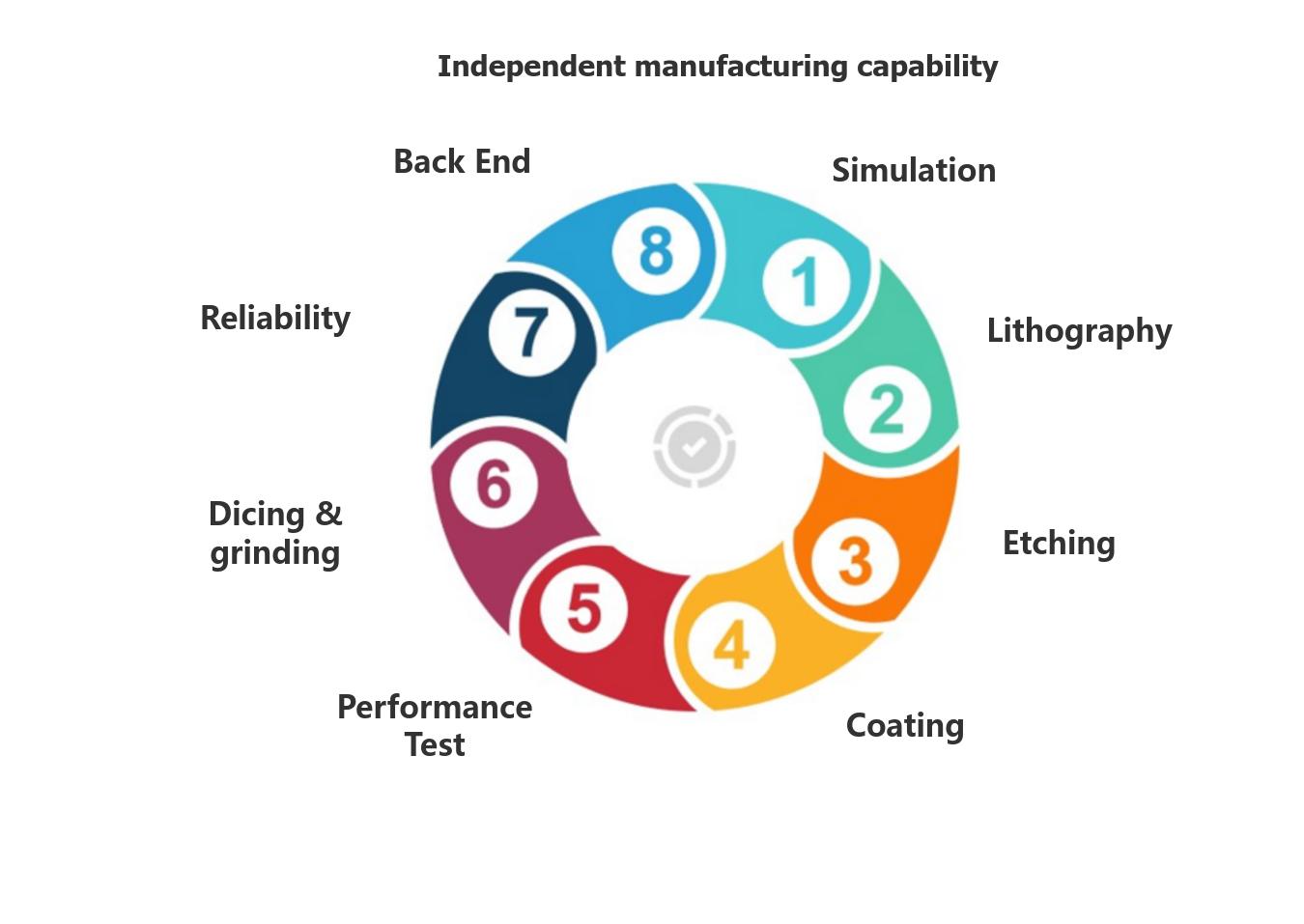
In-house Independent Manufacturing Capability
- Customer demand communication and technical team evaluation
- Microlens design and optical simulation by design software
- Self-made Mask Fabrication
- Photolithography exposure process development
- Microlens process with photolithography patterns, grayscale exposure and other technologies to achieve microlens curvature
- Structure and performance testing with morphology testing, optical performance testing and Perform environmental and durability tests
- Process improvement and feedback improvement according to test result and industry standard
- Batch production capabilities with quality management system and quality tracking
- Finished product inspection and shipment
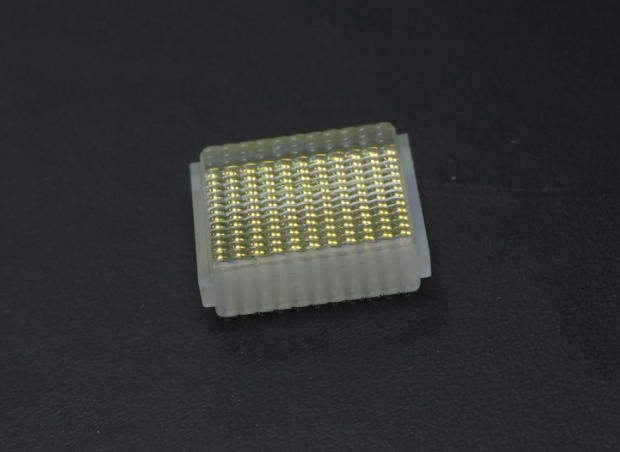
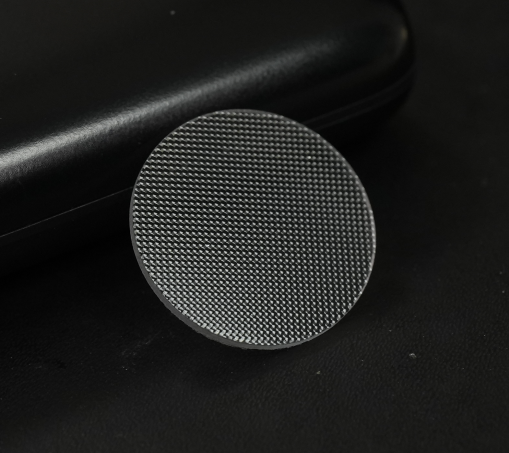
Lithography Etched Micro-Optics Series
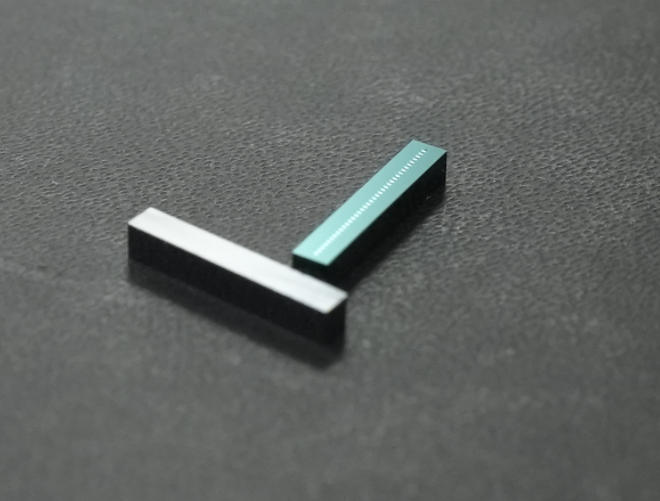
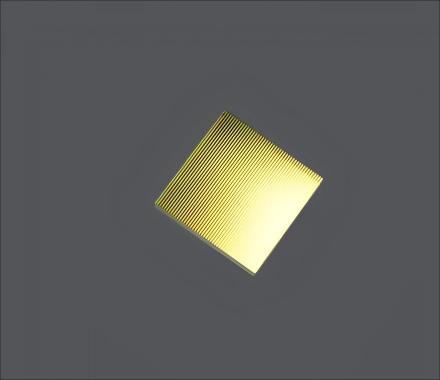
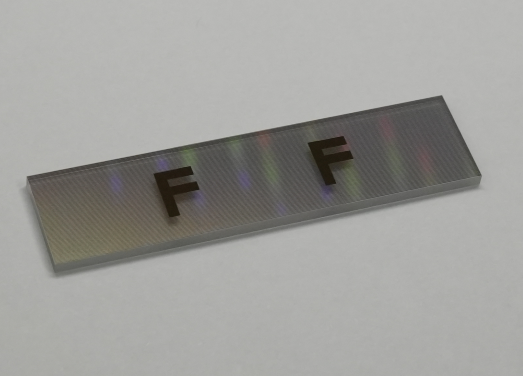
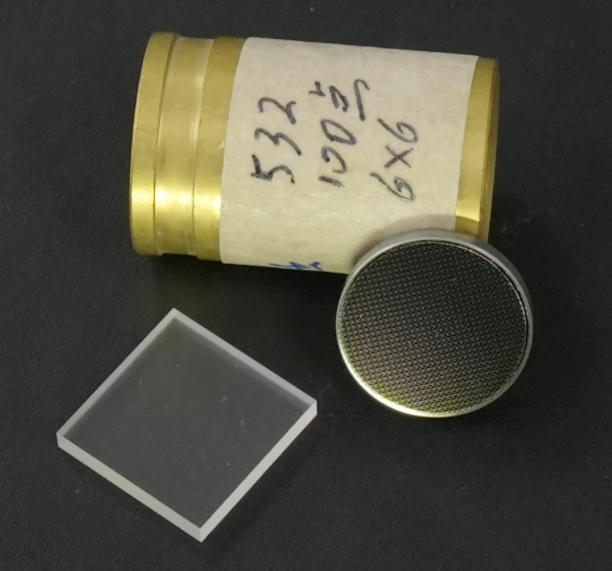
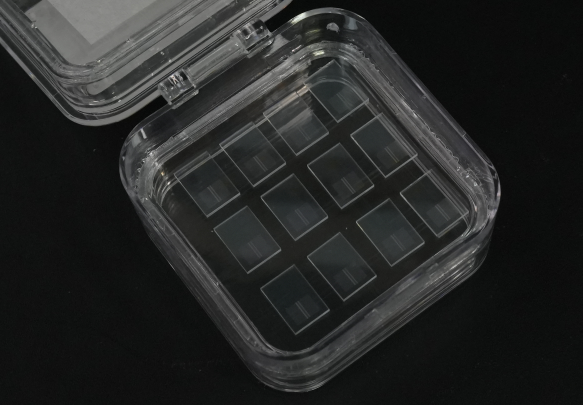
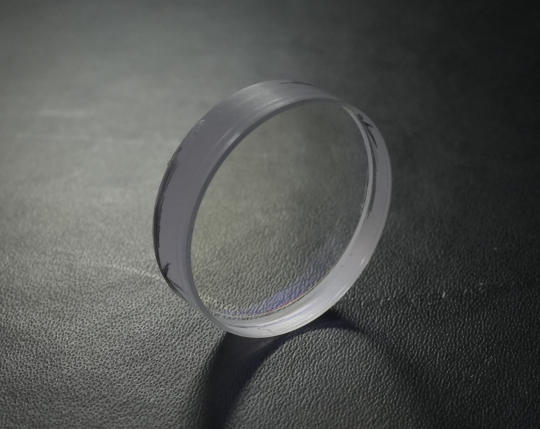
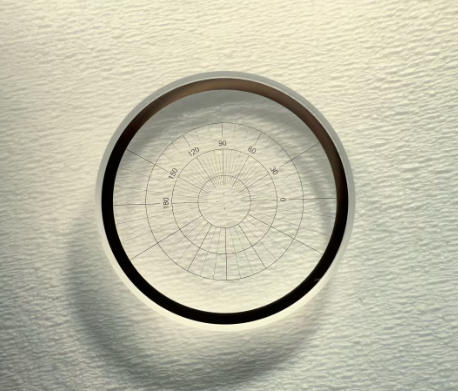
Strong compatibility with system integration
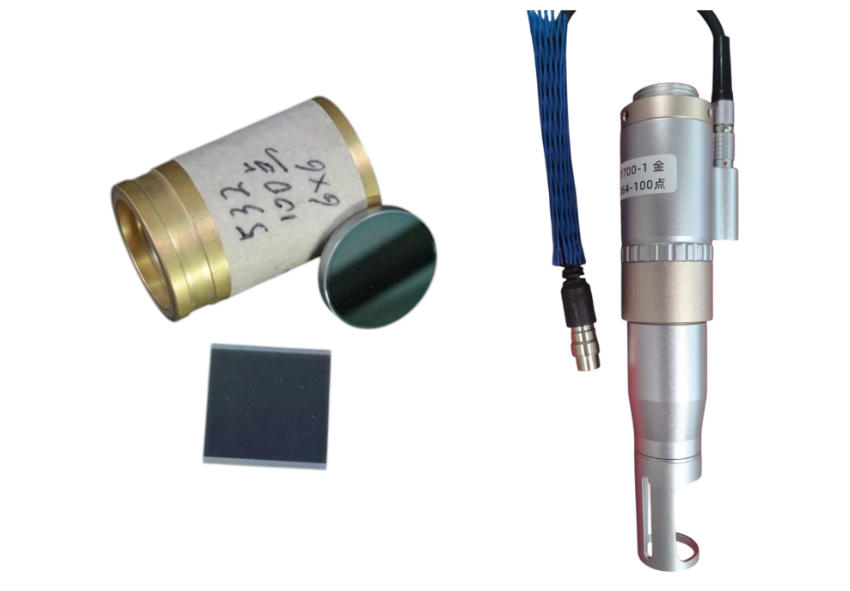
We ensure micro-optical components can be efficiently integrated into various module platforms, including precise dimension and alignment matching, multiple packaging methods, and auxiliary structures such as frames, positioning slots, and alignment marks. We also support customer full-system design evaluation and collaboration.
Why Trust Us for Your Micro Optics Fabrication Needs?
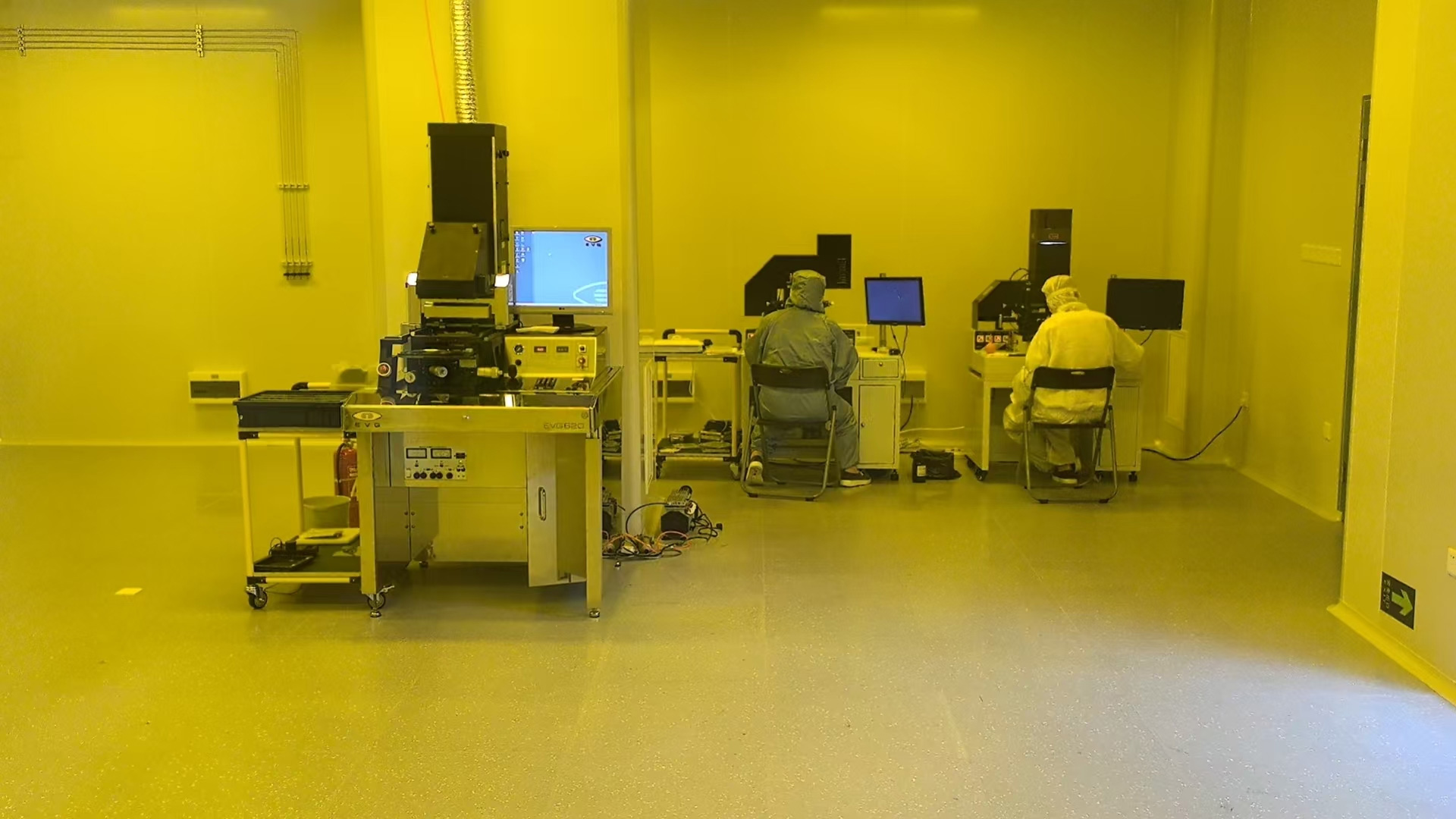
Leveraging advanced photolithography technology
We achieve high-precision pattern transfer and position alignment of microstructure arrays, with pattern consistency reaching sub-micron levels, ensuring superior performance of devices in high-end laser machining, 3D sensing, and precision imaging systems.
Full-process vertical manufacturing capability
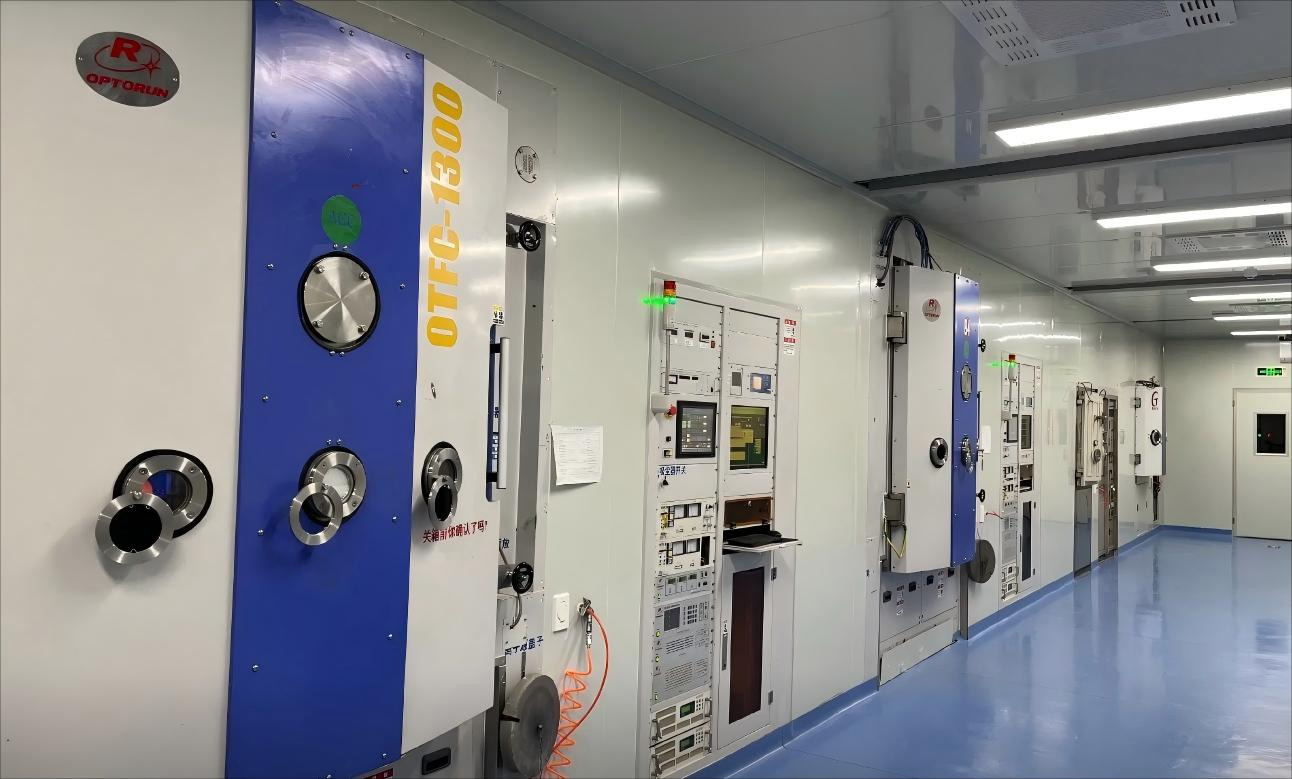
From optical design, mask fabrication, photolithography, etching, to inspection and packaging, all key processes are completed in-house, ensuring efficient coordination and controllable quality.
Broad spectral adaptability
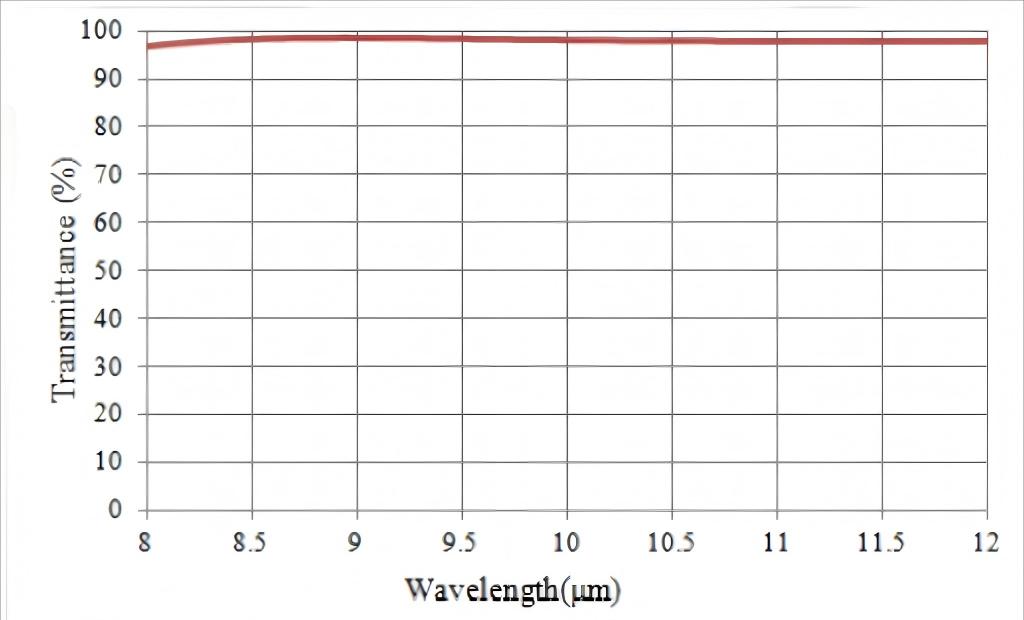
Our products cover wavelengths from ultraviolet 200 nm to infrared 20 μm, meeting the needs of imaging, detection, laser, and illumination systems across different spectral bands.
Material diversity
We support microstructure processing on various substrates. Depending on the application, customers can choose from fused silica, Corning glass, silicon, float glass, metal, optical plastics, and other materials, with recommendations for the most suitable material solutions.
Exemplary Sales & Support Services from Coligh

Small-batch rapid delivery
We support rapid sample development, completing solution evaluation within 2 days, providing design simulation verification within 7 days, and producing customized micro-optical structures within 21 days—ideal for research, innovative applications, or initial project validation and sample development.
Experienced technical support team
Our R&D team includes three scientists from the Chinese Academy of Sciences with deep expertise in micro-optical design, photolithography processes, and system applications. Equipped with 5 photolithography machines and 15 etching machines, these scientists provide optical design advice, customized evaluations, and process assessments to help clients accelerate product implementation.
Stable export and international service experience
With years of export experience, we have established long-term cooperation with research institutes, high-tech enterprises, and system integrators across multiple countries and regions. Our clients cover major optical and semiconductor markets in Europe, America, Japan, South Korea, and Southeast Asia.
Etched-Production Of Fused Silica And Silicon Optical Elements
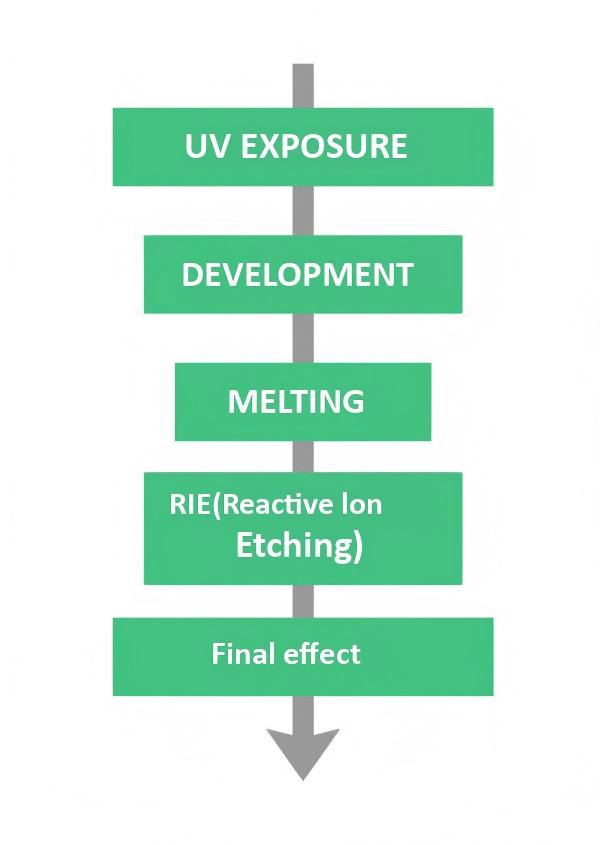





UV EXPOSURE
Use a photomask to transfer the designed pattern to a silicon wafer or fused quartz wafer coated with photoresist by ultraviolet exposure.
DEVELOPMENT
After ultraviolet exposure, the unexposed or exposed photoresist is removed by a development process to expose the area corresponding to the pattern on the wafer surface.
MELTING
Heat the wafer to form a smooth lens surface or other microstructure shape on some structures.
RIE (Reactive Ion Etching)
Through the reactive ion etching process, the photoresist pattern is accurately transferred to the surface of the substrate wafer to form a microstructure. This process can achieve complex shapes such as aspheric lenses by adjusting the etching rate.
Final effect
The above process obtains a high-precision aspheric microlens or microstructure array with fine and stable structural morphology.
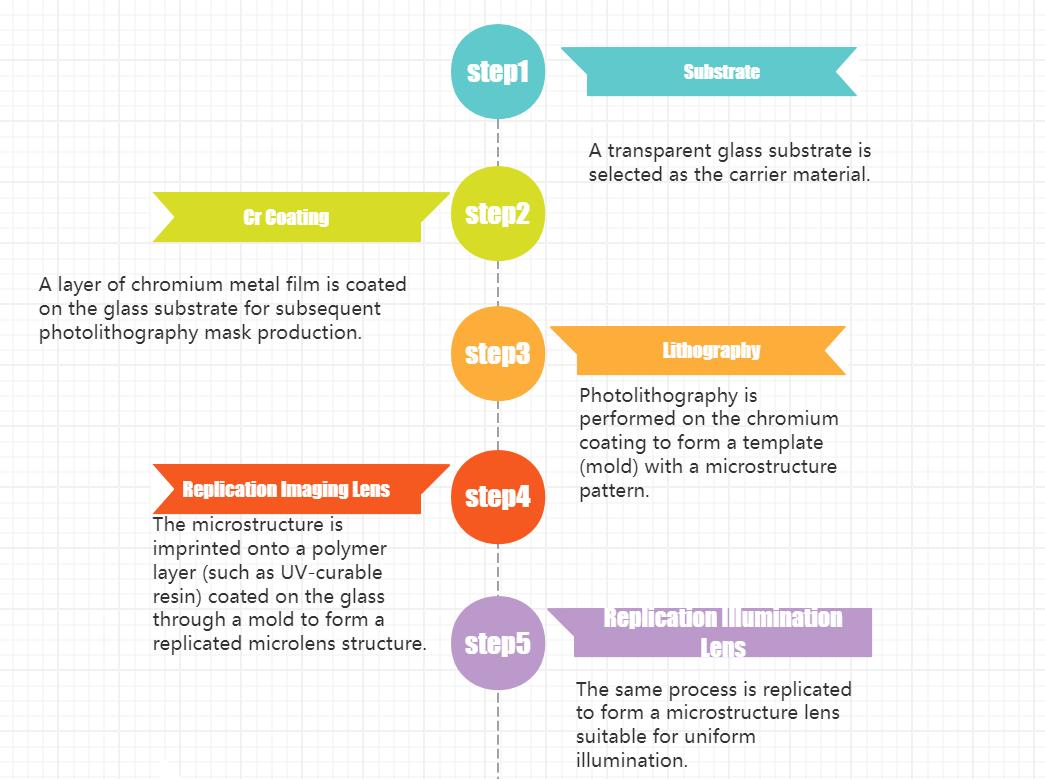
Imprint-Production Of Polymer-on-glass lens
-
Substrate
A transparent glass substrate is selected as the carrier material.
-
Cr Coating
A layer of chromium metal film is coated on the glass substrate for subsequent photolithography mask production.
-
Lithography
Photolithography is performed on the chromium coating to form a template (mold) with a microstructure pattern.
-
Replication Imaging Lens
The microstructure is imprinted onto a polymer layer (such as UV-curable resin) coated on the glass through a mold to form a replicated microlens structure.
-
Replication Illumination Lens
The same process is replicated to form a microstructure lens suitable for uniform illumination.
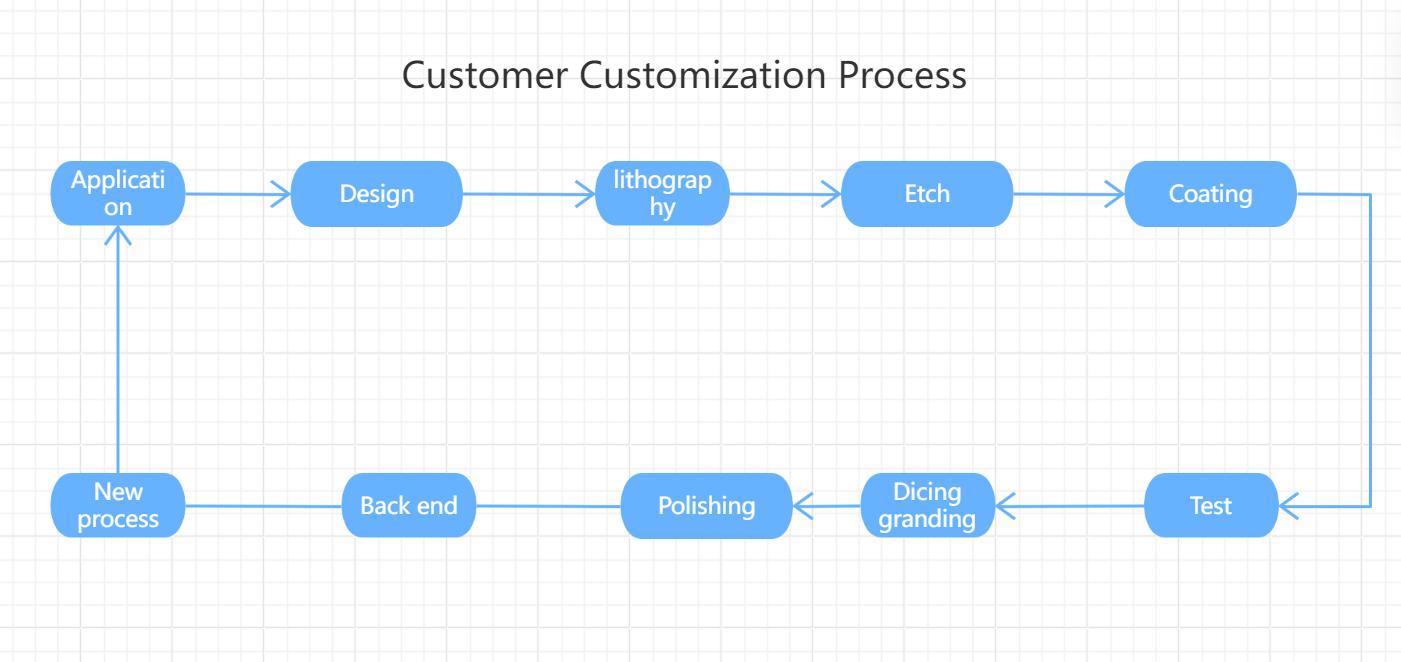
Customer customization process
- Customer demand communication and confirmation
- Design solution development
- Photolithography mask production
- Photolithography trial production
- Microlens structure detection and performance testing
- Solution optimization and confirmation
- Mass production preparation
- Mass production and quality control
- Packaging and delivery
Micro Optics Elements Applications
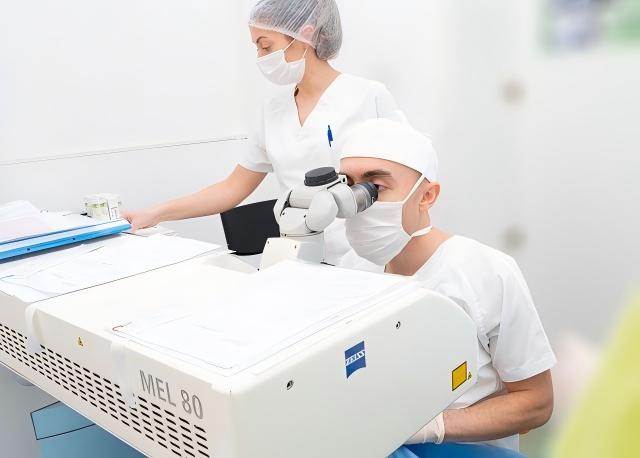
High-end optical system and product design
In the design and prototyping process, engineers use masks to photolithography micron or nanometer optical structures and circuit patterns onto various substrates. Phase elements and microlens arrays are used to integrate micro-optical components through photolithography or electronic etching technology.
Laser processing and display
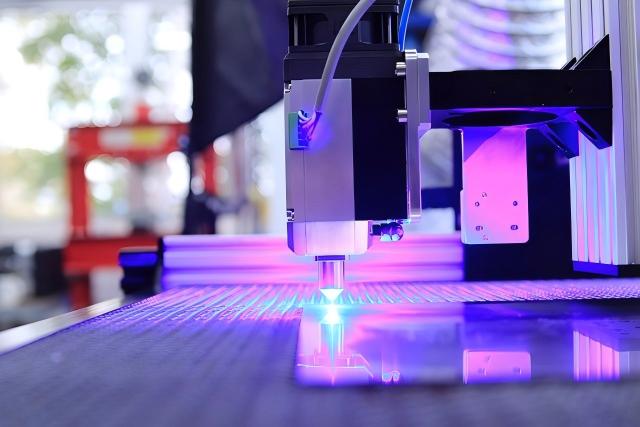
Products such as homogenizing mirrors, diffraction beam splitting gratings, precision gratings, phase elements, etc. play an important role in the laser processing process. They can accurately convert the uneven light beam emitted by the light source into a uniform spot or divide a laser beam into multiple laser beams, and perform beam shaping and wavefront control more flexibly.
Performance test calibration
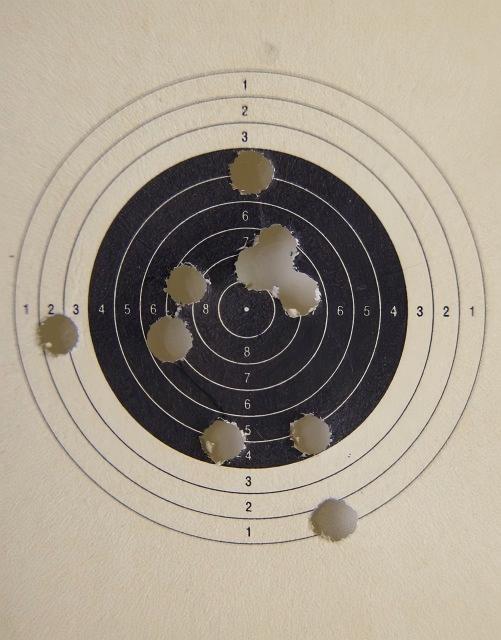
In the process of optical product manufacturing and quality control, resolution plates can be used to evaluate the clarity of the imaging system and whether distortion occurs. In addition, sight plates and graticules are usually used to aim, position, and calibrate telescopes, microscopes, or measuring equipment.