Strong R&D and Engineering Team
Overview of the R&D and Engineering Team
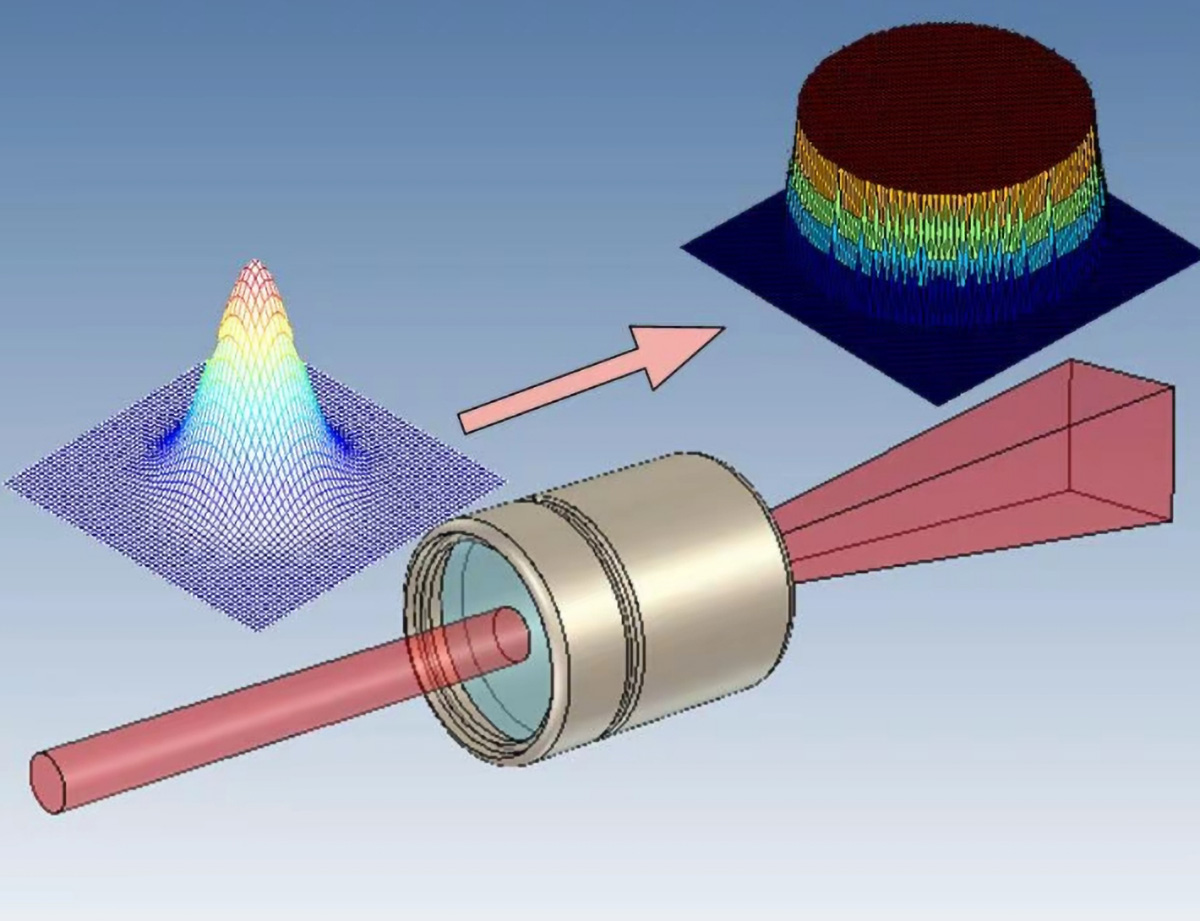
Our R&D and design work is primarily carried out by three scientists from the Chinese Academy of Sciences, who possess extensive experience and deep expertise in microarray lenses, DOEs, optical filters, and infrared components. The team specializes in end-to-end development, from optical design and material selection to manufacturing processes, enabling high-precision beam shaping, uniform spot distribution, precise diffraction patterns, and high-performance filter control.
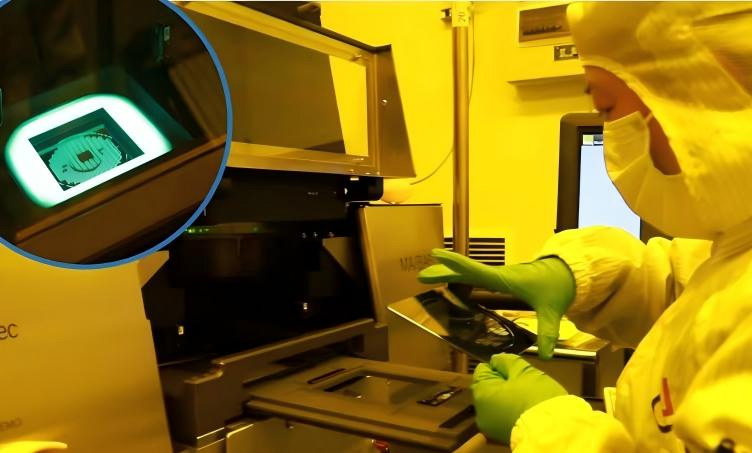
Our advanced lithography and micro/nanofabrication technologies.
- Ultraviolet (UV) and deep ultraviolet (DUV) mask-based lithography: Using a photomask to transfer pre-designed microstructure patterns onto photoresist.
- Mask-less laser gray-scale direct-write lithography: Directly exposing photoresist point-by-point using a laser beam, achieving gray-scale exposure by adjusting laser intensity and exposure time.
- Nanoimprint lithography: Using a mold to imprint micro/nano structures onto optical substrates, forming permanent microstructures through thermal pressing.
The Material We Select
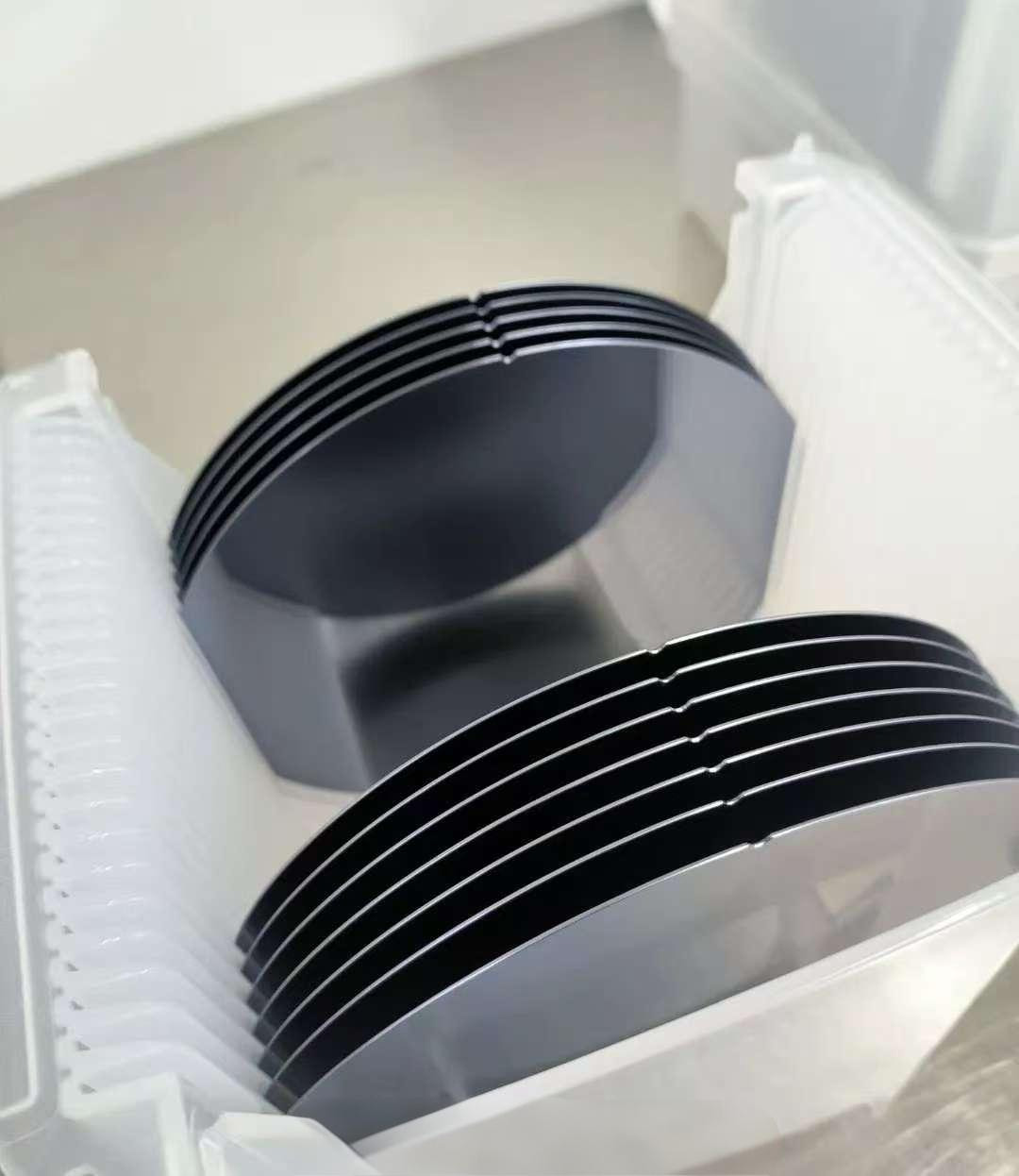
- Lithography Micro-Lens Arrays/DOE: Fused Quartz (UV-NIR High Transmission): High transmission from 200-2500 nm, high laser damage threshold, low thermal expansion coefficient, and excellent uniformity
- Silicon: Refractive index approximately 3.4, transmission wavelength range 1.2-8 μm, suitable for infrared DOE, MLA, and medical aesthetics laser systems
- Other high-quality, high-refractive-index optical glasses: BK7, K9 suitable for processing within the 350-2000 nm wavelength range
Or low-cost, high-volume molded PMMA: PC, PMMA
The software we use
- ZEMAX OpticStudio: Performs ray tracing, focusing characteristics analysis, imaging quality analysis, aberration correction, tolerance analysis, etc., for micro-lens arrays, traditional lenses, and optical systems.
- Code V: Specializes in the design and optimization of complex optical systems, particularly in high-precision imaging systems.
- LightTools: Focuses on lighting system design and non-imaging optical analysis, capable of performing micro-lens array beam homogenization, brightness analysis, as well as laser beam shaping, headlight, and backlight module analysis for lighting systems.
- MATLAB: Primarily used for calculating the diffraction efficiency of diffractive optical elements (DOEs), phase distribution optimization, one-dimensional and two-dimensional diffraction grating simulations, and optical signal processing.
- Virtual Lab Fusion Software: Primarily used for beam shaping, diffraction efficiency calculations, diffraction pattern simulation, and holographic element design.
- Essential Macleod: Determines the type of coating layer (anti-reflective, reflective, bandpass, longpass, shortpass, etc.) based on the function of the filter or optical component. Optimizes coating layers based on the thickness and refractive index of each layer. Simulates the effects of thickness deviations, refractive index errors, and surface irregularities on optical performance using wavefront analysis, polarization effects, and thermal effects.
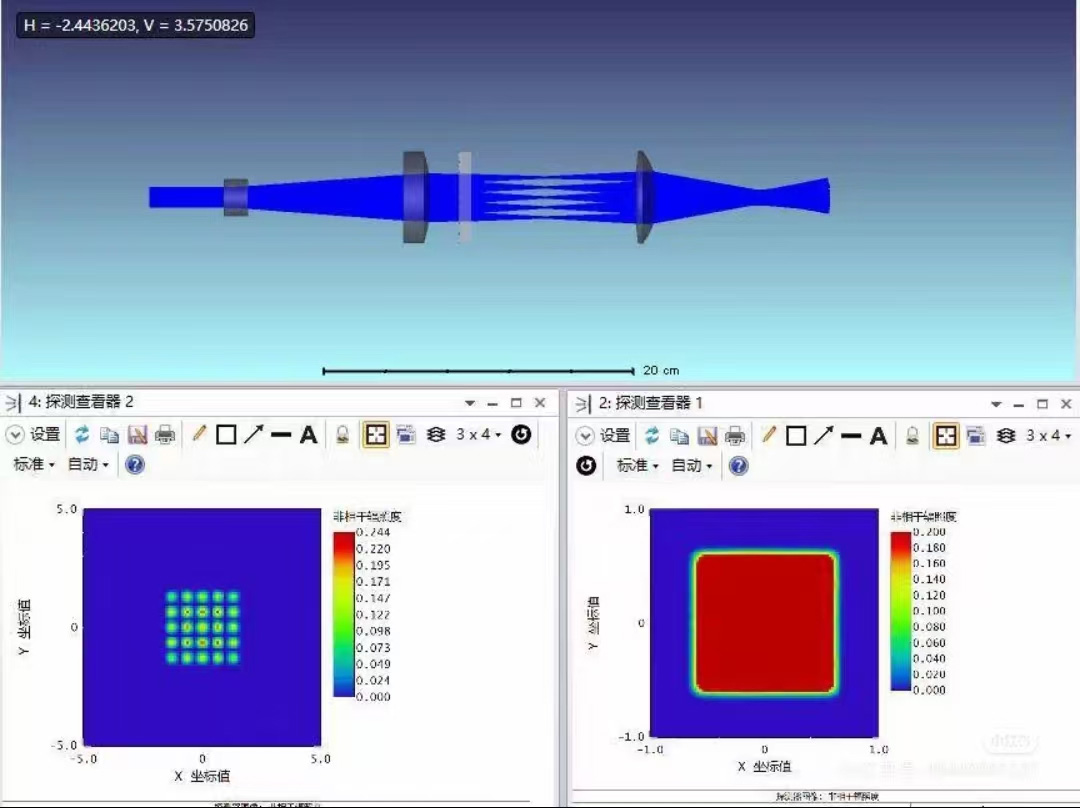
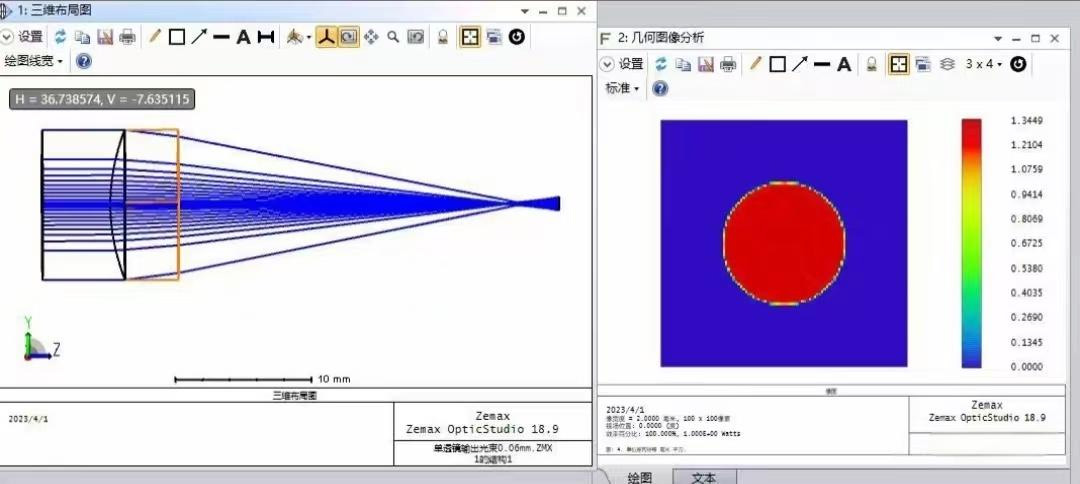
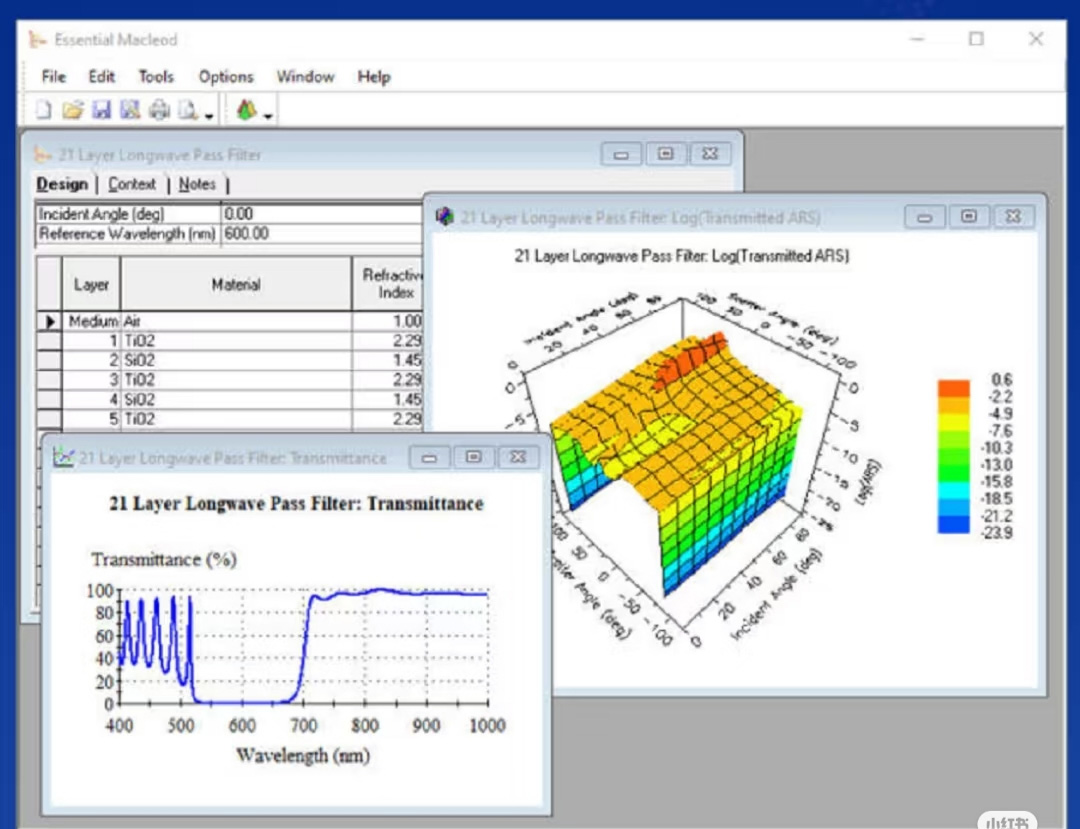
Our Research and Development on MLA&DOE&Optical Filter & Infrared Components
| R&D Component Type | Design Considerations | Materials | Coating Type / Manufacturing Process |
|---|---|---|---|
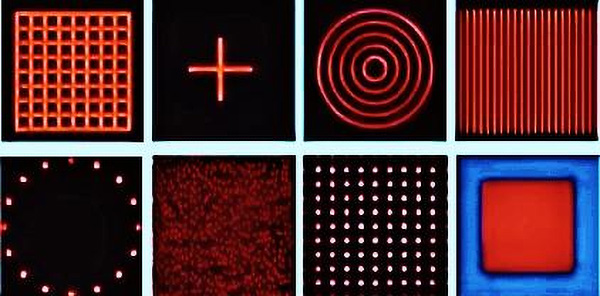
| Microlens Array (MLA) | Focal length, radius of curvature, aperture size, fill factor, arrangement; array patterns: rectangular, honeycomb, circular, square, freeform; regular, irregular, or random arrays; spot uniformity, spot size, spot pitch, diffraction efficiency | Fused silica, silicon, high refractive index optical glass (BK7, K9), PMMA, PC | Lithography: UV/DUV mask-based lithography, maskless laser grayscale direct-write lithography, nanoimprint lithography |
| Diffractive Optical Element (DOE) | Beam shaping pattern (point array, ring, rectangular, square, freeform); phase map design, phase depth, phase levels, diffraction orders; spot uniformity, shape, position accuracy | Fused silica, silicon, optical glass, PMMA | Same lithography processes as MLA; can combine with micro-/nano-fabrication |
| Optical Filter | Center wavelength, FWHM, transmittance, cutoff depth, angle of incidence sensitivity | Substrate: glass, fused silica; film materials: Ta₂O₅, Nb₂O₅, TiO₂, SiO₂, MgF₂, Al₂O₃ | AR, reflective, transmissive; Physical vapor deposition (PVD, e.g., evaporation, sputtering), ion beam assisted deposition |
| Infrared Optical Component | Transmittance, thermal conductivity, hardness, target wavelength range, refractive index, aberration (for lenses), temperature resistance, mechanical strength | ZnSe, ZnS, sapphire, silicon, CaF₂, BaF₂, chalcogenide glass | Single-band AR, broadband/multi-band AR, high-reflection coating, bandpass, longpass coatings, DLC coatings |
Comprehensive Testing and Certification of Our R&D Outputs
| Types | Performance Verification / Testing Methods |
|---|---|
| Microlens Array (MLA) | Interferometry, profilometry, MTF testing; verify focal length consistency, array uniformity, spot uniformity, fill factor, etc. |
| Diffractive Optical Element (DOE) | Diffraction efficiency measurement, Fourier optics testing, beam analyzer, image processing software; calculate diffraction efficiency and spot uniformity |
| Optical FilterInfrared Optical Component | Transmittance and blocking depth measurement, optical density testing, laser damage resistance testing, environmental stability testing |
| Infrared Optical Component | Transmittance testing, infrared spectroscopy, laser damage threshold testing, thermal conductivity and temperature resistance testing, mechanical strength testing, environmental stability verification |