Micro-Nano Fabrication Capabilities
High-resolution and high-precision masks
We use soda-lime substrates and quartz glass substrates to manufacture high-precision masks. The thermal properties of soda-lime substrates are around 710°C, while those of quartz glass substrates are around 1730°C. Under the high exposure of a lithography machine, these two materials can ensure the accuracy of the pattern. Additionally, at a thickness of 2.3 mm, they maintain a transmittance of over 90% at λ = 400 nm and λ = 200 nm, respectively. High transmittance ensures efficient exposure. Furthermore, we use positive photoresist, ensuring that the patterns after development are identical to those on the mask plate, thereby maintaining exceptional precision even at extremely small scales.

The photolithography pattern fabrication process we employ
In terms of pattern fabrication, we primarily employ two processes:
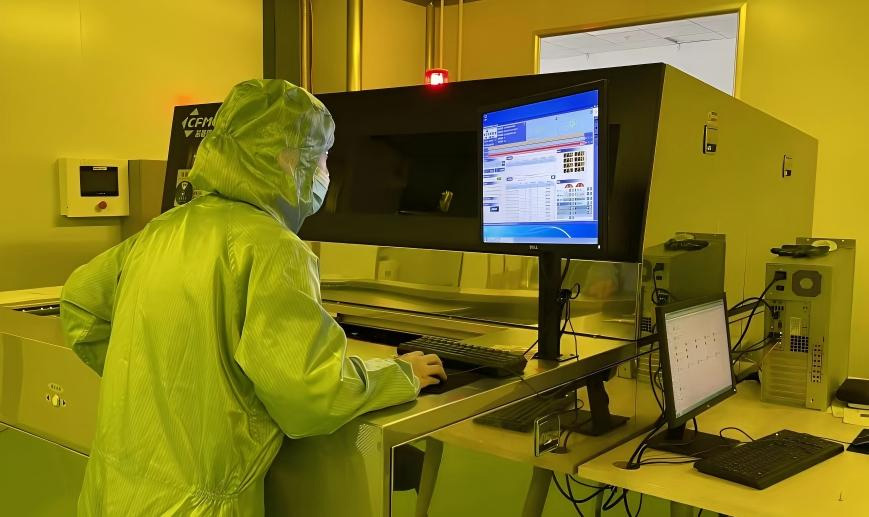
- Mask-based UV photolithography UV photolithography achieves precision at the micron or even nanometer level, typically used in semiconductor manufacturing, MEMS, micro-lens arrays, and diffractive optical elements. This process enables us to achieve large-scale production and supply capabilities.
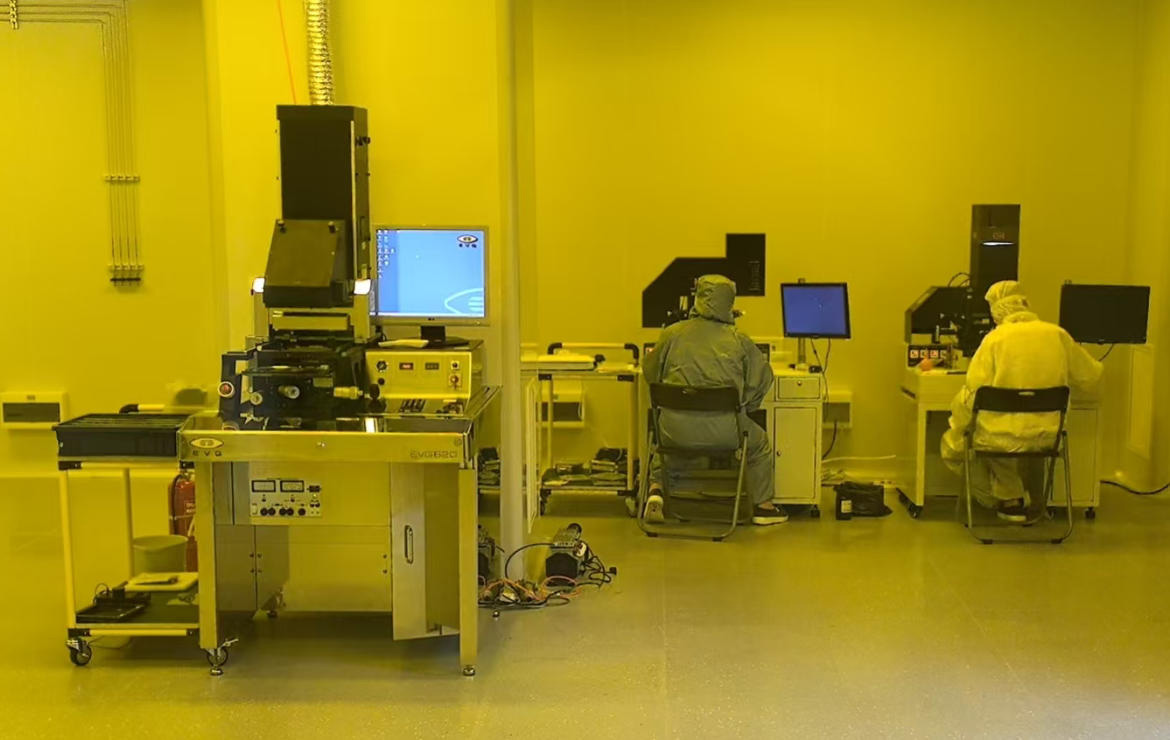
- Mask-less laser direct writing multi-photon gray-scale lithography We have procured laser direct writing equipment. Laser direct writing does not require mask fabrication; instead, it uses high-energy laser beams to control position and light intensity, directly exposing the substrate to create high-resolution three-dimensional structures. This enables us to offer customers small-batch, customized production.
Etching Process
We currently have over 60 etching machines, utilizing dry etching to fabricate high-precision micron/nanometer-scale microarray lenses and diffractive optical elements through photolithography. We employ deep reactive ion etching (DRIE) technology, ensuring consistent microstructural parameters such as curvature, spacing, depth, height, width, and period. This enables the production of large-area smooth curved surfaces with low scattering in microarray lenses and precise step/period structures with high diffraction efficiency in diffractive optical elements.
Imprinting
We can use photolithography to mass-produce micro- and nano-structures, and we also have the capability to perform imprinting, which involves adding polymers or glass to the mold of the master mold during UV curing. Due to its low cost, imprinting is particularly suitable for cost-sensitive consumer electronics products.
Substrate Materials
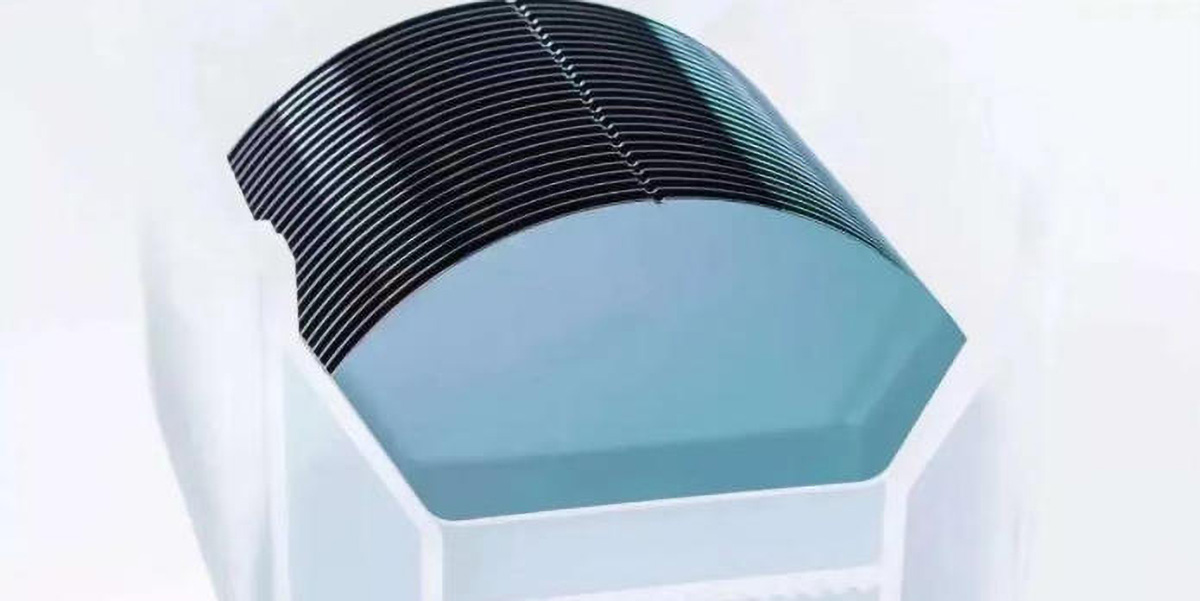
Fused silica exhibits extremely high transmittance in the UV-NIR wavelength range, has a very low thermal expansion coefficient, maintains stable performance under temperature changes, and, due to its high hardness, is highly wear-resistant and capable of withstanding high-power laser damage thresholds. We use fused silica to fabricate microarray lenses and DOEs spanning the UV to near-infrared spectrum, which are widely applied in semiconductor lithography, high-power laser systems, medical equipment, and research and development devices.
Silicon has high transmittance between 1.2 μm and 8 μm, with a refractive index of approximately 3.4, making it particularly suitable for high NA applications. Additionally, silicon has excellent thermal conductivity, enabling rapid heat dissipation. We use silicon to manufacture microarray lenses and
PMMA is produced through hot pressing. We currently do not have a direct hot pressing process, but if there is a bulk order, this process is within our capabilities.
Coating 200 nm–20 μm
In China, we are one of the top three manufacturers capable of depositing anti-reflective coatings, high-reflective coatings, and protective coatings on microarray lenses and DOEs within the 200nm-20μm range. Reflectance and transmittance can be customized according to customer requirements, with typical transmittance in the target wavelength band ≥90%. For more information on coating capabilities, please refer to our Coating Capabilities section.
Design and Simulation Capabilities
We have our own R&D team, with three core technical personnel being scientists from the Chinese Academy of Sciences. The R&D team can perform optical design based on the customer’s application and requirements. After the optical design is completed, it is validated based on actual production, followed by adjustments. After several rounds of testing and validation, the customer’s design requirements and product production are finalized.
Our commonly used design software includes:
- Zemax
- LightTool
- Code V
- VirtualLab Fusion
and other necessary software required for design. For more information, please refer to the R&D Design section.
Morphological Characterization and Testing:
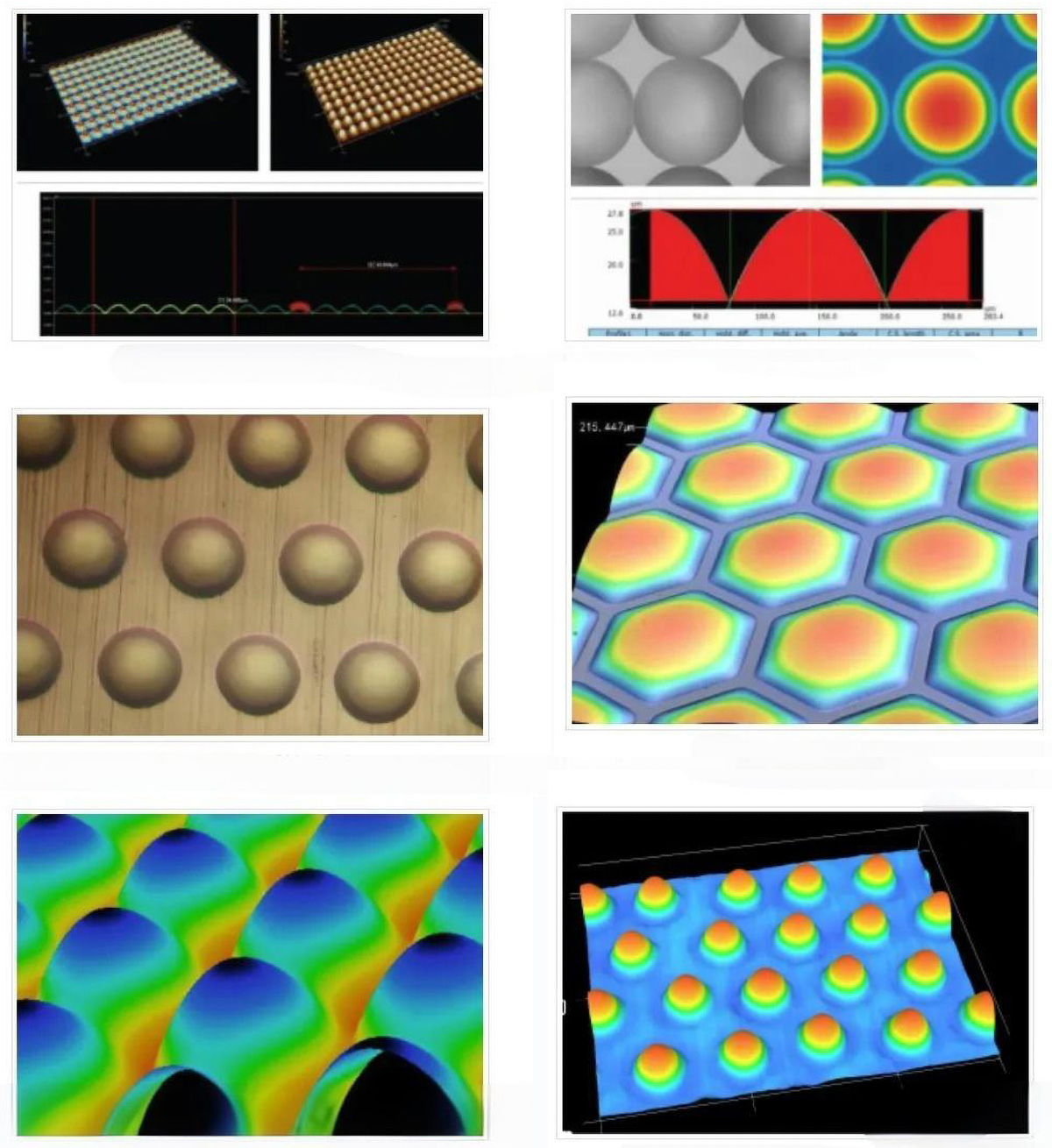
Our company is equipped with interferometers, step profilometers, and contour profilometers, among other devices.
We can provide the following testing services to external clients:
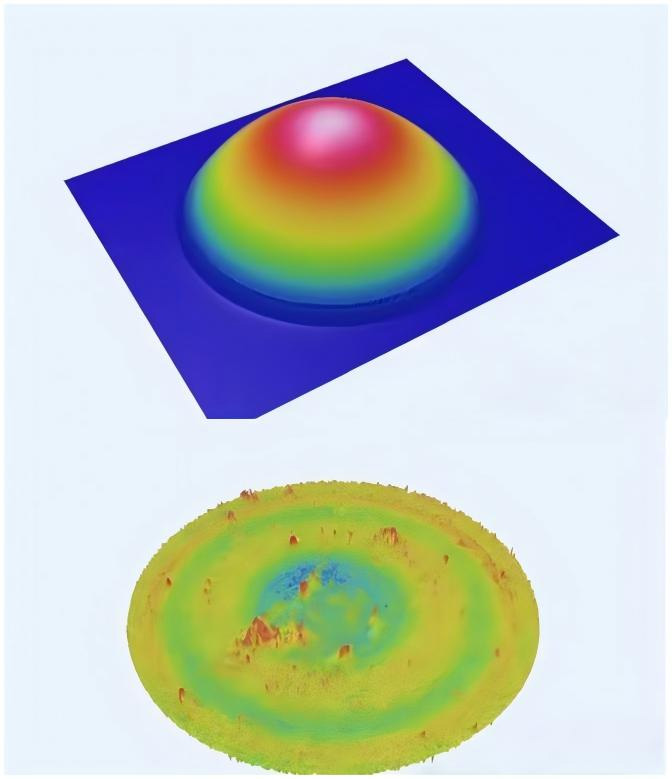
Step profilometers and contour profilometers can be used to verify the surface morphology and structural testing of microarray lenses and DOEs, such as one-dimensional step contour testing and three-dimensional contour testing: Test items include micro-lens height, step height of DOEs, relief depth, surface roughness, and array uniformity. The one-dimensional step profiler has a measurement range of 5 μm to 2 mm and a measurement accuracy of 10 nm. The three-dimensional profilometer has a measurement range of 10 μm to 20 mm and a measurement accuracy of 20 nm.
An interferometer can perform spherical surface profile testing and aspherical surface profile testing, such as measuring the curvature radius, surface profile deviation, and wavefront aberration of micro-lenses with a diameter ≤ 100 mm, with a measurement accuracy of ≥ λ/8000.
A spectrophotometer measures optical transmittance, reflectance, and diffraction efficiency from the ultraviolet to the near-infrared spectrum.