1064nm Laser Diffractive Diffuser for Medical & Aesthetic Nd:YAG Systems
Coligh manufactures and customizes 1064nm laser diffusers for Nd:YAG medical and aesthetic laser systems. Whether for high-power lasers or medium-to-low frequency power lasers, we deliver reliable performance across the board. Contact us today to discuss your custom requirements.
1064nm Laser Diffuser for Medical & Aesthetic Nd:YAG Systems Discription
1064nm Laser Diffractive Diffuser is a fused silica engineered diffuser designed for medical and aesthetic Nd:YAG systems. It shapes and optimizes high-energy 1064nm laser beams, transforming the original Gaussian or non-uniform laser spot into a flat-top beam with uniform energy distribution and well-defined edges.
Coligh is the manufacturer of 1064nm laser diffusers. We customize diffractive diffusers and other aesthetic laser components for the medical and aesthetic laser industry.
This product is specifically designed for high-damage-threshold optics. These diffusers are used in skin treatments such as pigmentation removal, tattoo removal, and skin rejuvenation. As a skin rejuvenation beam shaper, it enables a safer and more consistent treatment experience by precisely controlling the energy density of the laser spot.
1064nm Laser Diffuser for Medical & Aesthetic Nd:YAG Systems Product Features
The 1064nm diffractive laser diffuser features the following product characteristics:
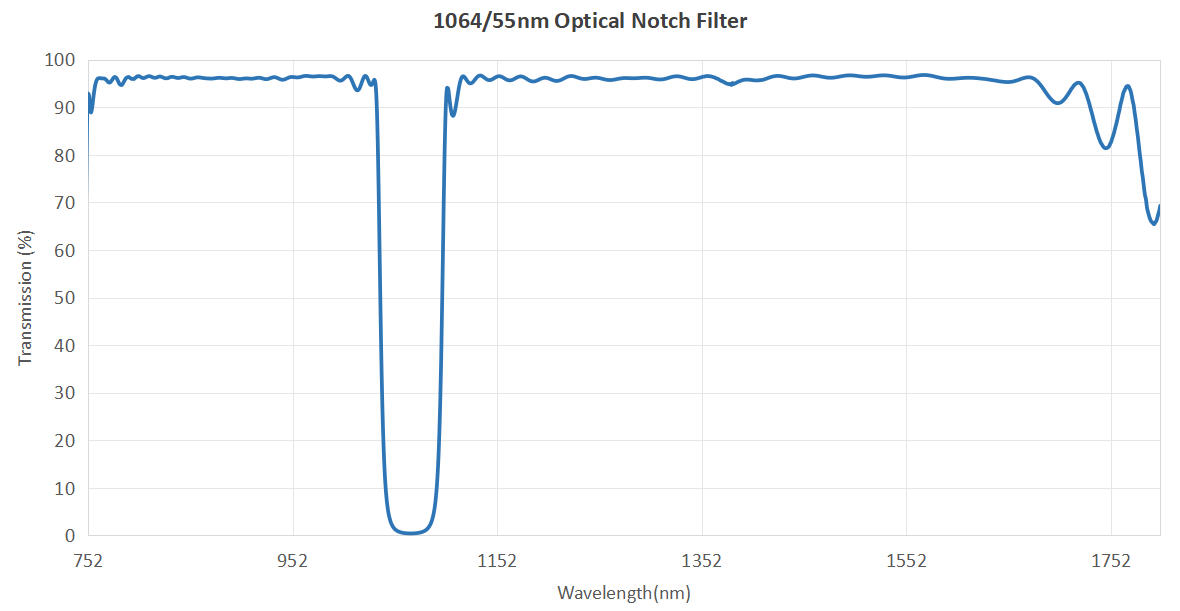
- We specifically designed this product for the 1064nm laser wavelength. Using imported fused silica for etching and our proprietary coating design and technology, it achieves >95% transmittance at the 1064nm band commonly used in Nd:YAG lasers, minimizing energy loss.
- We use imported fused silica as the substrate, combined with our custom high-damage-threshold 1064nm anti-reflective coating. This enables the diffuser to withstand long-term exposure to high peak power and high repetition rate lasers commonly found in medical aesthetic equipment, delivering exceptional laser damage resistance.
- We employ high-precision micro-nano optical structures to convert the laser energy from a Gaussian distribution to a flat-top distribution. This achieves extremely high uniformity with no central hot spot and no edge feathering.
- We currently support customization of different spot sizes and divergence angles based on customer optical system requirements, with full support for spot customization.
Why Choose Coligh For Your Diffractive Optical Element Diffusers Project?
- We have a complete, vertically integrated production chain encompassing optical design, micro-nano processing, precision replication, and coating, ensuring stable delivery times and consistent quality control.
- We possess our own photolithography and etching processing platforms, capable of achieving structural precision at the micron or even nanometer level, guaranteeing the uniformity and consistency of the diffusers.
- We are equipped with high-precision spectrophotometers and wavefront analyzers. Every batch undergoes 100% optical performance inspection to ensure that the homogenizer meets the required standards for uniformity, transmittance, and divergence angle consistency.
- We have a team of experienced optical engineers who can collaborate with customers on joint R&D. We offer rapid prototyping services with a 4–6 week turnaround time based on different technical specifications, helping to shorten the overall system development cycle.
Coligh Diffractive Optical Element Diffusers Custom Capability
| Laser Mode | Single-mode laser and multi-mode laser |
|---|---|
| Operating Wavelength | 200-2000nm |
| Diffusion Angle | Custom (1D, 2D, asymmetric) |
| Output Beam Shape | Circular, Square, Line, Elliptical, or Custom patterns |
| Homogenizing Efficiency | 65%-85% or custom |
| Uniformity | ±5% to ±15% (typical) or custom |
| Optical Efficiency | 80% – 95% or custom |
| Incident Angle | Designed for defined F-number ranges |
| Polarization Dependence | Polarization-independent, Defined polarization |
| Laser Power | mW to kW |
| Substrate Materials | Fused Silica, Optical glass, Polymer |
| Thin Film Coating | AR Protective Coating @200-30000nm |
1064nm Beam Homogenizer For Nd: YAg Application
- Laser Pigment Removal
In traditional Nd:YAG laser pigment removal, the original laser spot typically exhibits a Gaussian distribution (high energy at the center, low energy at the edges). If the energy is set too low, the central area achieves acceptable results while the edges receive insufficient energy, leading to incomplete treatment. If the energy is set too high, the central area is highly susceptible to thermal damage, blisters, and even hyperpigmentation due to excessive energy intensity. The 1064nm laser diffuser is integrated into the optical path of the laser handpiece. The laser beam first passes through the diffuser, which shapes it by converting the Gaussian distribution into a flat-top beam, and is then projected onto the pigmented skin area through a focusing lens. Every area of skin covered by the laser spot receives the same energy density. - Laser Skin Rejuvenation / Tightening
Skin rejuvenation typically employs a long-pulse 1064nm mode, utilizing thermal stimulation to induce collagen regeneration. If energy distribution is uneven, localized areas with excessively high temperature can instantly cause epidermal burns or blisters, while areas with insufficient temperature fail to achieve adequate collagen contraction, resulting in uneven treatment outcomes and even “striped” or “grid-like” treatment marks. The diffuser homogenizes a large spot (e.g., 8mm–10mm round or square) and, in conjunction with scanning mode or a sliding handpiece, ensures that every area receives uniform heat accumulation. The temperature is precisely controlled within the threshold range for stimulating collagen regeneration in the papillary dermis. - Picosecond / Q-Switched Laser Systems
Picosecond and Q-switched lasers are characterized by extremely short pulse widths (nanosecond/picosecond level) and extremely high peak power. Under such extreme conditions, conventional optical components are highly susceptible to optical damage (coating ablation, substrate cracking) due to excessive local energy density, and spot non-uniformity is amplified, leading to significant fluctuations in treatment outcomes. A diffuser featuring a high-damage-threshold fused silica substrate and a specialized coating is placed at the laser output. Under picosecond/Q-switched ultra-short pulses, the diffuser remains stable, shaping the beam into a uniform flat-top spot without sustaining damage or introducing nonlinear effects.