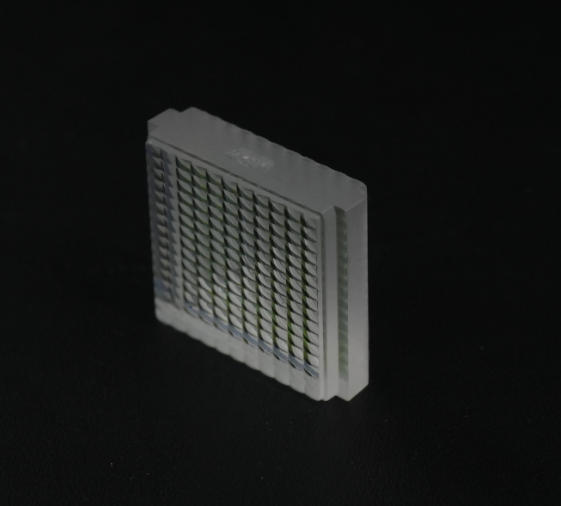
Fused Silica Hexagonal Microlens Arrays
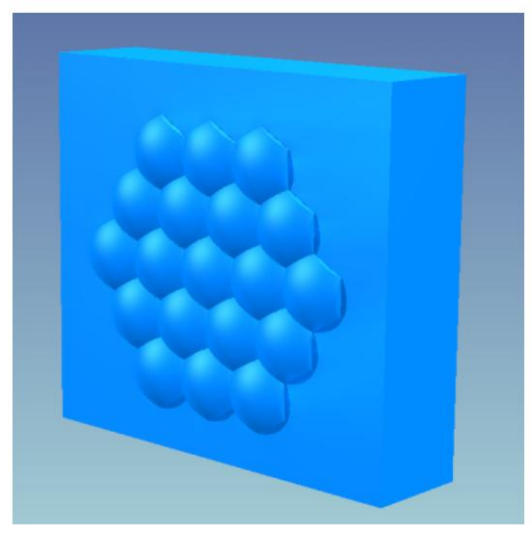
Coligh uses advanced photolithography technology to produce Fused Silica Hexagonal Microlens Arrays, which are microstructure arrays with high uniformity. This microlens array is made from high-purity fused silica, and the hexagonal structure increases the optical fill factor.
- Photolithography technology fabticating
- Fused silica as substrate
- Hexagonal microlens units
- Pitch range from 10μm to 1500μm
- Maximum size up to 4-6 inch
Fused Silica Hexagonal Microlens Arrays Key Features
- We use advanced photolithography technology combined with precision etching to achieve micro-nano structure fabrication.
- Fused silica is used as the substrate, offering high temperature resistance, corrosion resistance, and excellent transmission from UV to near-infrared with minimal absorption and scattering.
- We adopt hexagonal microlens units, which provide higher optical energy utilization and more uniform light spot distribution compared to traditional circular lens units due to their high fill factor.
- We offer standard products with a pitch range from 10μm to 1500μm.
- We can support size cutting within 4 inches.
In-house Micro Optic Arrays Manufacturing Optical Design And Manufacturing capability
| Capability | Specification |
|---|---|
| Lens Cell Shapes | Circular, Square, Hexagonal, Freeform |
| Material Options | Fused Silica, Monocrystalline Silicon, Optical Glass, PMMA Polymer, Metal |
| Coating | AR Coating from UV (200 nm) to IR (20 μm) |
| Overall Size Range | 1.5 mm to 4 inch |
| Micro Lens Pitch | 10μm -1500 μm |
| Service Scope | Structural Design, Material Selection, Optical Simulation, Prototyping, Mass Production, System Integration |
Standard Fused Silica Hexagonal Microlens Arrays Series:
| Product No. | Pitch | EFFL. | Dim. | Thick | ROC | N.A. | Wavelength |
|---|---|---|---|---|---|---|---|
| MRLQ(HH)-016 | 15.0μm | 3,00 | Φ25 | 1 | -138,00 | 25,00 | 0.52μm |
| MRLQ(HH)-030 | 30.0μm | 9,00 | 10×10 | 1 | -42,00 | 163,00 | 0.6328μm |
| MRLQ(HH)-050 | 50.0μm | 2,00 | 10×10 | 1 | -914,00 | 125,00 | 0.6328μm |
| MRLQ(HH)-051 | 100.0μm | 5,00 | 10×10 | 1 | -2.285,00 | 1,00 | 0.6328μm |
| MRLQ(HH)-125 | 125.0μm | 55,00 | 10×10 | 1 | -2.442,00 | 114,00 | 1.55μm |
| MRLQ(HH)-125-F3.0.AR1 | 125.0μm | 3,00 | Φ12.7 | 2 | -13.710.365,00 | 205,00 | 0.633μm |
| MRLQ(HH)-127 | 127.0μm | 55,00 | 10×10 | 1 | -2.442,00 | 115,00 | 1.55μm |
| MRLQ(HH)-127-F0.7 | 127.0μm | 7,00 | 10*10 | 1 | -324,00 | 88.028.169,00 | 0.656μm |
| MRLQ(HH)-200 | 200.0μm | 5,00 | 10×10 | 1 | -2.285,00 | 2,00 | 0.6328μm |
| MRLQ(HH)-250 | 250.0μm | 7,00 | 10×10 | 1 | -3.199,00 | 18,00 | 0.6328μm |
| MRLQ(HH)-300 | 300.0μm | 10,00 | 10×10 | 1 | -457,00 | 15,00 | 0.6328μm |
| MRLQ(HH)-500 | 500.0μm | 10,00 | 10×10 | 1 | -457,00 | 25,00 | 0.6328μm |
| MRLQ(HH)-600 | 600.0μm | 25,00 | 10×10 | 1 | -11.425,00 | 12,00 | 0.6328μm |
| MRLQ(HH)-A00 | 1000.0μm | 40,00 | Φ16 | 2 | -17.768,00 | 13,00 | 1.535μm |
| MRLQ(HH)-A00-J3 | 1000μm | 42,00 | Φ16 | 1 | -17.768,00 | 11.904.762,00 | 2.94μm |
| MRLQ(HH)-A00-F70 | 1000.0μm | 70,00 | Φ16 | 2 | -310.942,00 | 7.128.571,00 | 1.535μm |
| MRLQ(HH)-A03.AR1 | 1000.0μm | 100,00 | Φ16 | 2 | -4.566.513,00 | 499,00 | 0.64575μm |
| MRLQ(HH)-A50 | 1500.0μm | 150,00 | 20×20 | 2 | -6.663,00 | 5,00 | 1.535μm |
Unique Technical Design Team
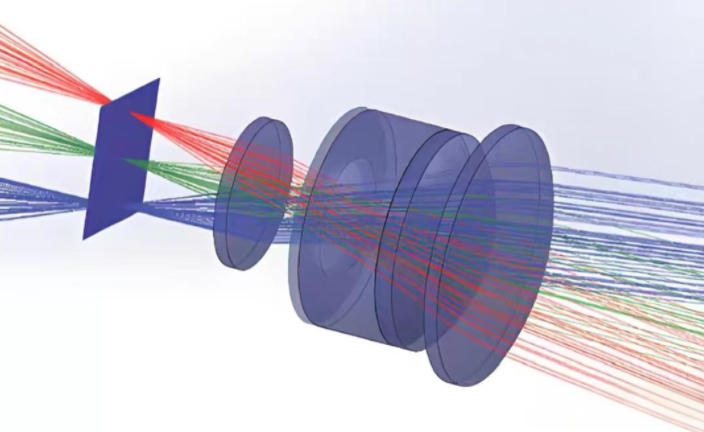
We have three scientists from the Chinese Academy of Sciences, with core expertise in providing one-stop customized services covering optical design, structural design, and performance simulation.
- Relying on advanced photolithography technology and a highly skilled technical team, our engineers can rapidly carry out design simulations of focal length, working wavelength, beam spot size, focusing accuracy, array shape, and dimensions. We are also capable of completing small-batch sample design, fabrication, and delivery within a short time frame.
- With years of experience serving multiple industries such as LiDAR, optical communication, machine vision, and medical equipment, our technical team integrates optics, electronics, mechanics, and other multi-physics disciplines to provide comprehensive system integration R&D and manufacturing solutions.
Fused Silica Hexagonal Microlens Arrays Applications
- Laser Beam Shaping and Collimation In high-power lasers, uneven energy distribution in the laser spot affects processing quality. Fused silica hexagonal microlens arrays can refract, focus, homogenize, and collimate laser beams, achieving more uniform energy distribution and stable processing.
- Optical Communication In optical communication systems, fused silica microlens arrays serve as interfaces to improve fiber coupling efficiency and reduce insertion loss. They are used in high-speed optical modules, WDM modules, and photonic integrated devices between chips and fibers.
- 3D Sensing and Imaging In devices such as 3D facial recognition and AR/VR, microlens arrays enable beam shaping, speckle generation, and optical path homogenization, enhancing image clarity and accuracy, thereby improving 3D perception capabilities.