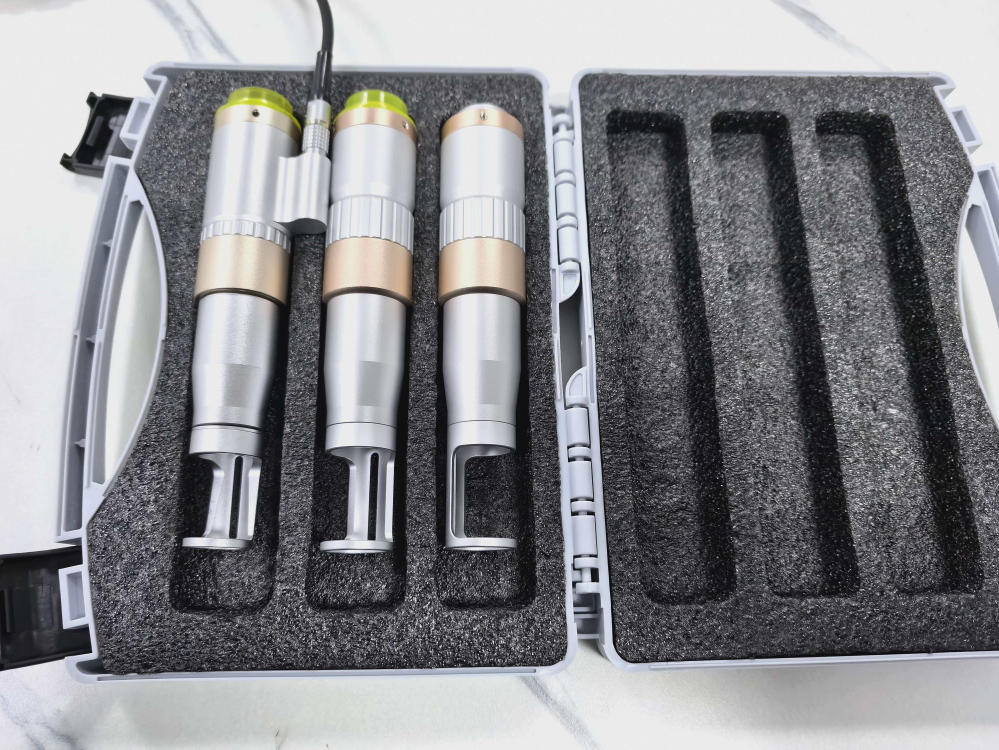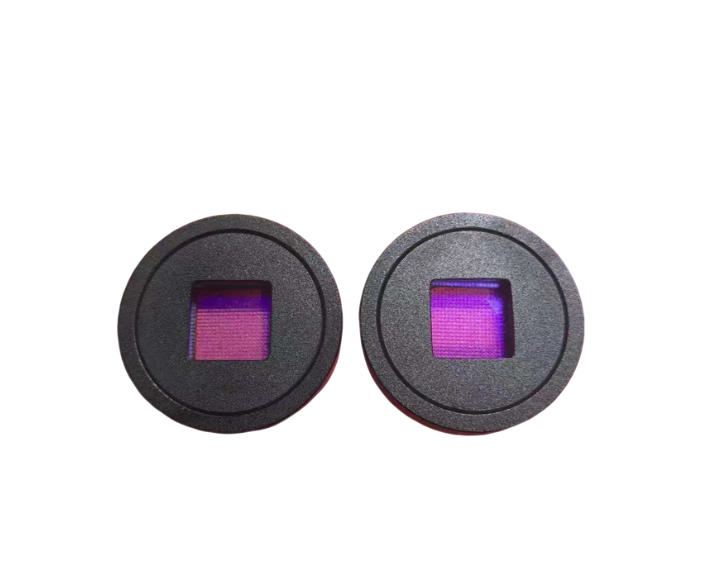
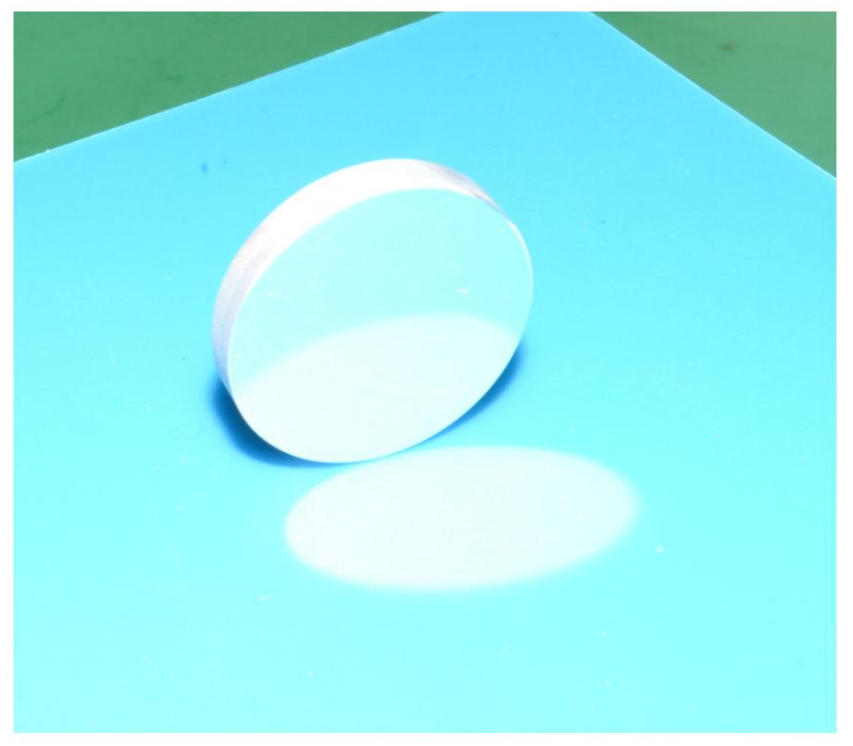
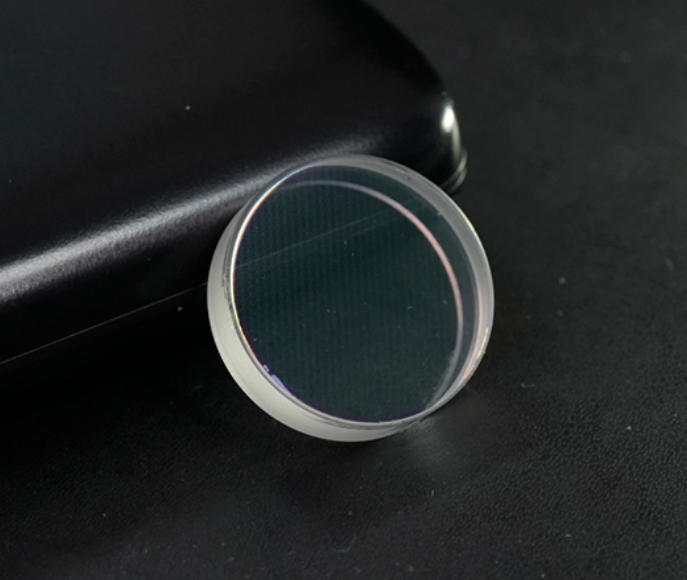
Homogenized Mirror
Coligh adopts photolithography to produce homogenizing mirrors, and in addition to the existing models, we can customize the mirrors according to the customer’s requirements, which can adapt to different types of laser, such as stabilized cavity, unsteady cavity and non-stabilized cavity.
- Material: Quartz
- Type: Homogenized Mirror, etc.
- Applications: Laser Processing, Medical Aesthetics, etc.
Homogenized Mirror Description
Homogenizing mirrors are optical components used in laser resonant cavities to convert a Gaussian distributed beam into a flat-topped beam. The homogenizing mirror replaces the rear mirror in the original resonant cavity through special optical design, which can homogenize the light oscillating in the cavity to form a laser beam without adding other optical components, and can directly output a more uniform round spot. We can customize our mirrors to suit different types of lasers, such as stabilized or un-stabilized cavities, or lasers with different cavity lengths and wavelengths. Homogenizing mirrors for lithography are generally used in the fields of laser processing and laser medicine.
Homogenizing ReflectorKey Features
- All homogenizing mirrors are based on photolithography to form sub-micron bit-phase modulation structures on the mirror surface, which can homogenize the spot distribution of incident light after reflection.
- Our photolithography homogenizing mirrors strictly control the interface roughness to enhance reflectivity and reduce scattering.
Optical surface type adopts concave reflector, which is essential for beam homogenization. - All the film layers are high reflective films, reflecting more than 99% in the laser wavelength band, the standard wavelength is 1064nm, and can also be customized for 532nm, 808nm, 1550nm, and 10.6μm.
we use fused silica as the substrate, fused silica’s low expansion coefficient is suitable for high power laser applications - We offer a wide range of diameter and thickness combinations to suit different needs.
Homogenized Mirror Product Series
| Product No. | Dim. | Curv. | Coating | Material. |
|---|---|---|---|---|
| MBPQ-005.HR1 | φ20.0mm×5.0mm | -4000mm | HR coating R≥99.0% @1064nm | Fused Silica |
| MBPQ-005-D15.HR1 | φ15.0mm×4.0mm | -4000mm | HR coating R≥99.0% @1064nm | Fused Silica |
| MBPQ-006.HR1 | φ12.7mm×4.0mm | -2500mm | HR coating R≥99.0% @1064nm | Fused Silica |
| MBPQ-012.HR1 | φ20.0mm×5.0mm | -7000mm | HR coating R≥99.0% @1064nm | Fused Silica |
| MBPQ-014-D15.HR1 | φ15.0mm×3.0mm | -2500mm | HR coating R≥99.0% @1064nm | Fused Silica |
Custom Diffractive Optical Element Reflector Core Capabilities
| Capability | Specification |
|---|---|
| Homogenization Type | Intensity Homogenization, Wavefront Shaping, Top-hat Output |
| Microstructure Pattern | Random, Quasi-periodic, Hexagonal, Square |
| Beam Profile Shape | Top-hat, Gaussian, Freeform |
| Substrate Material | Fused Silica, Silicon, Sapphire, Other Optical Glass |
| Operating Wavelength | 200 nm – 20 μm |
| Shape | Round, Square, Custom Shaped |
| Coating | Multilayer Dielectric HR, Metallic HR |
| Size Range | Min 1.5 mm, Max 4–6 inches |
| Incident Angle Design | 0°–60° |
Lithographic Homogenizing Mirror production process
- Optical design: Determine the working wavelength, homogenization angle, reflection efficiency, structure pattern coating film system design.
- Optical simulation: simulate the effect of homogenization
- Photolithography: photolithography coating and exposure using a mask plate to form a mask pattern and graphic etching
- Optical coating: metal reflective coating or dielectric multilayer reflective coating.
- Post-processing: packaging after inspection
Laser Beam Shaping Mirror Homogenized Applications
- Laser Material Processing
Gaussian laser centers are too energetic, and homogenizing mirrors can split and superimpose the incident Gaussian beam through microstructures on the surface, resulting in a rectangular or circular spot with uniform energy. - Semiconductor lithography
Lithography requires extremely uniform illumination. The integration of homogenizing mirrors in the illumination module of the lithography machine converts the UV or deep UV laser into a uniform light field. - Medical Aesthetics
Gaussian lasers can easily burn the skin. Homogenizing mirrors produce a uniform square or circular spot that provides uniform illumination and prevents skin burns.