What Is a Phase Plate?
Tuesday, February3, 2026
Table Of Contet
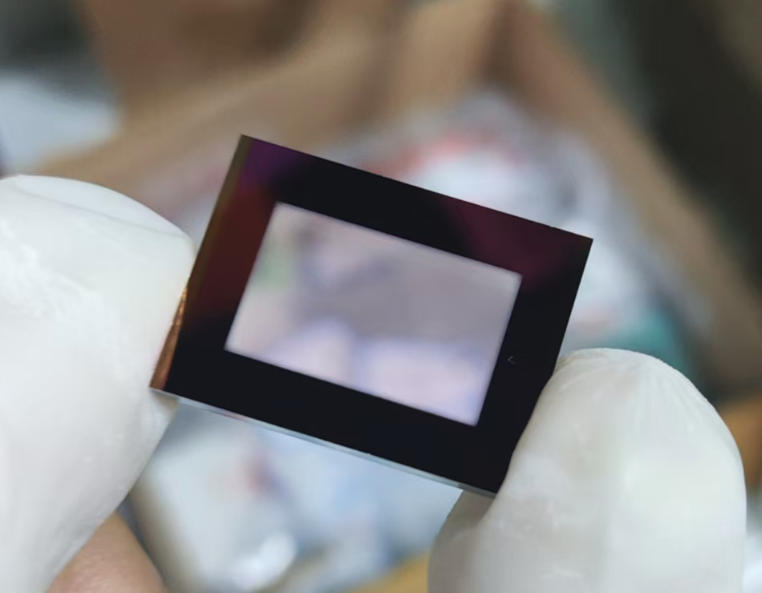
Phase plates are commonly used as key optical components in microscopes and optical systems. Conventional phase plates, such as those found in traditional microscopes, are smooth plates fabricated by grinding glass. This article primarily discusses microstructured phase plates produced through micro-nano fabrication techniques.
The Principles and Basic Concepts of Phase Plate
Phase plates for micro-nano fabrication are optical components that control beam distribution through specialized micro-nano structural designs. They alter the phase distribution of light waves without significantly changing their amplitude distribution, capable of processing incident light and reshaping the entire wavefront. By manipulating optical path differences through material thickness or equivalent refractive index, they induce arbitrary distortions in the wavefront’s shape. Phase plates are primarily used for laser beam shaping, generating random phase or helical beams. These phase plates find extensive applications in STED microscopy and atmospheric turbulence simulations.
Different Types of Phase Plates and Their Optical Functions
Phase plates come in numerous types, which we categorize based on their distinct functions as follows:
Binary Phase Plate / Multilevel Diffractive Optical Element
A binary phase plate is the most fundamental diffractive optical element. It modulates light’s phase by etching two-depth step structures onto a transparent substrate such as fused silica or optical glass. Typically, the phase of the incident light wave is modulated to two discrete values: 0 and π, meaning the surface consists of a series of peaks and troughs.
However, the theoretical maximum diffraction efficiency of a binary phase plate is only 40.5%, with most light wasted in the zero-order and other unwanted diffraction orders. Therefore, higher efficiency demands necessitate the use of multi-order diffractive optical elements.
Multi-order diffractive optical elements (DOEs) are continuous contour approximations evolved from second-order phase plates. They increase phase modulation from 2 discrete levels to 2^N levels, such as 4th, 8th, 16th, and so on. This surface resembles a digitized continuous slope, with finer resolution achieved through more steps. Multi-order diffractive optical elements achieve 81% efficiency at 4 orders and can reach up to 99% efficiency under ideal conditions at 16 orders.
These elements enable complex light field manipulation, such as transforming Gaussian beams into flat-top beams, creating vortex phase plates, multi-focus lenses, and Airy pattern generators.
Spiral Phase Plate (SPP)
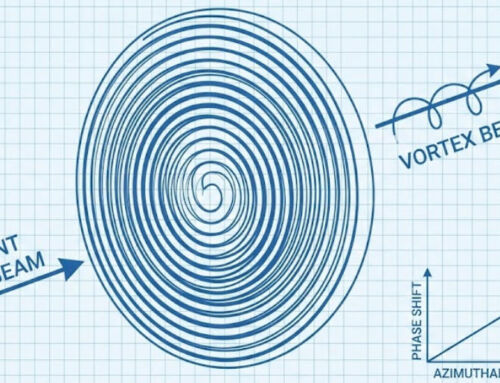
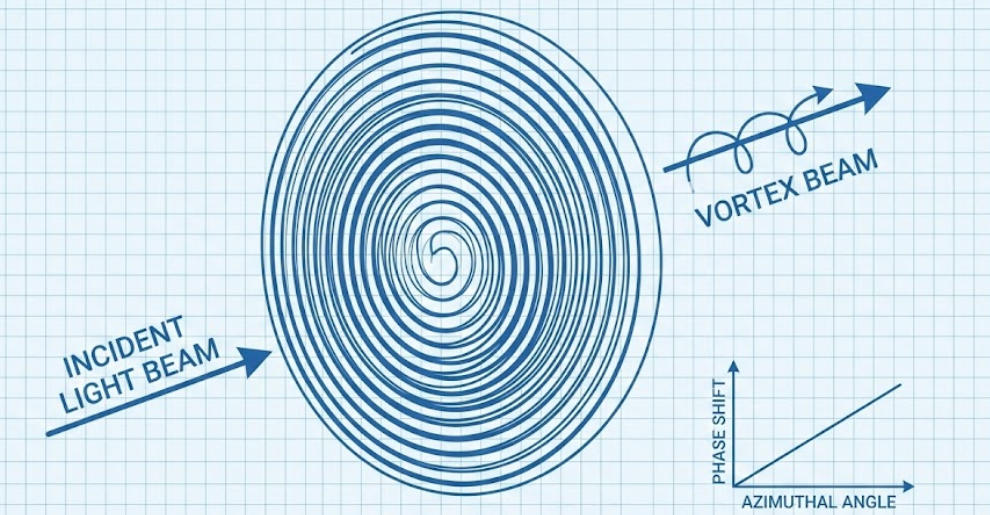
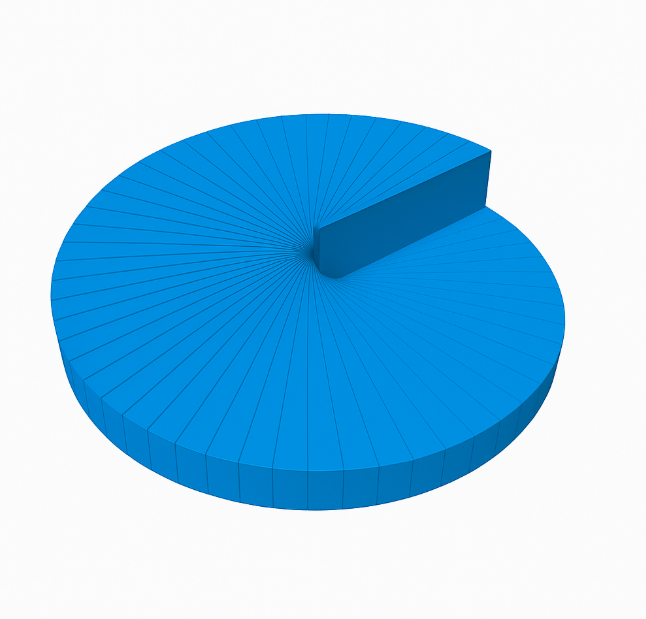
Spiral Phase Plate (SPP) is a specially designed diffractive optical element. Its core characteristic is that its optical thickness or phase delay continuously changes in a spiral pattern with the azimuth angle around the central point.
Simply put, when a Gaussian laser beam passes through it, it engraves a phase structure resembling a spiral staircase onto the beam’s wavefront. Vortex beams are characterized by zero intensity at the center point, yet the emerging beam exhibits a hollow ring pattern in the far field or focal plane. Additionally, each photon within the beam carries not only intrinsic spin angular momentum but also an extra orbital angular momentum.
Due to its vortex beam properties, SPP is particularly suited for optical manipulation, optical communications, super-resolution microscopy, and quantum computing. Furthermore, in astronomy, it can be used to suppress intense direct starlight, enabling clearer stellar observations.
Atmospheric Turbulence Phase Plate
The Atmospheric Turbulence Phase Plate, also known as a turbulence simulator, is a diffractive optical element specifically designed to controllably and reproducibly simulate the effects of atmospheric turbulence on light wave propagation in a laboratory environment. It is also referred to as ATPP. It creates a relief structure with a highly random surface topography on a glass substrate through photolithography and etching. This fixed random pattern corresponds to a frozen turbulent phase screen.
The ATPP functions by introducing a spatially varying phase delay across the beam’s cross-section, adhering to the Kolmogorov turbulence statistical model for atmospheric turbulence. Its primary applications include testing the accuracy of wavefront sensors, calibrating systems, and evaluating the resolution limits of imaging systems in astronomical telescopes under turbulent conditions.
Random Phase Plate (RPP)
The delay distribution on the surface or within the random phase plate is spatially random, hence the name “random phase plate.” By leveraging the interference effects of numerous randomly scattered elements, the random phase plate transforms a highly ordered laser beam into a specific, uniform speckle field.
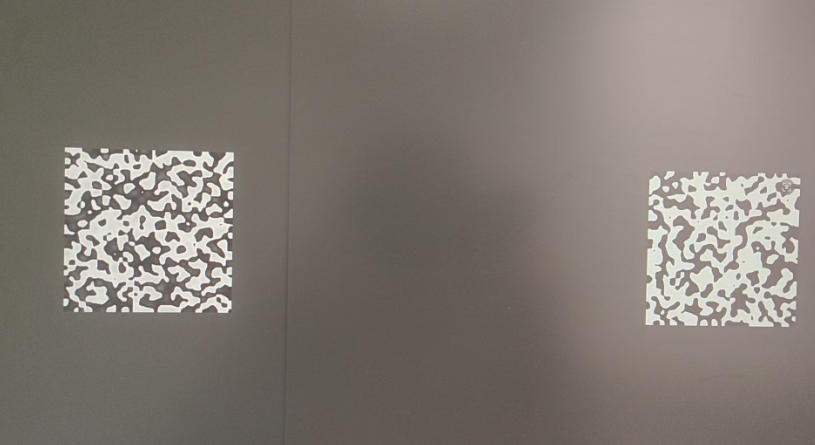
The core function of a random phase plate is to randomize and homogenize light beams. Its primary application is in homogenizing laser beams. For instance, in industrial laser processing, it converts Gaussian beams into flat-top beams. By leveraging the statistical properties of random phase patterns, it produces a spot with sharp edges and uniform interior on the target plane.
In laser projection and display systems, random phase plates eliminate inherent speckle noise from laser light sources. By generating a dynamically varying speckle field, they reduce speckle contrast and enhance image quality.
Phase-Contrast Phase Plate
The phase contrast plate is the core component of a phase contrast microscope. It converts phase variations—invisible to the naked eye and undetectable by conventional brightfield microscopes—into visible light intensity contrasts within the image, rendering them observable through the microscope’s lenses and colorless biological specimens.
Computer-Generated Hologram (CGH) Phase Plate
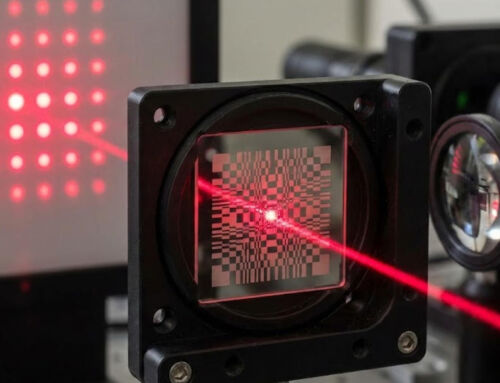
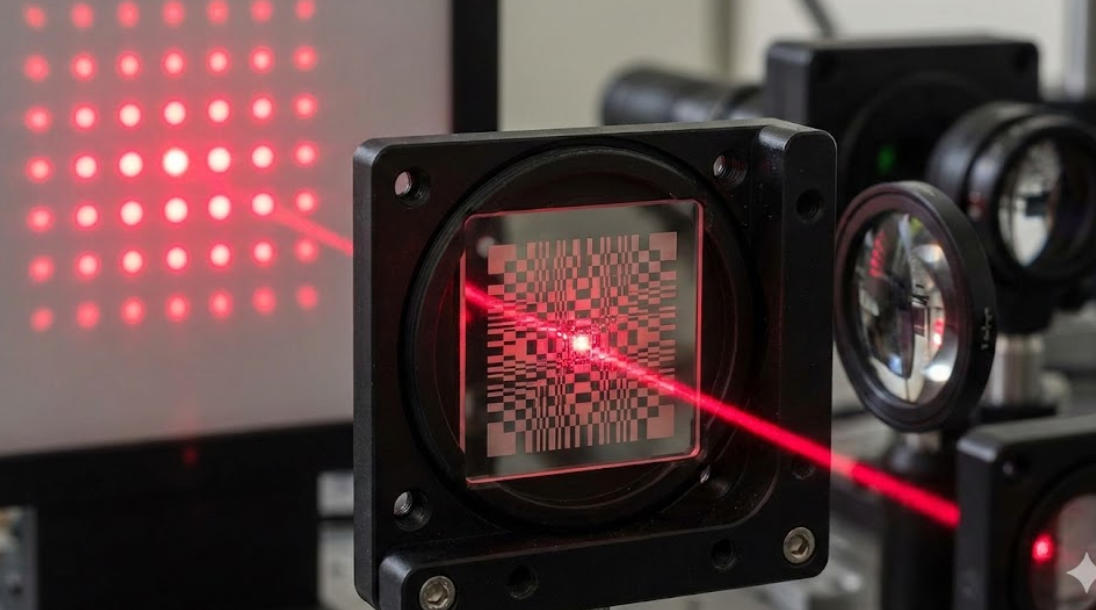
Computer-generated holographic phase plates are diffractive optical elements designed through computer algorithms and manufactured using micro-nano fabrication techniques. When illuminated by a coherent light beam, CGHs encode the light field pattern into a code filled with intricate relief structures. Following holographic principles, they reconstruct objects by recording and reproducing the phase and amplitude information of light waves, thereby precisely reconstructing a complex three-dimensional light field distribution.
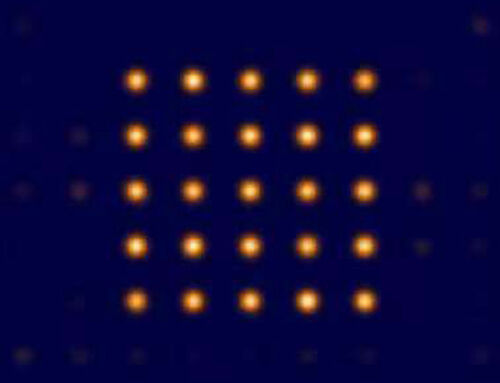
Theoretically, CGH can generate any describable light field without constraints imposed by traditional optical surface geometries. Additionally, it exhibits high diffraction efficiency, typically achieving over 90% light energy utilization. A single CGH can simultaneously perform functions such as beam splitting, focusing, and beam shaping.
CGH finds applications in numerous scenarios.
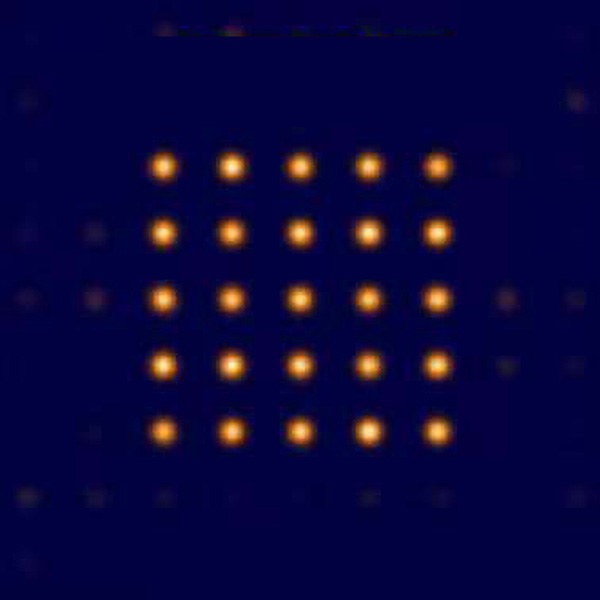
- It can transform complex Gaussian beams into flat-top beams for laser processing, or generate multi-focus arrays, Bessel beams, Airy beams, and other patterns for machining.
- It can produce three-dimensional holographic images for AR, VR, or anti-counterfeiting applications.
- As a reference plate for wavefront sensors, it can also be used to detect surface errors in aspheric mirrors and freeform mirrors.
Fresnel Phase Plate (FZP)
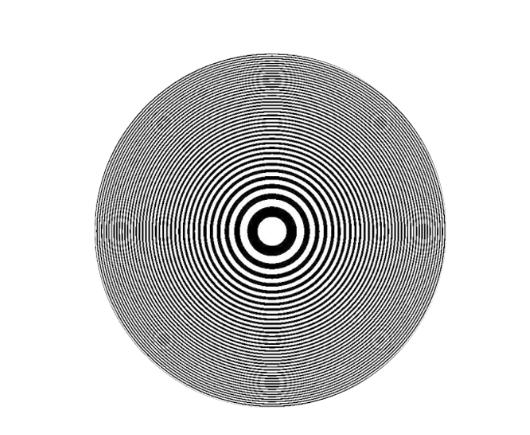
Fresnel phase plates, also commonly referred to as Fresnel waveguide plates or phase-type waveguide plates, are diffractive optical elements based on the Fresnel diffraction principle. Like a lens, they focus or diverge incident parallel light to form a relief pattern composed of concentric rings.
Similar to a grating, a Fresnel phase plate possesses multiple focal points corresponding to different diffraction orders beyond its primary focus. For polychromatic light, different wavelengths converge at distinct positions.
The most significant application of Fresnel phase plates lies in X-ray and extreme ultraviolet microscopy. They are extensively employed in synchrotron radiation sources and X-ray free-electron laser facilities, enabling nanoscale imaging of biological cells and materials science research
How to Customize Phase Plates for Advanced Optical Experiments
Coligh is a phase plate manufacturer. We can transform clients’ concepts into mass-producible, high-precision micro-nano components. Based on client-provided information, we conduct in-depth requirement analysis and design. For example:
1. What is the client’s application?
We can generate vortex, random phase plates, or simulate atmospheric turbulence based on the client’s application and requirements.
2. Beam specifications
Depending on whether the wavelength is single-wavelength or broad-spectrum, we can directly select suitable substrate materials for micro/nanofabrication to control structural depth and dispersion.
3. Diffraction Efficiency
Diffraction efficiency directly determines whether multi-step etching is required for micro/nanofabrication, such as 2th, 4th, 8th, 16th, or 32th order.
4. Etching Precision
Contact us to learn more about customization details.