200-1100nm Ultra Broadband T50:R50 Dielectric UV-VIS-NIR Plate Beamsplitter
200-1100nm Ultra Broadband T50:R50 Dielectric UV-VIS-NIR Plate Beamsplitter is a beamsplitter which transmit 50% and reflect 50% within 200-1100nm range. Coligh manufactures and customs ultra broadband beamsplitter plate according to client’s project requirement.
200-1100nm Ultra Broadband T50:R50 Dielectric UV-VIS-NIR Plate Beamsplitter Overview
200-1100nm Ultra Broadband T50:R50 Dielectric UV-VIS-NIR Plate Beamsplitter is an optical component capable of achieving a 50% transmission and 50% reflection ratio across a spectral range spanning the ultraviolet, visible, and near-infrared bands.
Coligh is a manufacturer of ultra-broadband beamsplitters, offering custom solutions with various splitting ratios to meet specific client requirements. Utilizing UV-grade fused silica substrates, we tailor each unit according to the specified angle of incidence and splitting ratio. The beamsplitters feature a functional beamsplitting coating on one side and an anti-reflective (AR) coating on the other to minimize ghosting and stray light. These components are ideally suited for a wide range of industrial applications, including multi-band spectral analysis, multispectral imaging, laser diagnostics, and optical inspection.
200-1100nm Ultra Broadband T50:R50 Dielectric UV-VIS-NIR Plate Beamsplitter Key Features
It features the following core characteristics:
- An ultra-wideband range covering 200–1100 nm, encompassing the ultraviolet, visible, and near-infrared spectral bands.
- A T50:R50 dielectric coating design that ensures 50% transmission and 50% reflection across the 200–1100 nm range.
- The use of hard dielectric multilayer coatings and a UV-grade fused silica substrate makes the beamsplitter exceptionally durable.
- We offer customization options for various dimensions and angles of incidence.
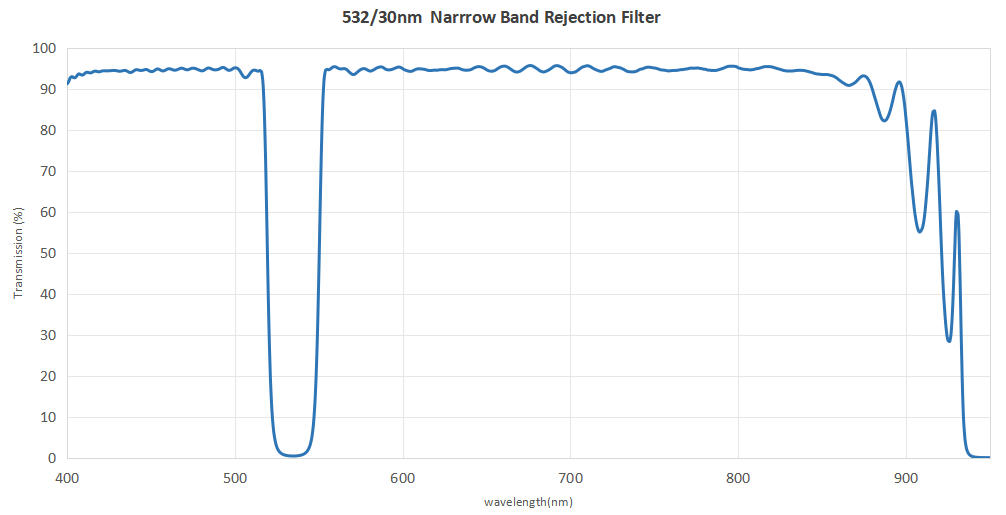
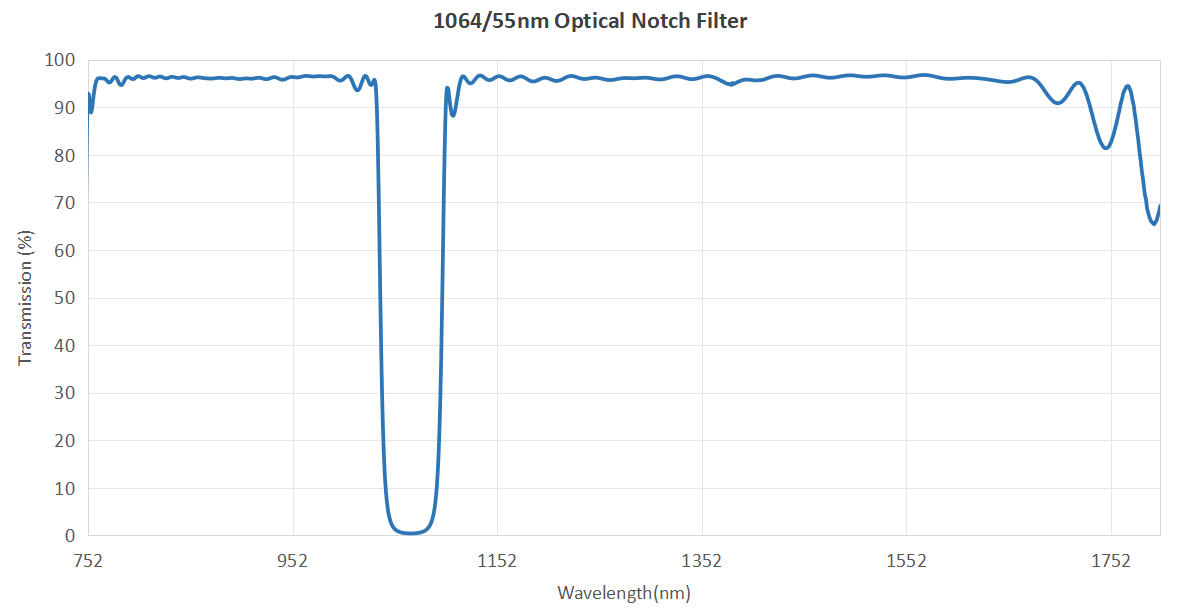
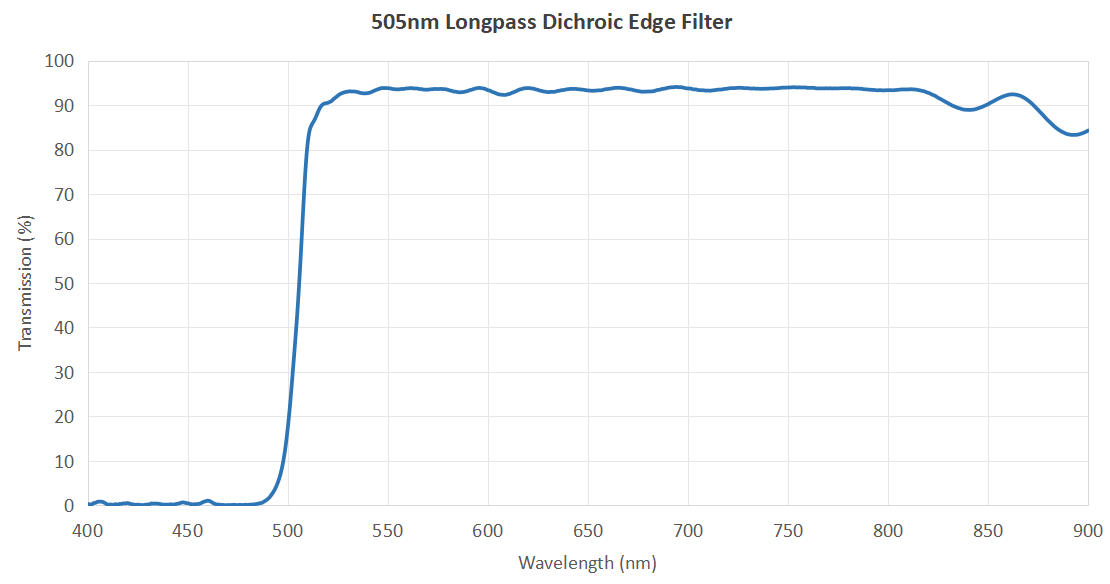
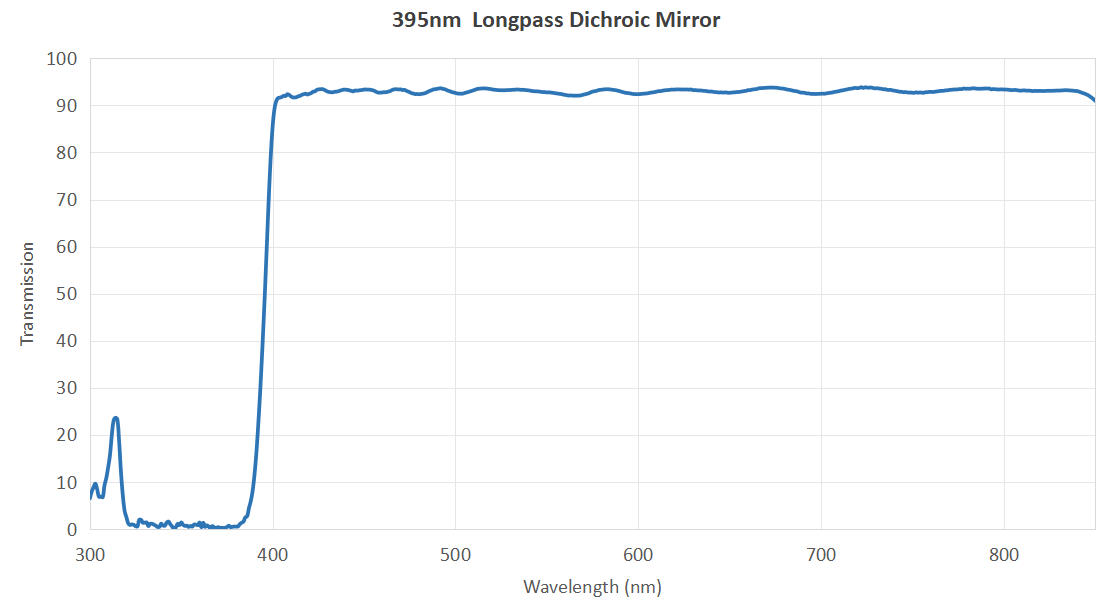
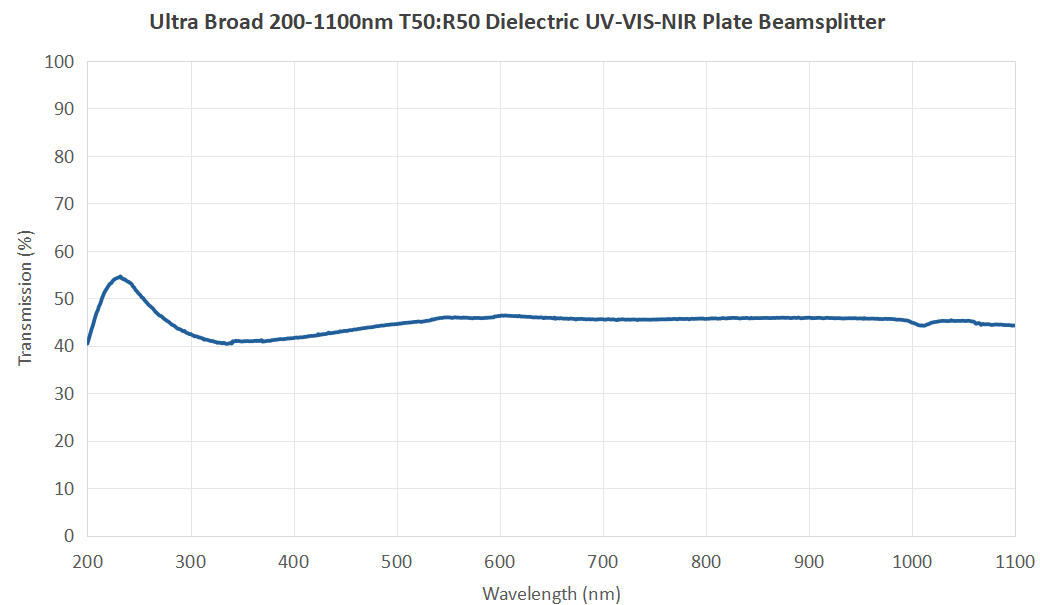
The spectrum Curve Of 200-1100nm Ultra Broadband T50:R50 Dielectric UV-VIS-NIR Plate Beamsplitter
200-1100nm Ultra Broadband T50:R50 Dielectric UV-VIS-NIR Plate Beamsplitter Technical Specifcation
- Beamsplitter wavelength: 200-1100nm
- Transmission and reflection: 50:50+/-10%
- Material: Fused silica
- Angle of incidence: 45deg
- AR coating: Back side
- Thin film coating: Dielectric hard coating
Other Non-polarizing Plate Beamsplitter UV-NIR In Stock List:
| Working wavelength range | T/R | AOI | Size Dimension |
|---|---|---|---|
| 400-900nm | 50/50 | 45° | 25.4*1.0mm |
| 400-900nm | 50/50 | 45° | 25.4*1.0mm |
| 400-700 nm | 24/76 | 45° | 60*60*1.0mm |
| 400-700 nm | 30/70 | 45° | 25.2*35.6*1mm |
| 400-700nm | 30/70 | 45° | 60*60*1.0mm |
| 200-1100nm | 50/50 | 45° | 60*60*1mm |
| 200-1100nm | 45/55 | 45° | 25*60*1mm |
| 200-1100nm | 45/55 | 45° | 25.2*35.6*1 |
| 220-380nm | 50/50 | 45° | 80*80*0.7mm |
| 200-370nm | 50/50 | 45° | 80*80*0.7mm |
| 400-700nm | 50/50 | 45° | 70*5mm |
| 220-380nm | 50/50 | 45° | 25*36*1.1mm |
| 240-460nm | 50/50 | 45° | 150*150*1mm |
| 1000-1100nm | 50/50 | 45° | D15*3mm |
Customization Capability of Broadband Beamsplitter
| Customization Item | Capability Range |
|---|---|
| Product Type | UV Beam Splitter Plate, UV Partial Reflector, UV Dichroic Beam Splitter, UV Laser Beam Splitter |
| Wavelength Range | UV spectrum customization from 160–400 nm (EUV / UV-C / UV-B / UV-A available) |
| Center Wavelength | Customized wavelengths, such as 193 nm, 248 nm, 266 nm, 308 nm, 355 nm, 365 nm, 405 nm, or wideband |
| Beam Splitting Ratio | Custom reflection/transmission ratio, such as 50/50, 30/70, 20/80, 10/90 |
| Coating Type | UV dielectric beam splitter coating, ion-assisted deposition (IAD) hard coating |
| Substrate Material | UV fused silica, JGS1/JGS2 quartz glass |
| Operating Angle | 45° |
| Surface Quality | 40/20, 60/40 scratch-dig standards |
| Surface Flatness | λ/4, λ/6 precision available |
| AR Coating | UV anti-reflection coating available |
| Laser Damage Threshold | High-LIDT coating design available for UV range |
| Edge Treatment | Fine grinding, chamfering, protective edge processing |
200-1100nm Ultra Broadband T50:R50 Dielectric UV-VIS-NIR Plate Beamsplitter Applications
Spectrophotometer Reference Beamsplitter
Spectrophotometers require the division of a light source into a sample channel and a reference channel. A 200–1100 nm ultra-wideband T50:R50 plate beamsplitter covers the ultraviolet (UV), visible, and near-infrared (NIR) ranges simultaneously. By using a single optical element for broadband beam splitting, the optical path of the spectrophotometer can be significantly simplified.
Deuterium-Halogen Light Source Beamsplitter
A deuterium lamp covers the UV range, while a halogen lamp covers the visible to near-infrared range; together, they form a broadband light source. Using a narrowband beamsplitter would otherwise necessitate the use of multiple switchable components or a complex optical path. A 200–1100 nm ultra-wideband beamsplitter, however, allows for the splitting of the combined light from both deuterium and halogen lamps within a single optical path.
Broadband Beamsplitter for Silicon Detectors
Silicon detectors typically respond to light ranging from the visible to the near-infrared, with some UV-enhanced versions extending their range into the ultraviolet. A 200–1100 nm ultra-wideband beamsplitter can be paired with a silicon detector to split broadband light—directing a portion to the detector and the remainder to a reference or imaging channel—or to facilitate monitoring via dual detectors. The T50:R50 configuration provides a balanced split ratio, making it ideal for systems that require the simultaneous acquisition of both transmitted and reflected signals.