Diffractive Beam Splitter vs Traditional Beam Splitter In Medical Laser System
Friday, January30, 2026
What Is a Diffractive Beam Splitter?
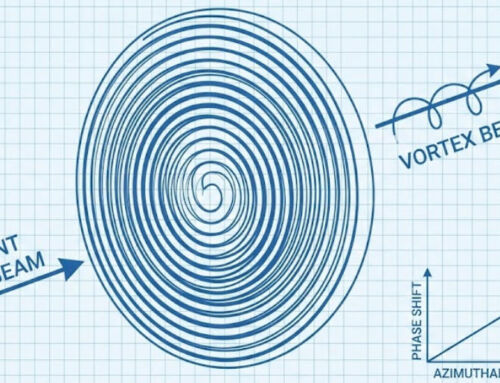
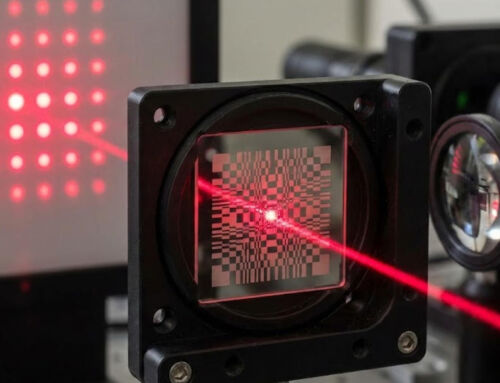
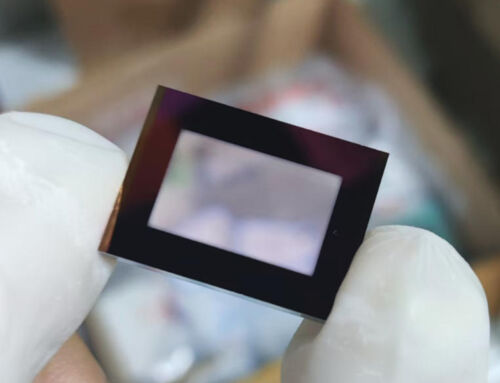
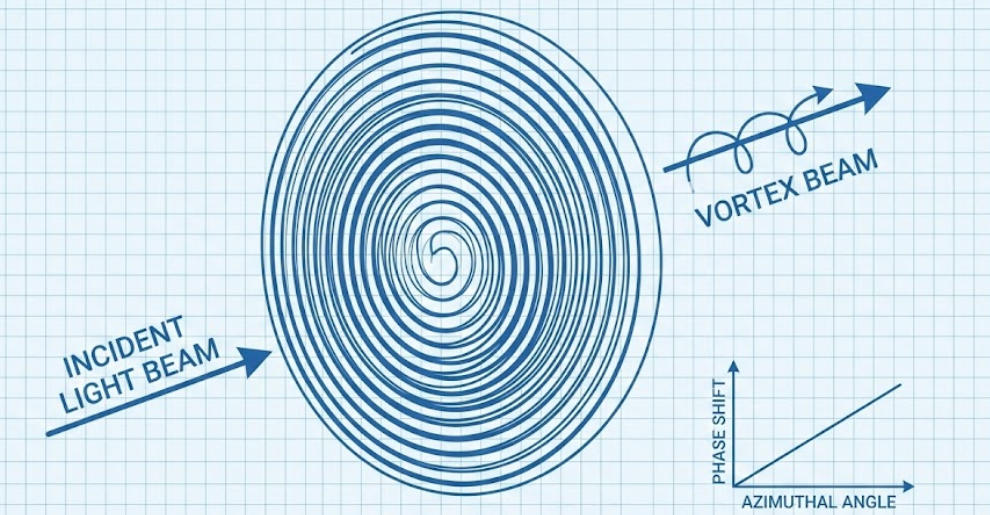
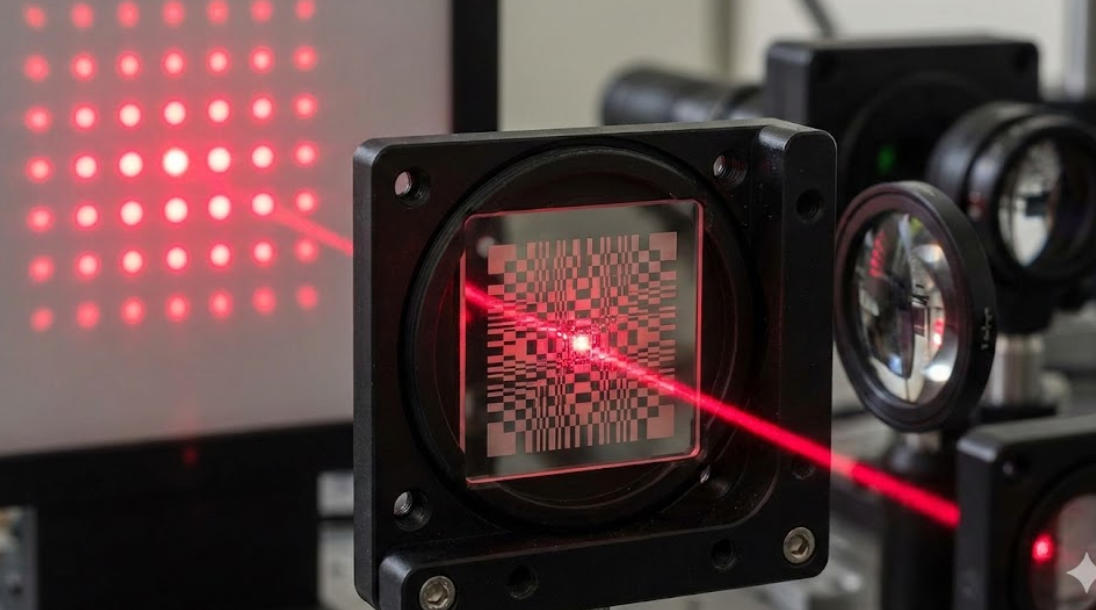
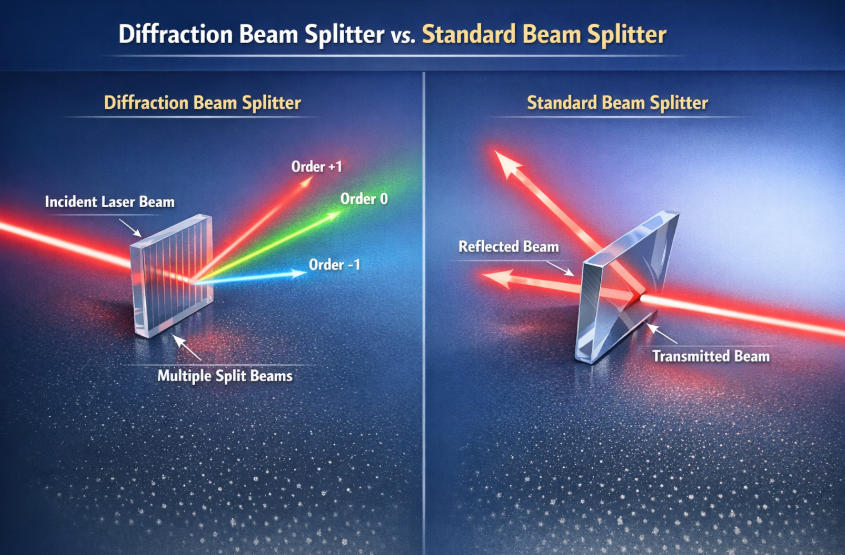
A diffractive beam splitter is a diffractive optical element (DOE) that utilizes micro- and nano-structures designed on its optical surface to achieve beam splitting in multiple directions with specific intensities.
Diffractive beam splitters are typically designed for a specific laser wavelength. By varying the surface height through changes in material refractive index, they generate corresponding phase delays. During design, the diffraction grating period can be adjusted, phase depth can be modified, and two-dimensional non-periodic structures can be employed. Consequently, incident laser energy can be distributed according to the designed proportions, forming multiple diffraction orders.

Comparison & Selection Guide Of Diffractive Beam Splitter vs Traditional Beam Splitter
- A diffraction beam splitter is a type of beam splitter. The key differences between diffraction beam splitters and traditional beam splitters are as follows:
- Unlike traditional beam splitters, which rely on reflection or refraction principles for light splitting, diffraction beam splitters utilize diffraction and phase modulation to achieve light splitting.
- Traditional beam splitters can typically only divide light into two beams, either transmitting or reflecting. Diffractive beam splitters, however, can split a single beam into multiple beams arranged in a regular array.
- The exit angles of traditional beam splitters are generally fixed and lack an array pattern. In contrast, the exit angles of diffractive beam splitters can be arbitrarily designed and distributed in one-dimensional, two-dimensional, or even three-dimensional patterns.
- Traditional beam splitters exhibit high overall energy efficiency, typically ranging from 95% to 98%. In contrast, diffraction splitters have lower diffraction efficiency, exceeding 90% only when employing multi-order designs with optimized configurations.
- Conventional beam splitters feature relatively bulky physical structures, such as prisms or cubes, with thicknesses varying from several millimeters to several centimeters. Diffractive beam splitters, however, are relatively compact. In ultra-thin configurations, they can achieve micrometer-level dimensions and thicknesses.
- Traditional beam splitters are typically broadband devices, making them highly compatible with multi-wavelength systems. In contrast, DOE beam splitters exhibit significant wavelength dependency, requiring specialized design for each specific laser wavelength.
What is the key funciton of diffractive beam splitters in aesthetic medical laser system
In medical aesthetic laser systems, traditional beam splitters such as half-silvered mirrors, cubes, and prisms are indispensable in auxiliary optical paths. For instance, when a laser beam strikes the skin, these conventional splitters can divert 1-5% of the energy to a detector, thereby maintaining stable energy ratios without altering the spatial distribution of the main beam.
Additionally, dichroic beam splitters can be used for beam combining and splitting. For example, during beam combining, red light and therapeutic light can be merged. During beam splitting, only red light or therapeutic light can be selectively directed into the observation system.
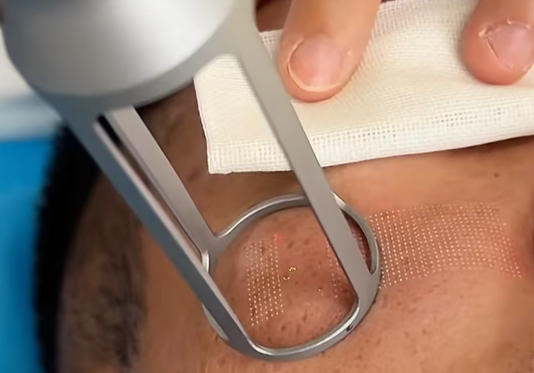
However, traditional beam splitters play a minimal role in the core functionality of aesthetic laser treatment outputs. This is because aesthetic lasers fundamentally require controlled spatial distribution of light, forming micro-spot arrays. This prevents the skin from receiving uniform laser irradiation across entire areas, concentrating laser energy precisely on the target treatment zone while preserving healthy tissue.
Coligh specializes in manufacturing diffractive beam splitters. Through DOE design, we can precisely control the energy distribution, diameter, and spacing of each micro-spot. The entire dot pattern can be achieved in one or a few exposures, thereby controlling the depth of thermal damage and the affected area on the skin.
Diffractive Beams Spliiters For Medical Aesthetic Laser Applications
- 10.6μm DOEs for CO₂ Fractional Laser Systems
10.6 μm CO₂ Fractional Laser Systems are primarily used for skin rejuvenation, such as treating fine lines, wrinkles, aged skin, scars, and gynecological and intimate treatments. In the 10.6μm CO₂ fractional laser system, 10.6 μm diffractive optical elements (DOEs) integrated into the laser handpiece divide the high-power CO₂ laser beam into a micro-spot array with a micro-patterned arrangement. This enables fractional treatment to promote skin tightening and regeneration. - 532nm/755nm/1064nm DOEs for Picosecond Aesthetic Laser Systems
Picosecond Aesthetic Laser Systems primarily utilize picosecond pulses to concentrate energy on pigment or tattoo particles within an extremely short timeframe. Consequently, they are mainly used for removing tattoos, freckles, age spots, and sunspots. 532nm/755nm/1064nm DOEs enable picosecond lasers to remodel wrinkles and scars through minimally invasive stimulation. - 2940nm DOEs for Er:YAG & Laser Systems
The 2940nm DOE-equipped Er:YAG laser system primarily leverages the high absorption peak of water at 2940nm. Through photothermal effects, it achieves skin vaporization and minimally invasive remodeling—such as removing epidermal lesions and addressing gynecological or intimate applications.