Glass Photonic Interposer & CPO Glass Core Substrates Manufacturer
Coligh customs and supply Glass Photonic Interposer and CPO Glass Core Substrates for Co-packaged optics, AI computing power, data centers, optical communications, and high-performance packaging applications.
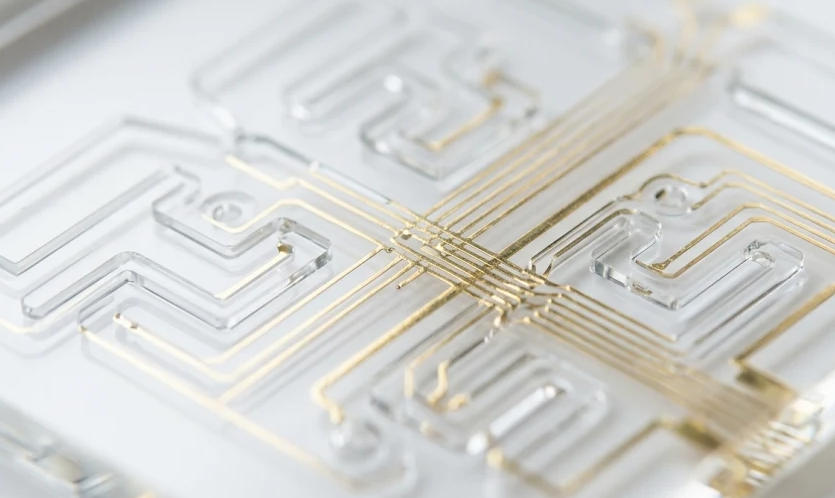
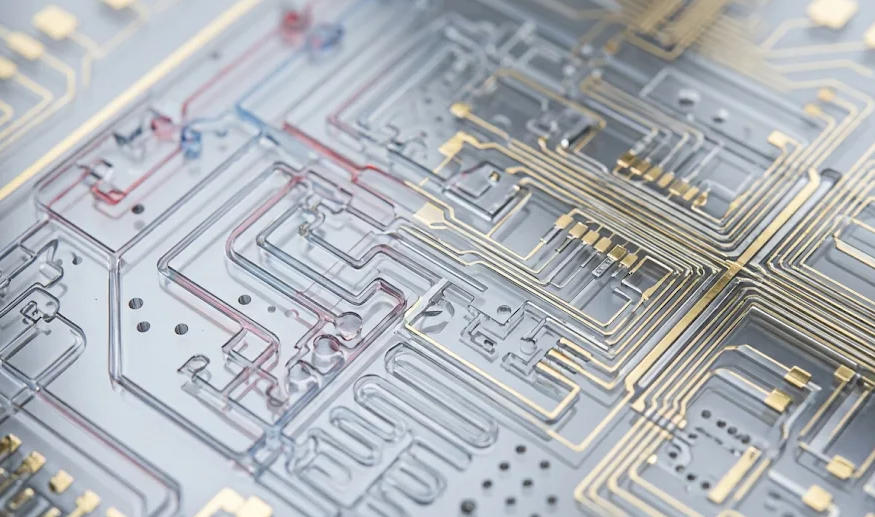
We support key processes including Through-Glass Vias (TGV), metallization, Redistribution Layers (RDL), thinning, polishing, dicing, and inspection to help our customers achieve high-density, low-loss, and highly reliable optoelectronic packaging structures.
Glass Photonic Interposer & CPO Glass Core Substrates Produce Discription
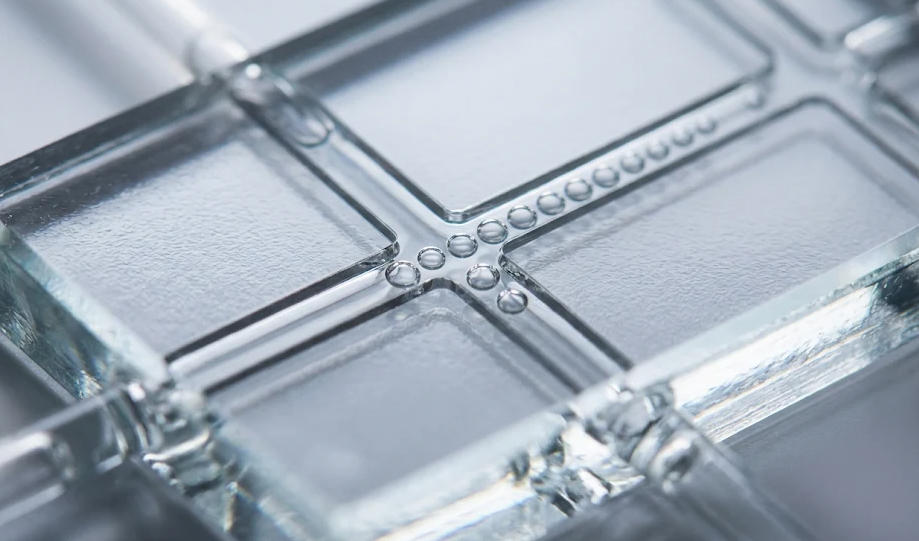
A Glass Photonic Interposer is a packaging platform based on a glass substrate that supports both electrical and optical interconnections. Leveraging the inherent processability of glass—specifically through the creation of Through-Glass Vias (TGV)—the substrate integrates optical waveguides and turning mirrors to enable low-loss transmission and redirection of optical signals.
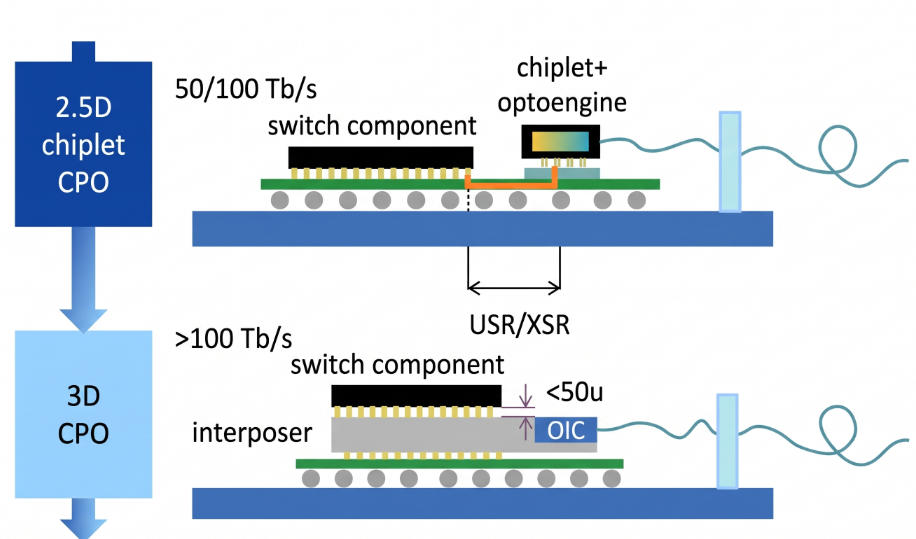
A CPO (Co-Packaged Optics) glass core substrate consists of a glass core layer with additional layers stacked above and below it. Designed as an alternative to traditional organic core substrates for co-packaged optics, it effectively addresses the physical failure issues that organic substrates may encounter in CPO applications.
Coligh manufactures and customizes Glass Photonic Interposers and CPO glass core substrates for use in co-packaged optics, AI computing, data centers, optical communications, and various packaging applications.
Glass Photonic Interposer & CPO Glass Core Substrates Product Features
They possess the following core characteristics:
- Glass materials feature a low dielectric constant (Dk), making them well-suited for high-density, high-speed electrical interconnects. For applications such as CPO (Co-Packaged Optics) switches, AI computing packages, and high-frequency optical modules, we can evaluate low-Dk glass solutions and routing designs based on specific frequency requirements, trace structures, and packaging formats.
- Glass exhibits extremely low dielectric loss, which helps reduce insertion and transmission losses for high-speed signals. It is ideal for applications such as 200G/lane (and higher-rate) CPO electrical interconnects, as well as short-reach, high-speed links between optical engines and ASICs. We can assess fabrication and integration solutions for optical features—including glass optical waveguides, cavities, grooves, turning mirrors, or coupling structures—providing a material foundation for the integration of electrical interconnects and optical coupling on a single substrate for CPO, NPO (Near-Packaged Optics), silicon photonic modules, and optical engine packages.
- Glass offers excellent light transmission and low absorption across the visible to near-infrared spectrum; its surface can be polished to achieve a very low roughness.
- We provide support for thinning, polishing, cleaning, and surface treatment processes, allowing for the precise control of surface roughness, flatness, and defect levels to meet the requirements of subsequent metallization, bonding, lithography, optical coupling, and packaging steps.
- We offer customized evaluation services covering substrate dimensions, thickness, TGV (Through-Glass Via) aperture and pitch, RDL (Redistribution Layer) layer counts and line/space dimensions, metallization structures, cavities/optical features, and dicing/singulation profiles. We provide specification customization and process co-development tailored to the client’s packaging architecture—ranging from single-unit prototyping to small-batch validation.
Why Choose Us For Your Glass Photonic Interposer and CPO Glass Core Substrates
- We possess full-process capabilities, including the creation of high-aspect-ratio TGV (Through-Glass Via) openings, deep-via copper filling, low-stress metal-glass integration, high-density patterning, and low-stress dicing—all while ensuring controlled signal loss and reliable lead times.
- We offer panel-level production capacity; our samples have already been validated by customers in small-batch trials, and we are on track to begin mass production within a foreseeable timeframe.
We can tailor key parameters—such as glass thickness, TGV aperture size and pitch, RDL (Redistribution Layer) configuration (number of layers and line width), and dicing profiles—to align with the specific CPO (Co-Packaged Optics) architecture required by our customers. - Our in-house capabilities span the entire workflow, from PI (polyimide) paste synthesis and mass TGV formation to glass-based PVD metallization, glass thinning, precision dicing, and RDL routing.
- Leveraging our deep understanding of the inherent brittleness of glass, the sensitivity of TGVs to micro-cracks, and copper-to-glass adhesion, we provide traceable inspection and test data for critical aspects—including TGV positioning and aperture dimensions, metallization fill quality, surface flatness, RDL integrity, and edge chipping.
- Furthermore, we assist customers in correlating substrate specifications with final package reliability, covering factors such as thermal cycling, high-temperature/high-humidity performance, and alignment precision.
Glass Photonic Interposer & CPO Glass Core Substrates In CPO Packaging
Ultra-low insertion loss Through-Glass Via (TGV) Substrate Processing Capability
| Substrate Size | 650*650mm |
|---|---|
| Metal Material | Cu |
| Glass Thickness | 0.5-2mm |
| Through-Hole Diameter | >=3um |
| Through-Hole Pitch / Spacing | 2:1 |
| Thickness-to-Diameter Ratio (T/D Ratio) | <=150:1 |
| RDL Thickness | <=50um |
| Maximum Number of RDL Layers | 20+ |
| Minimum RDL Line/Space (L/S) | >=3/3um |
| PVD Process Capability | 10um |
| Coefficient of Thermal Expansion (CTE) | CTE is adjustable, low to 3.3ppm/℃ |
| Young's Modulus | >70Gpa |
| Thermal Conductivity | 1.2W/,8K |
Co-Packaged Optics interposer and Through Glass Via Substrate Application
Hyperscale Data Centers (800G/1.6T+)
As optical module data rates evolve from 800G toward 1.6T and 3.2T, transmission losses for high-frequency, high-speed signals on organic substrates increase sharply, limiting the scalability of next-generation data center switches and optical interconnect systems. In a CPO (Co-Packaged Optics) glass-substrate architecture, Through-Glass Vias (TGV) enable vertical interconnection of high-speed electrical signals. Within the glass, ion-exchange processes can be used to align optical paths, connecting external light sources to Photonic Integrated Circuits (PICs). Furthermore, the superior flatness and tunable Coefficient of Thermal Expansion (CTE) of glass make it an ideal platform for the flip-chip bonding of optical engines and electrical chips, simultaneously reducing signal loss and increasing channel density.
AI & HPC Clusters (GPU Interconnects)
AI training clusters currently face significant interconnect bottlenecks. The introduction of glass-based optical interconnect layers and CPO glass-core substrates allows for a physical reduction in the distance between optical engines and compute chips, bringing optical interconnects directly into the package. Here, electrical signals are routed via TGV to the underlying GPU/accelerator package or interposer. Glass-based CPO solutions can improve interconnect energy efficiency—reducing it from approximately 20 pJ/bit in traditional pluggable modules to 5 pJ/bit—while boosting bandwidth density to 1–2 Tb/s/mm.
Silicon Photonics (SiPh) Packaging
The core process for a Glass Photonic Interposer involves constructing graded-index optical waveguides within the glass, which serve as a “size-matching bridge” between optical fibers and PICs. The optical transparency of glass, combined with a CTE that matches silicon, enables the 3D co-packaging of optoelectronic chips on a single substrate. This provides a mass-producible foundation that facilitates a seamless transition from Near-Packaged Optics (NPO) to fully integrated CPO.
Next-Gen Coherent Optical Networks
In coherent optical modules, a Glass Photonic Interposer can function as an integrated platform for optical path distribution and coupling. Glass interposers can integrate optical splitting/combining, mode-field conversion, and fiber-coupling functions within coherent transceiver modules, thereby reducing the number of discrete fiber-optic components and free-space optical elements. This enhances the optical signal-to-noise ratio and the level of module integration.