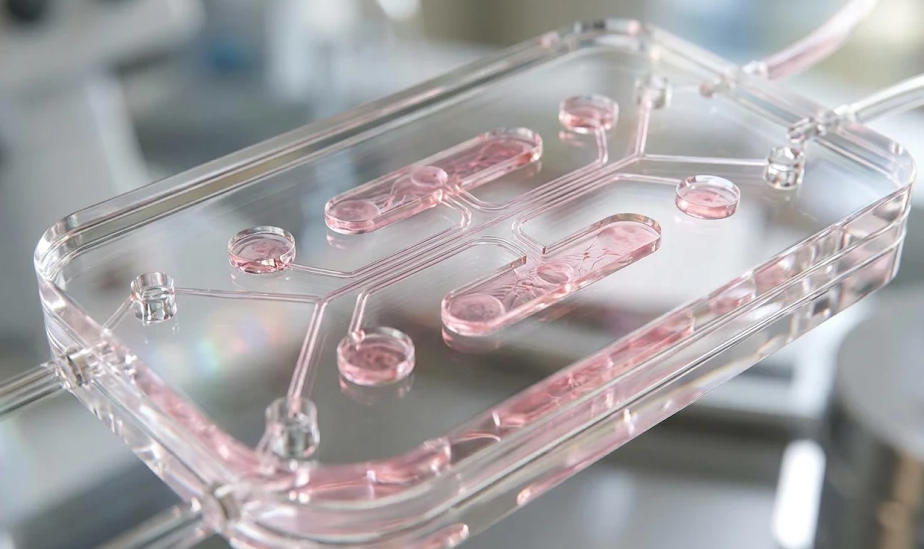
Organ-on-a-Chip Glass Microfluidic Substrates
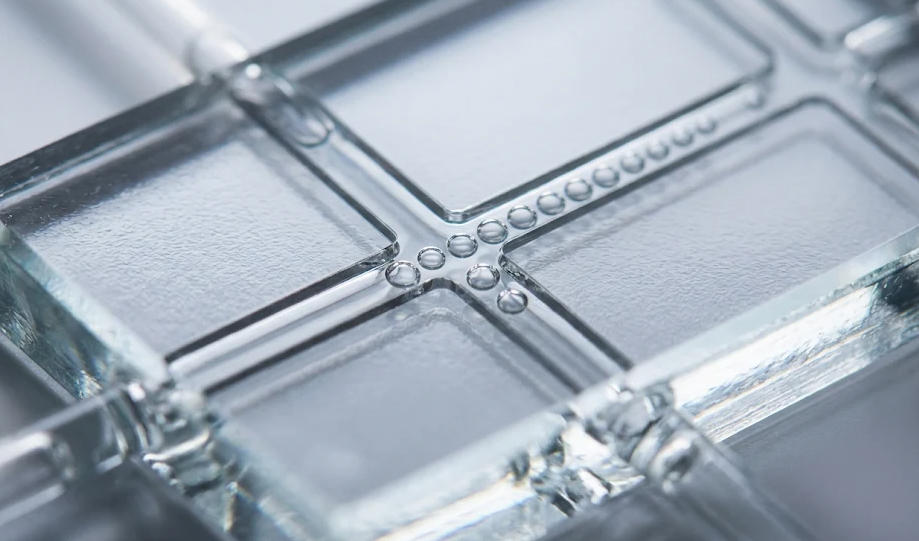
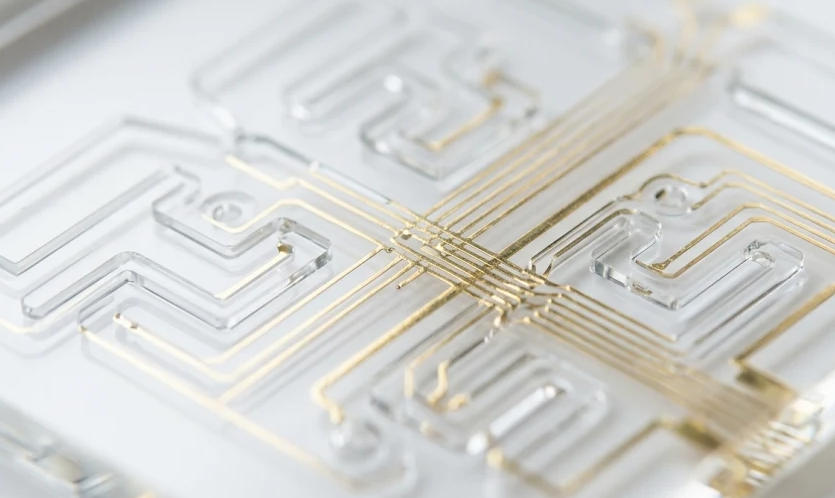
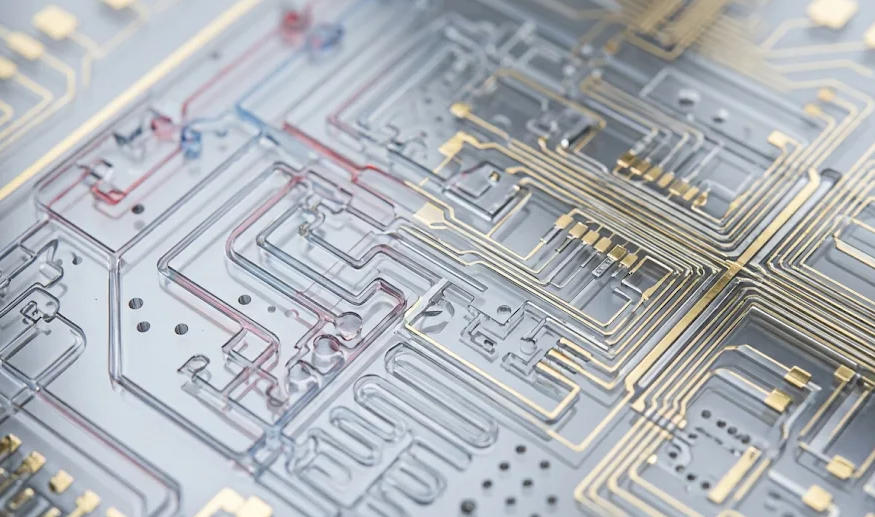
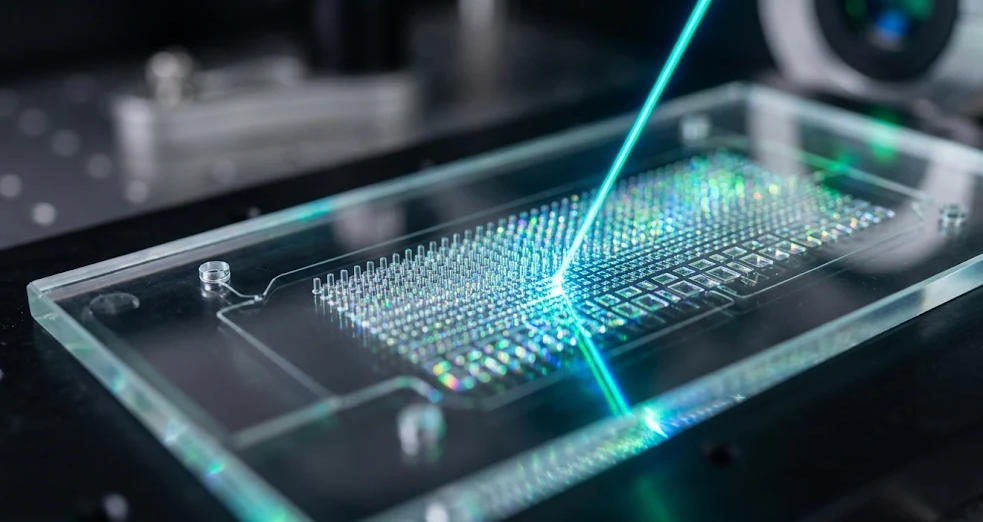
Coligh customs and manufacture glass microfluidic substrates for Organ-on-a-Chip applications. Available materials include borosilicate glass 3.3, quartz, and fused silica. We offer customization for features such as cell culture chambers, perfusion microchannels, fluid inlet/outlet ports, reservoirs, optical observation windows, and multi-layer bonded structures.
Organ-on-a-Chip Glass Microfluidic Substrates Product Discription
Organ-on-a-Chip (OOC) glass microfluidic substrates serve as physical, miniaturized platforms for constructing “in vitro biomimetic organ models.” Typically fabricated from fused silica or borosilicate glass, these substrates feature micron-scale channels and culture chambers created via deep reactive ion etching (DRIE) or wet etching. Through-Glass Vias (TGV) are incorporated as three-dimensional interconnects for fluidic access, and the structure is sealed through a bonding process to form a closed, three-dimensional fluidic system.
Organ-on-a-Chip substrates are primarily utilized in microfluidic control instruments, high-throughput imaging analyzers, and microphysiological systems (MPS). Key applications include drug toxicity and efficacy screening, blood-brain barrier (BBB) modeling, disease modeling, and the development of multi-organ systems—often referred to as “body-on-a-chip” platforms.
Coligh specializes in the custom design and manufacturing of Organ-on-a-Chip glass microfluidic substrates. Leveraging Through-Glass Via (TGV) technology and residue-free bonding processes, we produce crack-free glass vias, enabling complex fluidic interconnects within an extremely compact volume.
What is Through Glass Via Glass’s Advanatage Over Organ-on-a-Chip
- PDMS tends to exhibit high adsorption of certain hydrophobic drugs, whereas glass-based substrates have an adsorption rate of 0%, ensuring precise drug concentration delivery.
- Organ-on-a-chip devices often require long-term observation under a confocal microscope; glass offers high light transmission and low autofluorescence, enabling high-resolution cellular imaging.
- Glass is resistant to high temperatures, high pressures, and sterilization processes; it is also non-toxic, which helps ensure high cell viability during long-term 3D cell culture.
- Biomimetic organ models—such as those for the blood-brain barrier or alveoli—often require multi-layered microfluidic architectures to simulate blood vessels and the interstitial matrix. Glass facilitates the creation of complex 3D structures through technologies like Through-Glass Vias (TGV) for interconnection and advanced bonding techniques.
Custom and Manufacturing Capability Of Organ-on-a-Chip Glass Microfluidic Substrates
| Customization Item | Typical Specifications / Capabilities |
|---|---|
| Glass Material | Borosilicate Glass 3.3, Quartz Glass / Fused Silica, Soda-Lime Glass |
| Substrate Dimensions | Customized according to product drawings, up to 650 × 650 mm |
| Glass Thickness | 0.05–2 mm |
| Microchannel Fabrication | Straight channels, parallel channels, serpentine channels, branching channels, perfusion channels, etc. |
| Microchannel Width | ≥ 10 μm |
| Microchannel Depth | ≥ 3 μm |
| Microchannel Spacing | Customized according to channel layout and chip design |
| Microhole / Through-Hole Fabrication | Inlet ports, outlet ports, perfusion ports, cell culture media ports, through-holes, blind holes, etc. |
| Microhole Diameter | ≥ 3 μm |
| Microchamber Fabrication | Cell culture chambers, tissue culture chambers, organ culture chambers, fluid distribution chambers, etc. |
| Multi-Layer Microfluidic Structures | Multi-layer glass structures, stacked microchannels, integrated fluid chambers |
Why Choose Us For Your Glass Cell Culture Chip
- We support a wide range of applications—from circular-format designs to standardized drug screening—with high-quality glass chips that ensure absolute consistency across every batch.
- Our capability to prototype complex microfluidic channels and Through-Glass Via (TGV) arrays within just a few weeks accelerates the new product introduction (NPI) cycle. We maintain consistent yields and process quality, whether for a single substrate, dozens of units, or hundreds of thousands of pieces.
- We possess wafer-level mass production capabilities. We offer wafer-level microfabrication for substrates 12 inches in diameter or larger. Currently, our on-time delivery rate exceeds 99%, with a process yield also surpassing 99%. Beyond single-unit prototyping, we leverage semiconductor-grade manufacturing standards to drive down costs, facilitating the commercialization of Organ-on-a-Chip (OOC) consumables.
- Our TGV technology achieves an aspect ratio of up to 150:1, with a minimum via diameter of 3 µm, helping to reduce the risks associated with trial-and-error.
- We provide comprehensive, one-stop solutions—ranging from microcrack-free TGV technology to multi-layer glass bonding.
OOC microfluidics substrate’s Application:
Microfluidic Glass for Drug Screening
Drug screening applications require substrates that offer high optical transparency, low adsorption, solvent resistance, and well-defined flow channels. Glass is transparent, chemically inert, and exhibits low adsorption, making it ideal for fluorescence and microscopic imaging. Microfluidic glass for drug screening provides stable flow channels and transparent optical windows, facilitating the microscopic or fluorescent observation of drug effects. Its low adsorption and chemical inertness help minimize the non-specific binding of drugs and the retention of reagents. Furthermore, the rigidity of the channels prevents deformation under perfusion, ensuring consistent flow rates and shear stress.
Glass for Liver-on-a-Chip
Liver-on-a-chip platforms typically require culture chambers for hepatocytes or organoids, perfusion channels, low-adsorption surfaces, and optical windows to study metabolism, toxicity, and drug interactions. Glass is well-suited for these applications due to its transparency, chemical inertness, low adsorption, and high rigidity, which support both microscopic imaging and stable perfusion. Glass substrates for liver-on-a-chip devices provide clear observation windows and stable culture chambers, facilitating the monitoring of hepatocyte morphology, fluorescence, and metabolic activity.
Microfluidics for Tumor-on-a-Chip
Tumor-on-a-chip systems are frequently used for the culture of 3D tumor spheroids or organoids, the construction of microenvironments, and the study of drug penetration and immune cell interactions. These applications demand optical transparency, stable perfusion, low adsorption, and reliable bonding. Glass—characterized by its transparency, rigidity, and chemical inertness—is ideal for long-term microscopic imaging and the creation of enclosed flow channels. Microfluidic glass for tumor-on-a-chip applications provides stable culture chambers and transparent optical windows, facilitating the observation of tumor spheroid morphology.
Glass for Blood-Brain-Barrier (BBB) Chips
BBB chips generally require a dual-chamber structure (upper and lower), the integration of a barrier membrane, perfusion channels, and optical windows to study barrier integrity, permeability, and drug delivery. Glass is an excellent choice for these devices due to its transparency, rigidity, electrical insulation, and chemical inertness, which are essential for microscopic imaging and maintaining a stable chamber architecture. Blood-Brain-Barrier (BBB) Chip (Glass): Features a transparent observation window and a stable, dual-chamber structure, facilitating the monitoring of barrier integrity and cell morphology.
Lung-on-a-Chip Fluidics Substrate
Lung-on-a-chip systems typically involve alveolar epithelial/endothelial cells, air-liquid interfaces, integrated membranes, and perfusion culture—all of which demand excellent optical clarity, chamber stability, and precise fluid control. Glass, being transparent, rigid, and chemically inert, is ideally suited for microscopic imaging and stable perfusion. The Lung-on-a-Chip Fluidics Substrate provides a transparent optical window and a rigid microfluidic channel architecture, enabling the imaging of lung cell morphology and barrier function.