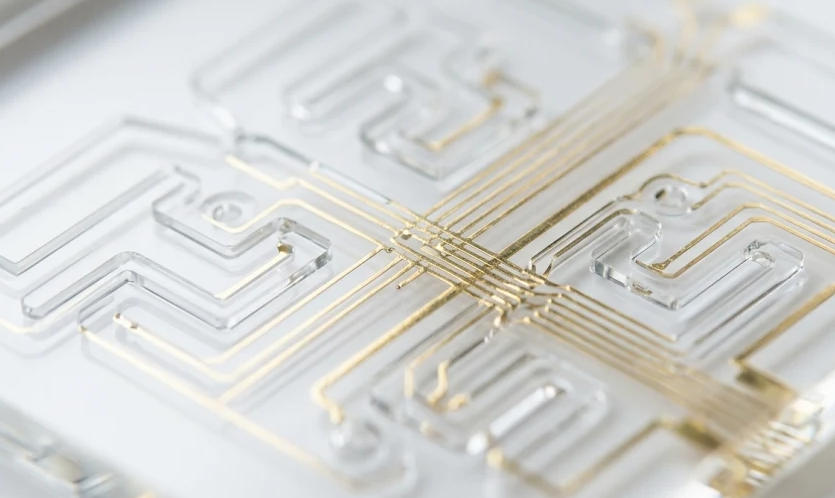
Microfluidic Biosensor Glass Substrates
Coligh specializes in the manufacturing of custom Microfluidic Biosensor Glass Substrates, DFM solutions for point-of-care (POC) microfluidics, and wafer-level BioMEMS foundry services, providing integrated fabrication capabilities from design optimization and process development to precision manufacturing.
Microfluidic Biosensor Glass Substrates Product Discription
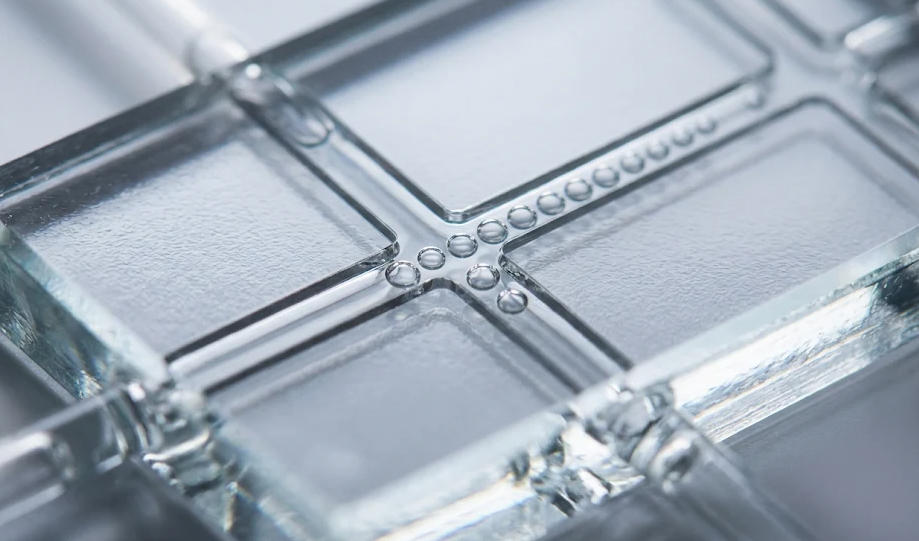
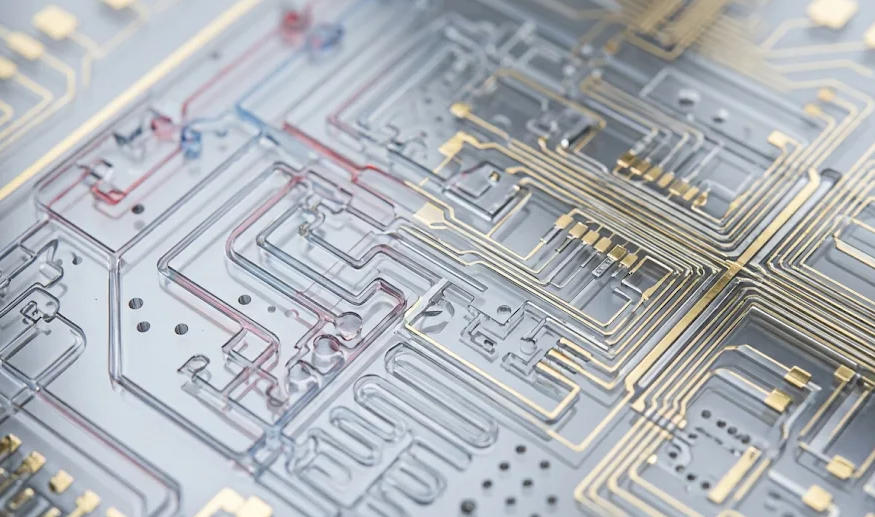
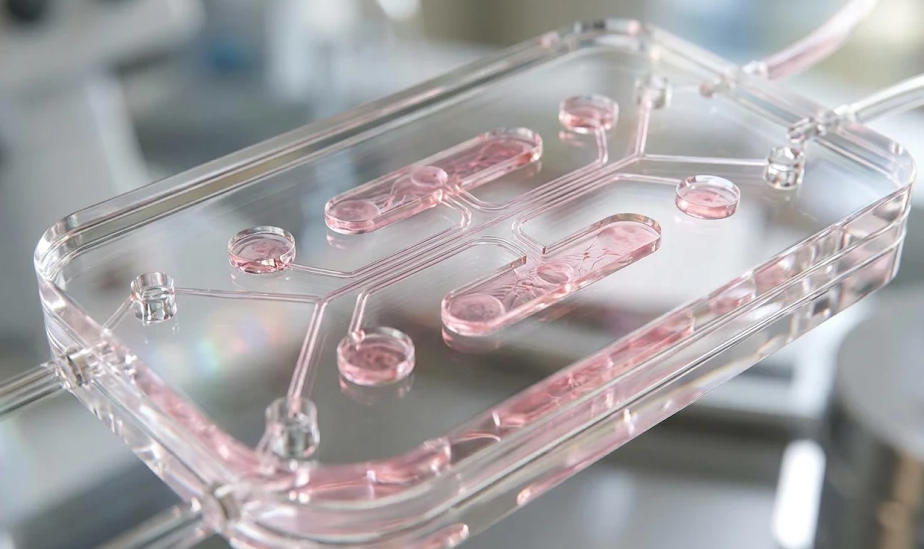
Glass substrates for microfluidic biosensors serve as essential foundations for integrating biological recognition elements, enabling the detection of nucleic acids, proteins, cells, small molecules, and pathogens. Coligh provides custom-manufactured microfluidic biosensor substrates based on client specifications, incorporating microstructures such as microchannels, detection chambers, reaction chambers, reagent reservoirs, through-holes, electrodes, and interface zones.
Utilizing substrates such as borosilicate glass, quartz, and fused silica, we employ a combination of dry and wet etching, CNC machining, and laser drilling. Furthermore, we perform metallization through precise PVD (physical vapor deposition) of high-adhesion copper.
These microfluidic biosensor glass substrates are primarily used in applications such as immunoassay chips, nucleic acid detection chips, biochemical test cards, electrochemical/optical detection chips, and portable POCT (point-of-care testing) devices—supporting fields including in vitro diagnostics (IVD), POCT, and SPR (surface plasmon resonance) sensing.
What Is Our Advantage Over Microfluidic Biosensor Glass Substrates?
- Biosensors—such as those based on fluorescence, surface plasmon resonance (SPR), or surface-enhanced Raman scattering (SERS)—require exceptionally high optical transmission across a broad spectral range, spanning from the ultraviolet to the near-infrared. Our fused silica substrates offer this high transmission while minimizing autofluorescence, thereby significantly enhancing sensitivity for single-molecule detection.
- Electrochemical sensors are susceptible to interference from leakage currents. Glass substrates, characterized by a high dielectric constant and the inherent properties of an inorganic insulator, serve as an ideal foundation for such sensors.
- We can deposit metal thin films—including gold (Au), platinum (Pt), and indium tin oxide (ITO)—onto glass surfaces, achieving superior adhesion.
- Our Through-Glass Via (TGV) processing technology enables the creation of crack-free vias with aspect ratios of up to 150:1. This capability allows for the integration of fluidic channels as well as metallized vias within microfluidic chips.
How Are We Different from Other BioMEMS Glass Substrate Manufacturers?
- Compared to materials like PMMA, COC, and PC, glass exhibits low autofluorescence and high resistance to organic solvents, making it the premier choice for substrates in high-end in vitro diagnostic (IVD) equipment. Furthermore, while silicon-based substrate processing is well-established, silicon itself is opaque and therefore unsuitable for optical detection applications.
- We offer comprehensive support—from rapid prototyping of BioMEMS devices to wafer-level mass production (on 8-inch or 12-inch wafers). Through collaborative design and manufacturing, we help our clients accelerate the time-to-market for their point-of-care (POC) solutions.
Our Manufacturing Capability Of Low auto-fluorescence biosensor chip glass substrate
| Customization Item | Customization Capabilities |
|---|---|
| Glass Materials | Borosilicate glass, quartz glass, fused silica, aluminosilicate glass, etc. |
| Substrate Dimensions | Maximum size up to 650 × 650 mm |
| Substrate Thickness | 0.05–2.0 mm |
| Glass Drilling | Micro-holes, through-holes, blind holes, inlet/outlet ports, and alignment holes; customizable hole diameter, spacing, and positioning |
| Microchannel Fabrication | Minimum channel width ≥ 4.5 μm; straight, curved, serpentine, branching, and merging channel designs |
| Microchambers | Custom circular, square, and irregular-shaped chambers; customizable chamber length, width, diameter, and depth |
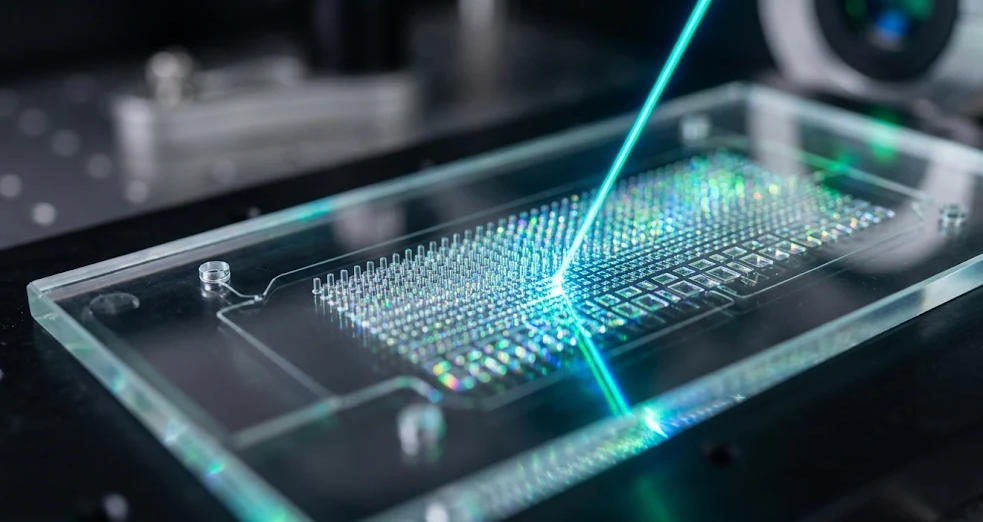
| Micro-hole Structures | Custom micro-hole arrays with different diameters, spacing, depths, and arrangement patterns |
| Fluid Inlet & Outlet Ports | Customizable inlet/outlet positions, dimensions, quantities, and interface configurations |
| Glass-to-Glass Bonding | Precision bonding and packaging of glass substrates; customizable bonding area, alignment accuracy, and sealing requirements |
| Metal Electrode Deposition | Customizable metal films (Au, Pt, Cr, Ti, etc.), electrode dimensions, spacing, and film thickness |
Fused silica biosensor Microfluidic Glass Wafer Application
Glass Substrates for Surface Plasmon Resonance (SPR) Biosensors
SPR sensing requires glass surfaces that offer high optical transparency, excellent flatness, and compatibility with thin-film metal coatings. With its high transparency, smooth surface, and suitability for metallization, glass is an ideal material for integrating microfluidic channels into SPR chips.
Glass Substrates for Electrochemical Biosensors
Electrochemical biosensing requires electrically insulating substrates, defined electrode regions, stable detection chambers, and chemically inert surfaces. Glass provides electrical insulation, chemical inertness, and metallization compatibility; it enables electrical isolation and the creation of stable detection chambers, making it well-suited for electrode isolation and the integration of electrochemical detection cells.
Glass Substrates for Point-of-Care (POC) Biosensors
POC biosensors require the handling of small sample volumes, optical or electrochemical detection capabilities, minimal evaporation, and stable fluidic pathways. Glass is transparent, exhibits low gas permeability, is chemically inert, and has low adsorption—qualities that make it excellent for enclosed microfluidic channels and optical detection. It helps reduce evaporation and interference from air bubbles, thereby enhancing detection stability.
Glass Substrates for Optical and Fluorescence Biosensors
Optical and fluorescence-based biosensing rely on transparent windows and substrates with low background fluorescence. As a substrate, glass offers high transparency and a flat surface. It can be processed to include detection chambers, microchannels, optical windows, and fluidic ports. Through glass-to-glass bonding, these components can be integrated into enclosed microfluidic systems, providing stable optical windows and low-background detection zones that facilitate the accurate readout of fluorescence or colorimetric signals.