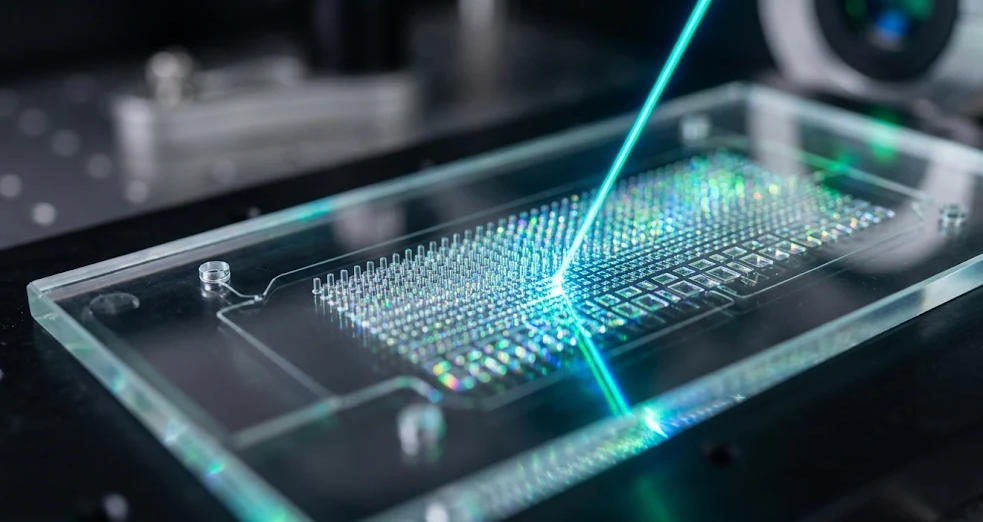
Custom Glass Microfluidic Substrates for DNA Sequencing Flow Cells | Flow Cell Substrate Fabrication
Coligh customs and manufactures high-throughput Glass DNA Sequencing Flow Cell Substrates.
We support the etching of nanopatterned glass flow cells microchannels in borosilicate glass or quartz , the creation of pore size, inter-pore spacing, nanopores, micropillars, fluid inlet/outlet ports, glass bonding, surface modification, and clean-room packaging. Our services span from DFM (Design for Manufacturing) review and prototyping to full-scale batch delivery.
Please share your drawing for flow cell DFM service.
Glass Microfluidic Substrates for DNA Sequencing Flow Cells Product Discription
A glass microfluidic substrate for DNA sequencing is a core component of a sequencing system; it facilitates fluid handling, reagent exchange, and optical imaging. These components are primarily used by sequencing instrument manufacturers, microfluidic chip design firms, in-vitro diagnostic (IVD) companies, and scientific research institutions.
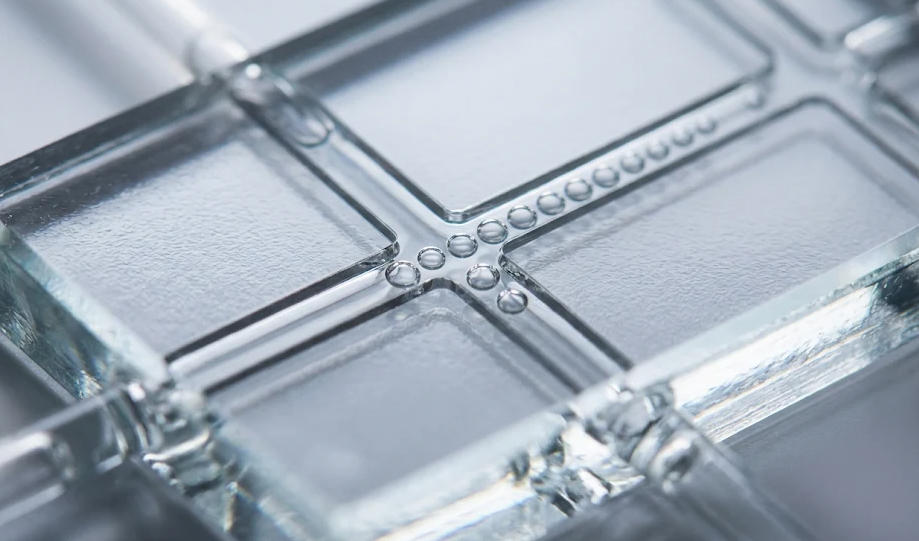
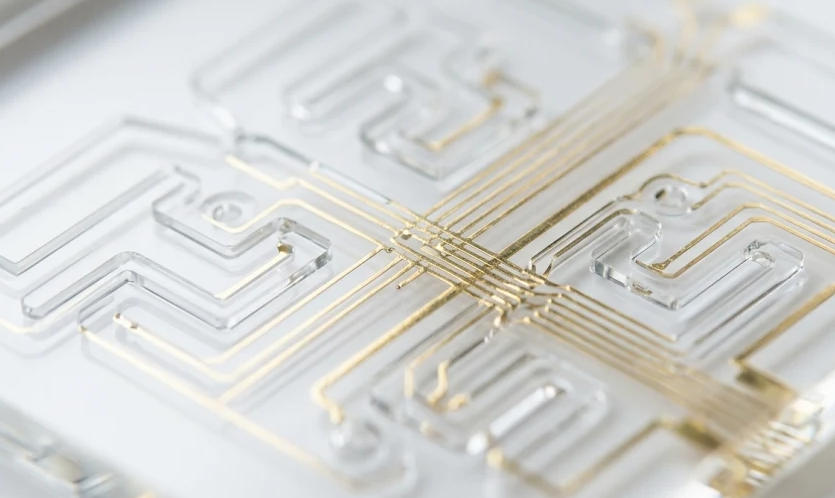
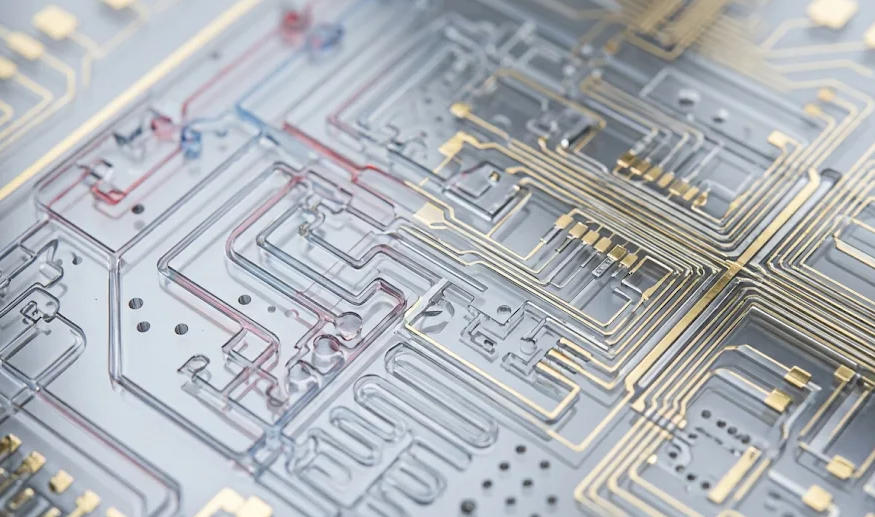
Glass microfluidic substrates serve as the base material for these flow cells. Coligh specializes in the manufacturing of glass microfluidic substrates for DNA sequencing flow cells. We provide custom-engineered glass substrates tailored to specific client requirements, utilizing a range of fabrication techniques—including dry and wet etching, laser cutting, CNC machining, and drilling—to create microchannels, fluid inlet/outlet ports, reagent reservoirs, optical windows, bonding layers, and interface zones.
Glass Microfluidic Substrates for DNA Sequencing Flow Cells Key Features
We offer processing services for materials such as borosilicate glass, quartz, and fused silica. These glass materials possess high optical transparency, making them ideal for applications like sequencing imaging and fluorescence observation. Furthermore, fused silica and quartz exhibit exceptionally low fluorescent backgrounds, rendering them highly suitable for optical detection tasks.
- To fabricate microchannels, we employ a versatile range of processing techniques—including etching, laser-only, CNC-only, dicing (mechanical blade), and various hybrid combinations (dicing + laser, dicing + CNC, or laser + CNC)—selecting the optimal method based on the specific requirements of each product.
- We have also upgraded our proprietary cutting equipment to incorporate features such as magnetic-levitation-based cutting, as well as automated substrate loading and flipping, achieving a precision (edge chipping/micro-crack control) of up to 15 µm.
- For fluid inlet/outlet ports and reservoirs, we provide customizable solutions, including drilling, through-hole fabrication, and tailored interface zone configurations.
Why Choose Us For Your Flow Cell Microfluidic Glass substrate
- We utilize high-purity fused silica or specialized low-autofluorescence glass substrates, which ensure accurate single-molecule signal detection.
- We provide inspection reports—including AFM and Zygo measurements—to verify the surface roughness and flatness of our flow cells.
- We possess the capability to fabricate high-aspect-ratio micro-holes, achieving ratios of up to 150:1.
- We offer comprehensive solutions for Through-Glass Vias (TGV), including mass-scale via fabrication for sequencing flow cells.
- Our one-stop service—encompassing mass-scale TGV drilling and nano-etching—is performed on 8-to-12-inch glass wafers, helping major manufacturers accelerate the R&D cycle for new products.
- We provide customized solutions tailored to specific sequencing workflows; our capabilities include processing ultra-thin glass and applying specialized coatings.
Custom Glass Microfluidic Substrates for DNA Sequencing Flow Cells Technical Datasheet
| Customization Item | Typical Specifications |
|---|---|
| Glass Material | Borosilicate Glass 3.3, Quartz / Fused Silica, Soda-Lime Glass |
| Substrate Dimensions | Customized according to Flow Cell drawings; up to 650 × 650 mm |
| Glass Thickness | 0.05–2 mm |
| Microchannel Fabrication | Straight channels, parallel channels, serpentine channels, inlet / outlet channels, etc. |
| Microhole / Through-Hole Fabrication | Inlet ports, outlet ports, buffer solution ports, through-holes, blind holes, etc. |
| Microchamber Fabrication | Reaction chambers, fluid chambers, liquid distribution chambers, etc. |
| Microchannel Depth | ≥ 3 μm |
| Inlet / Outlet Ports & Through-Holes | Subject to drawing review; commonly ≥ 0.2 mm |
| Microhole Diameter | ≥ 3 μm |
| Surface Treatment | Hydrophilic / Hydrophobic Treatment, Silanization, Functional Coatings, Metallization / ITO Coating, etc. |
| Outline Fabrication | Rectangular, Circular, Custom Shapes, Chamfering, Corner Rounding |
Glass Microfluidic Substrates for DNA Sequencing Flow Cells Application
Glass Microfluidic Substrates for DNA Sequencing Flow Cells
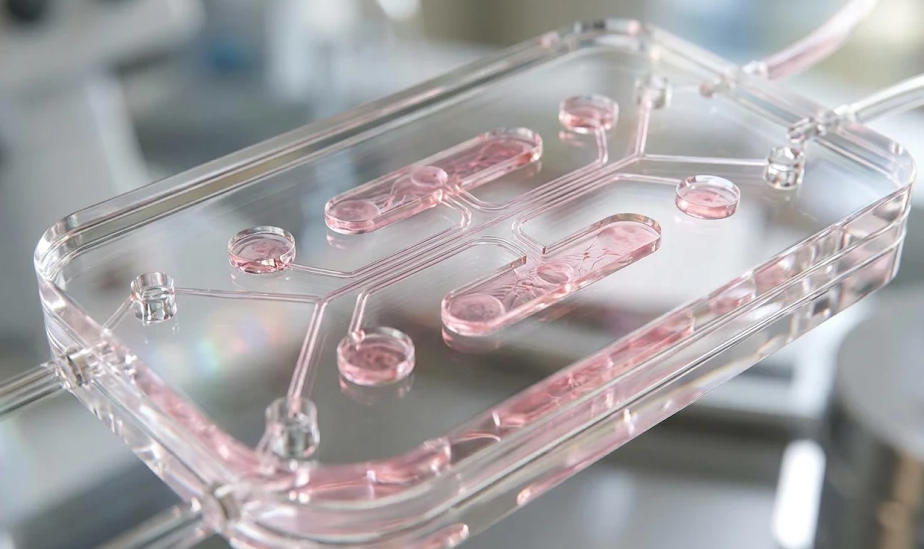
The transparency, chemical inertness, and high rigidity of glass make it well-suited for the stability and low-adsorption requirements of DNA sequencing flow cells. Glass serves effectively as both an optical window and a rigid fluidic channel, minimizing channel deformation, evaporation, and interference from air bubbles—qualities that are essential for sequencing imaging, reagent delivery, and the maintenance of enclosed fluidic paths.
Glass Substrates for Short-Read Sequencing Flow Cells
Short-read sequencing typically involves high-density imaging, frequent reagent exchange, and the need for stable fluidic pathways. Glass substrates offer high transparency, superior rigidity, and low gas permeability, which facilitate optical imaging and fluidic stability. Furthermore, their low adsorption and chemical inertness help minimize reagent residue and background interference. Glass substrates enhance the dimensional stability of fluidic channels and the uniformity of the imaging area, while reducing issues related to evaporation, air bubbles, and unwanted adsorption.
Glass Substrates for Optical Imaging Flow Cell Windows
Sequencing imaging requires optical windows that are transparent, exceptionally flat, and characterized by low background noise. With excellent light transmission, superior surface flatness, and high rigidity, glass is ideal for fluorescence imaging and microscopic observation. Consequently, glass substrates can be engineered into optical windows and microfluidic channels to minimize the impact of optical background noise and surface defects on imaging, thereby improving the consistency of the imaging area.