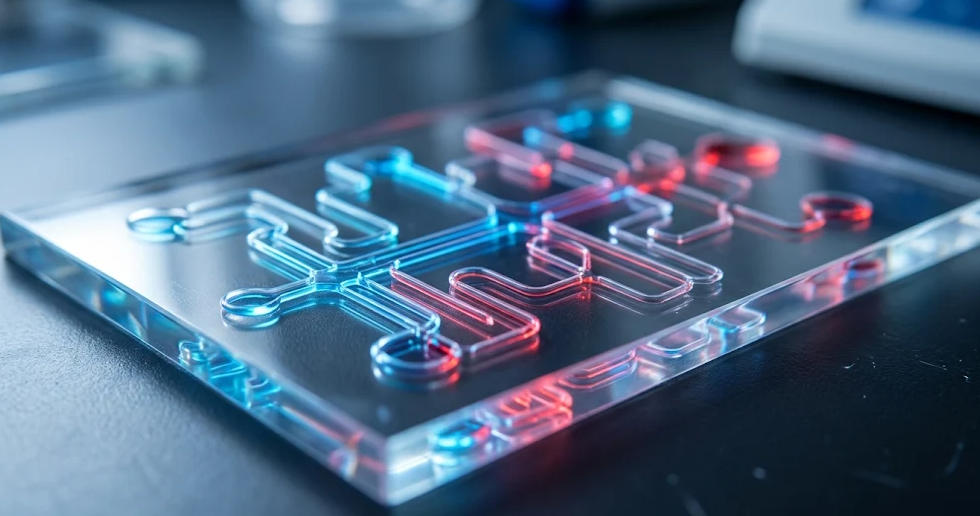
Lab-on-a-Chip Glass Microfluidic Substrates
Coligh is a Lab-on-a-Chip Glass Microfluidic Substrates manufacturer. Our custom glass microfluidic fabrication enable us from prototype building to production for point-of-care applications. We support the processing of borosilicate glass microfluidics and quartz microfluidic chips, including microchannel etching, laser cutting, drilling, bonding, and the application of hydrophilic or hydrophobic coatings. Upload your drawings to receive a DFM (Design for Manufacturing) review and a price quote.
Lab-on-a-Chip Glass Microfluidic Substrates Product Discription
A “lab-on-a-chip” glass microfluidic substrate is a miniature laboratory platform fabricated from glass. It typically features micron-scale channels, reaction chambers, through-holes, and fluid reservoirs, enabling the mixing, separation, and analysis of minute liquid volumes within an extremely compact footprint. These substrates are primarily used in applications such as point-of-care diagnostics, nucleic acid analysis, cell research, droplet generation, and biosensing.
Coligh is a manufacturer of lab-on-a-chip glass microfluidic substrates. We offer custom fabrication services—utilizing processes such as wet or dry etching, laser cutting, CNC machining, laser drilling, and metallization—to produce tailored microfluidic glass substrates.
Glass Microfluidic Substrate VS PDMS/Plastic/Silicon Sbustrate as Microfluidic Substrates
Common substrates for microfluidics include PDMS, PMMA, COC, COP, PC, and silicon. Compared to these traditional substrates, glass offers the following characteristics and advantages:
- Glass is transparent, exhibits low background fluorescence, and features a smooth surface. It is well-suited for demanding applications such as fluorescence microscopy, fluorescence detection, and optical analysis of droplets. Furthermore, glass provides greater stability during detection compared to opaque silicon, certain plastics with limited light transmission, or PDMS, which is prone to deformation.
- Glass is resistant to most organic solvents, acids, bases, and rigorous cleaning processes, making it an ideal choice for organic synthesis, mass spectrometry sample preparation, and applications requiring aggressive cleaning protocols.
- The surface of glass is inert and exhibits low adsorption, making it highly suitable for the analysis of biological samples such as nucleic acids, proteins, and cells.
Glass has extremely low gas permeability, which is advantageous for maintaining closed flow paths, ensuring droplet stability, achieving long-term sealing, and preventing evaporation. - Glass possesses high rigidity, which ensures stable channel dimensions—a critical requirement for high-pressure operations, precise flow control, and applications sensitive to channel deformation.
Our Core Manufacturing Capability Of Customizing Microfluidic Glass Wafer
Our Core Manufacturing Capabilities:
- Glass can be processed via etching to create micro-channels, utilizing both dry and wet etching techniques.
- We offer a full suite of processing methods—including mechanical dicing (wheel cutting), laser processing, and CNC machining—to perform tasks such as laser drilling, cutting, creating through-holes, and fabricating fluid reservoirs, tailored to the specific requirements of each product.
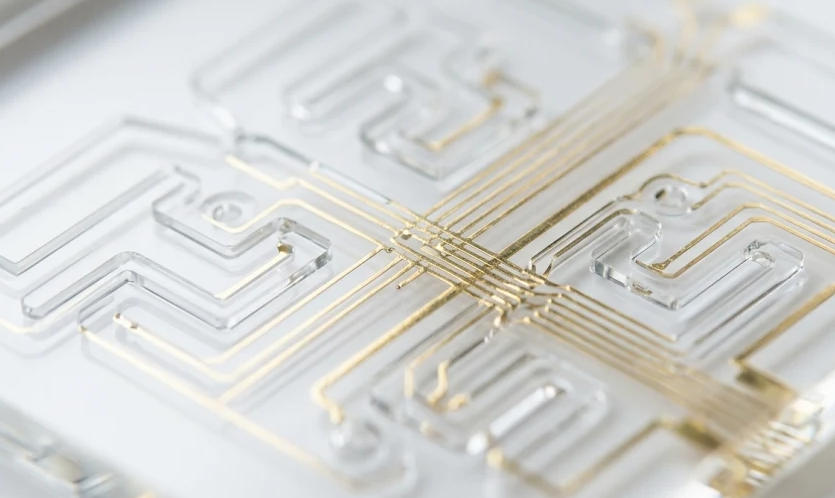
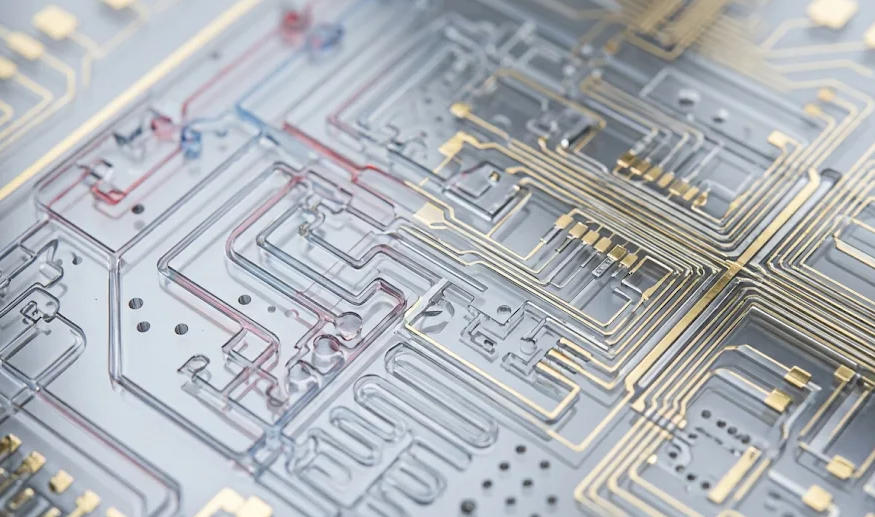
- Metal channels can be formed through the creation of precision circuitry.
- Our high-precision etching and circuit-fabrication capabilities allow for the production of micron-scale channels.
- In addition to single-layer substrates, we also possess the capability to perform thermal bonding of glass-to-glass, applicable to both single-layer and multi-layer substrate configurations.
Lab-on-a-Chip Glass Microfluidic Substrates Manufacturing Capability Technical Datasheet
| Customization Item | Capability |
|---|---|
| Glass Substrate | Borosilicate Glass / Fused Silica / Quartz Glass |
| Microfluidic Channel Fabrication | Microchannels, serpentine channels, flow splitters, manifolds, etc. |
| Microholes / Through-Holes | Inlet ports, outlet ports, through-holes, blind holes, etc. |
| Microstructure Fabrication | Microgrooves, microchambers, reaction chambers, mixing structures, etc. |
| Metal / Electrode Integration | Optional metal thin films, electrodes, conductive structures, etc. |
| Functional Coatings | Dielectric layers, metal coatings, hydrophilic / hydrophobic coatings, etc. |
| Glass Thickness | ≥ 0.05 mm |
| Microchannel Width | ≥ 10 μm |
| Microchannel Depth | ≥ 5 μm |
| Microhole Diameter | ≥ 3 μm – 2000 μm |
| Chip Size | Up to 650 × 550 mm |
| Outline Fabrication | Rectangular, circular, custom shapes, chamfering, filleting, etc. |
Why Choose Us For Your Borosilicate glass microfluidics and Quartz microfluidic chips
- We offer rapid prototyping capabilities, ensuring a seamless transition from wafer-level prototyping to mass production, with the flexibility to create customized microchannel networks and non-standard TGV (Through-Glass Via) arrays.
- Serving as a one-stop provider for substrates and laser processing, we excel in yield control and possess a deep, accumulated expertise in specialized manufacturing processes.
- Compared to PDMS (polydimethylsiloxane), glass offers significant advantages, including superior resistance to high pressure and organic solvents, excellent dimensional stability, and minimal background autofluorescence.
Microfluidic LOC glass wafers Substrate Application
Glass Microfluidic Substrates for Point-of-Care (POC) Testing
Point-of-Care (POC) testing often involves small-volume samples—such as blood, saliva, nucleic acids, or biochemical analytes—requiring substrates that offer excellent optical readability, low adsorption, minimal evaporation, reagent compatibility, and reliable bonding/sealing. Glass is transparent, chemically inert, exhibits low adsorption, and has extremely low gas permeability, making it ideal for POC chips that require fluorescence, colorimetric, or other optical detection methods, as well as those needing stable, enclosed fluidic pathways. Glass substrates help reduce background interference during optical detection, minimize the adsorption of biological samples and reagent residues, and accelerate product validation cycles.
Glass Microfluidic Substrates for Nucleic Acid Analysis
Applications such as nucleic acid extraction, amplification, pre-sequencing sample preparation, and capillary electrophoresis demand substrates with low adsorption, high resistance to cleaning processes, optical transparency, and chemical inertness. The inert nature of glass surfaces and their low level of leachable components make them well-suited for handling trace amounts of nucleic acids and performing fluorescence-based detection. By fabricating microchannels, reaction chambers, capture chambers, electrophoresis channels, and through-holes in glass substrates—and subsequently bonding them to form enclosed fluidic circuits—one can significantly reduce the risk of nucleic acid/protein adsorption and cross-contamination, while improving the recovery rate of small-volume samples and the stability of detection results.
Glass Microfluidic Substrates for Cell Analysis and Organ-on-a-Chip
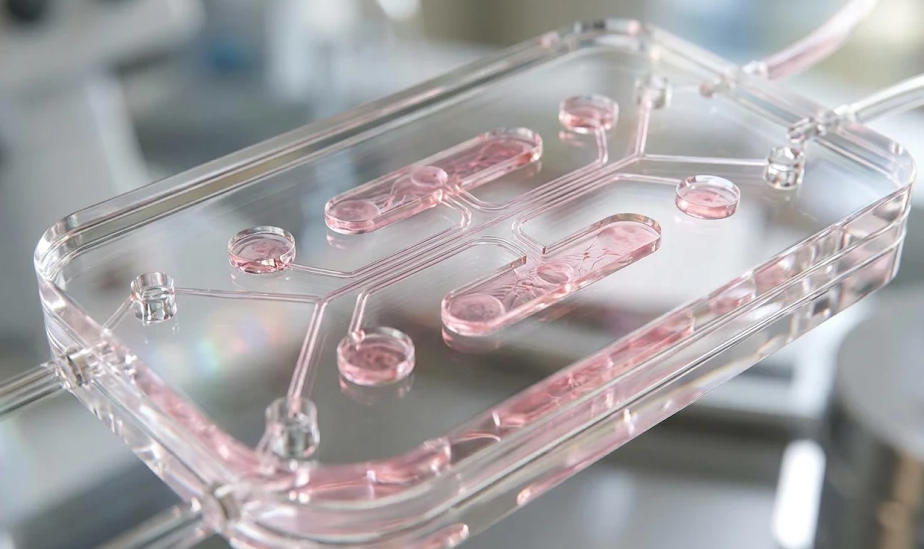
Cell analysis, cell culture, and organ-on-a-chip applications require substrates that facilitate microscopic observation, maintain stable fluidic pathways, exhibit low adsorption, and offer good chemical compatibility. Glass is transparent and highly rigid, ensuring that microchannels remain undeformed—a critical requirement for long-term microscopic imaging and precise perfusion. Glass substrates can be processed to include cell culture chambers, microchannels, perfusion channels, through-holes, and fluidic ports; these can then be bonded to create enclosed or semi-open culture structures that provide a stable optical window.
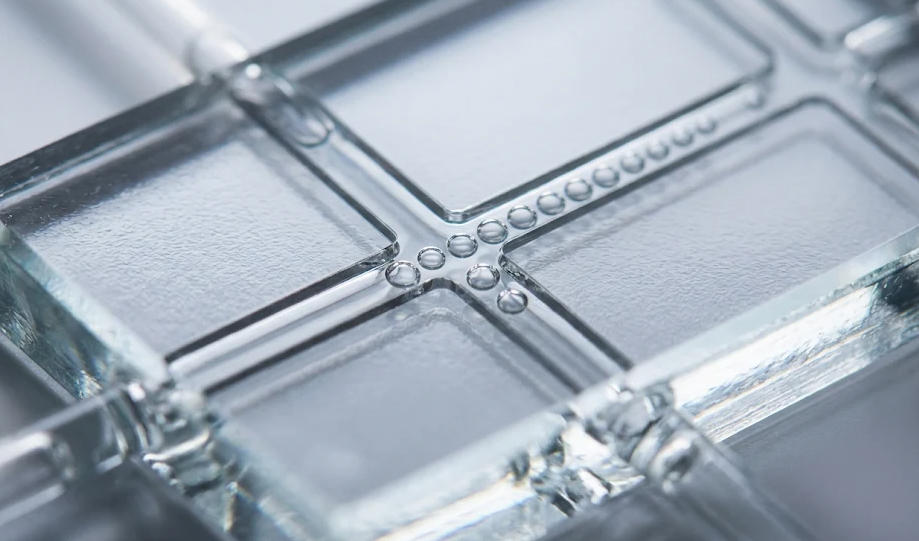
Glass Microfluidic Substrates for Droplet Generation and Microreactors
Droplet generation and microreactor applications require high precision in channel dimensions, specific surface wettability, solvent resistance, and low gas permeability. The high rigidity of glass ensures that microchannels do not deform, which is essential for the stable and consistent generation of droplets. By incorporating droplet-generation structures—such as flow-focusing junctions, T-junctions, and co-flow arrangements—along with mixing channels, reaction chambers, and detection windows, one can enhance the stability and uniformity of droplet size. This approach is well-suited for applications in digital PCR, single-cell analysis, and microreactors.